A pink rock discovered in the Sahara Desert has been identified as one of the oldest Martian meteorites ever found on Earth, according to a new NASA-funded study.
The 800-gram (1.8lb) meteorite, named Teghaza 001 after the salt plain in Mali where it was discovered in 2022, is more than 4.1 billion years old. It is one of only around 435 known meteorites from Mars.
Ancient Volcanic Minerals and Water Alteration
Researchers initially had no idea how old the unusual rose-coloured stone was, but their findings, published in the journal Science, revealed it was among the three oldest Martian meteorites ever discovered. The study found that the meteorite contains volcanic minerals that formed as molten rock cooled to create the planet's ancient crust.
Scientists also discovered evidence that the rock had been altered by water around 4.1 billion years ago, suggesting Mars had an active water cycle early in its history. Lead researcher Yang Liu, from NASA's Jet Propulsion Laboratory in California, said: "It was only after we started looking closely that we realized this meteorite is really unique."
A Rosetta Stone for Mars
Liu added: "One of the paper's reviewers called it a Rosetta Stone for Mars." Unlike most Martian meteorites, Teghaza 001 contains a combination of minerals that offers a rare opportunity to study how the planet's crust formed and interacted with underground water.
Its composition is similar to rocks detected by NASA's Mars Reconnaissance Orbiter in the heavily cratered southern highlands of Mars. Although researchers cannot determine precisely where the meteorite originated, they have identified 13 possible locations matching its characteristics.
Implications for Martian History
Study co-author Lee Saper, now a scientist at NASA's Ames Research Center, said: "This is really our first piece of Martian crust from a part of Mars we've never had a sample of before." He added: "It records interactions of water and rock and maybe even an imprint of the Martian atmosphere as it was losing water."
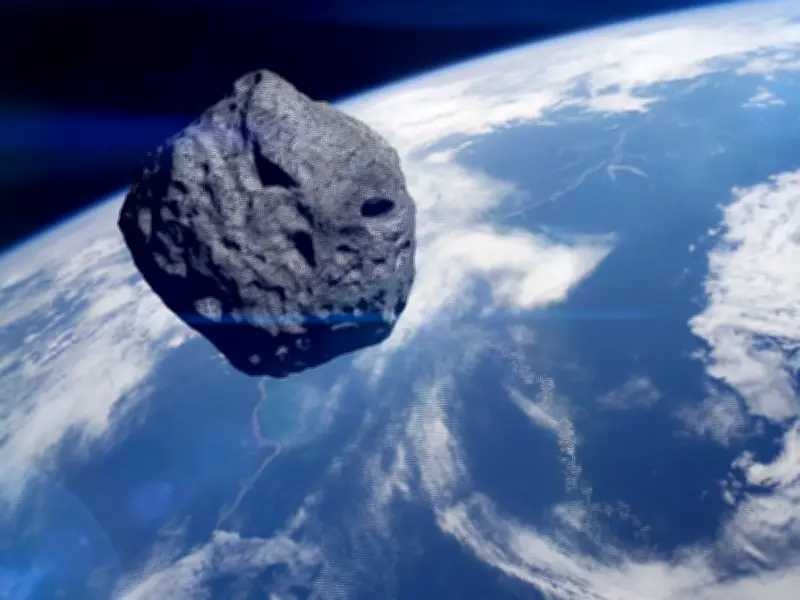
Researchers used tiny zircon crystals and advanced dating techniques to establish the rock's age, revealing it had already been affected by Martian water around 4.1 billion years ago. Like other Martian meteorites, Teghaza 001 is thought to have been blasted into space by an asteroid impact before eventually reaching Earth.
Scientists hope further studies will provide new insights into the planet's ancient environment. Liu said: "We've only scratched the surface."