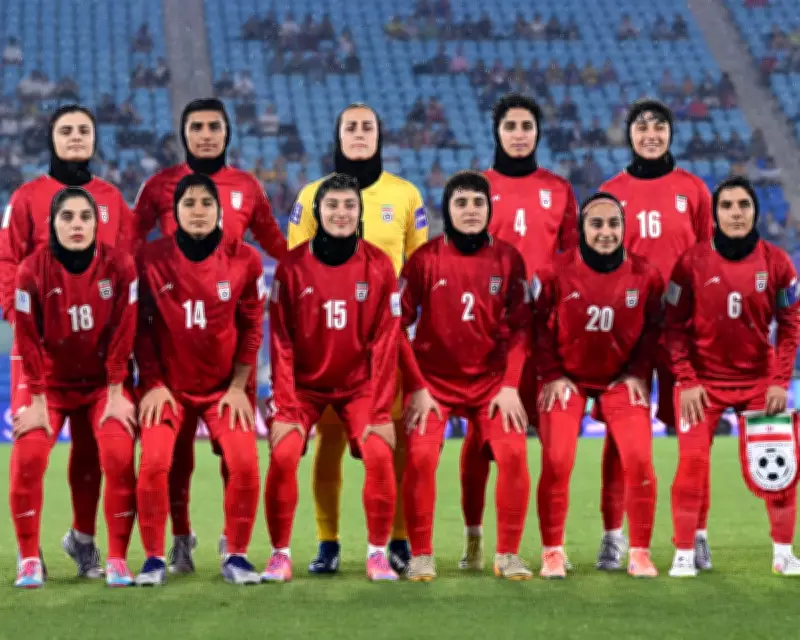
Iranian Women's Football Team Members Withdraw Asylum Claims Amid Coercion Allegations
Three additional members of the Iranian women's national football team have withdrawn their asylum applications in Australia and are now returning to Iran, according to recent reports. This development follows a high-profile incident where players were labeled "wartime traitors" for refusing to sing Iran's national anthem during the Women's Asian Cup tournament, drawing international attention and even calls for support from former US President Donald Trump last week.
Asylum Withdrawals and Return to Iran
Players Mona Hamoudi, Zahra Sarbali, and a team support staff member reportedly left Australia on Saturday night, traveling to Kuala Lumpur to meet other teammates before their return to Tehran. Iranian state media has also indicated that team captain Zahra Ghanbari has withdrawn her asylum bid and will fly back to Iran via Malaysia. If Ghanbari joins her teammates, only two of the seven squad members who initially sought asylum will remain in Australia.
Iranian news agencies, such as IRNA and Mehr, have framed these returns as patriotic decisions, with IRNA stating the captain was "returning to the embrace of the homeland." However, Australian officials and advocates have raised concerns about coercion and intimidation influencing the players' choices.

Allegations of Coercion and Intimidation
Tina Kordrostami, an Iranian-born Sydney councillor, told Fox News that the returning women had been intimidated and "communicated to directly by the regime" in recent days. She claimed that an individual within Australia was constantly influencing the players, undermining offers of help from Australian authorities. Kordrostami emphasized that the decision to return was not voluntary, stating, "They are being coerced, threatened, and intimidated; this is not a choice of their own." She highlighted that the players' only autonomous choice was their initial silence during the national anthem protest.
Australian Home Affairs Minister Tony Burke confirmed that three players had decided to return to Iran after being issued special protection visas. In a statement, Burke noted that while the Australian government provided opportunities and communicated options, it could not remove the difficult context in which the players were making decisions. He added, "Australians should be proud that it was in our country that these women experienced a nation presenting them with genuine choices and interacted with authorities seeking to help them."
Chaotic Scenes and Government Response
The situation escalated with a tense standoff at the team hotel on the Gold Coast in Queensland, where anti-Iranian regime protesters gathered as players prepared to board a bus to the airport. Chaotic scenes unfolded as government minders rushed into the lobby, searching for women seeking protection. One player reportedly changed her mind on Wednesday and contacted Iranian embassy officials, while others departed for Malaysia.
Iran's Tasnim news agency accused Australian authorities of subjecting the players to "psychological warfare, extensive propaganda, and seductive offers." In response, Federal Minister Kristy McBain dismissed this statement as propaganda, asserting that the Australian government had been transparent about ensuring the women had every opportunity to make their own decisions.
Broader Context and Policy Changes
Amid these events, the Australian government has implemented new laws to prevent some temporary visa holders from seeking permanent stay due to the Middle East war. These laws can block Iranian tourists with visas issued before US and Israeli attacks on Tehran if there are concerns about overstaying or applying for protection. The government has also expressed strong support for US and Israeli-led actions in Iran and is providing military assistance to the United Arab Emirates against retaliatory strikes from Tehran.
This case highlights the complex interplay between sports, politics, and human rights, as the Iranian women's football team navigates pressures from both their home country and international asylum processes.