Health in Focus: How to Prevent Muscle Loss When Using Weight-Loss Drugs, According to Science
Ozempic and other GLP-1-based drugs are a major advancement in obesity treatment, but they are not free of side effects, and one of the most prevalent is muscle loss. Professor Stuart Phillips tells Harry Bullmore the two simple things people can do to avoid it.
NHS data shows obesity rates are rising. Weight-loss drugs have been broadly welcomed by the medical community as a way of countering this, with an estimated 1.6 million people using them in the UK in 2024. “The reason weight loss drugs matter is that obesity itself is not benign,” says Professor Stuart Phillips, a distinguished professor at McMaster University’s department of kinesiology. By helping people eat less, they create conditions for weight loss and can have a wide range of knock-on positives for your health.
The body positivity movement should be applauded for its championing of inclusivity. But being overweight increases the risk of conditions like heart disease, stroke and Type 2 diabetes, while also putting extra strain on joints, says Professor Phillips. It can also disrupt hormone function and fertility, and is linked to issues like fatty liver disease and a higher risk of some cancers. The reason for rising obesity rates is the source of much discussion. But rather than obesity being a failure of willpower, as it is often painted, Professor Phillips views it as “biology colliding with a modern food environment”. Weight-loss drugs are designed to reduce food cravings, increase fullness, slow digestion and improve glucose control. “The benefits are real,” he continues. “I support the use of weight-loss drugs when prescribed appropriately, especially for people living with obesity who have struggled with weight loss and weight maintenance. I don’t see them as magic or as a substitute for lifestyle measures, but I do see them as a very useful tool. They are not going away any time soon.”
However, while GLP-1-based drugs are a major advancement in obesity treatment, they are not free of side effects. In the “pros” column, Professor Phillips lists their ability to counter a modern environment conducive to weight gain: “Inexpensive, calorie-rich food is constantly available, portions are large, and our biology is still wired to seek food when it is there, and to store excess energy efficiently.” However, a potential drawback of weight-loss drugs is the fact that they don’t just trim fat – they can cut muscle too. As Professor Phillips puts it: “Some of that lost weight is lean tissue, and in older adults that could matter.”
Muscle contributes significantly to physical function, balance, injury prevention, metabolic health and quality of life. For better health as we age, we want to hold on to it – not lose it. So, how concerned should we be about this unwanted impact of weight-loss drugs? Muscle loss when using weight-loss drugs is a widely held concern. Muscle is useful. Maintaining it or building more can benefit your health in many ways. However, Professor Phillips stresses the need for nuance when addressing this issue. “The current evidence suggests that a meaningful fraction of weight loss is lean mass,” he says. “But lean mass is not muscle mass – only about half of it is. Most studies measure ‘lean mass’, not actual skeletal muscle, so we still need better data.”
Across semaglutide studies, reductions in lean mass have ranged from almost none to about 40 per cent of total weight loss. Phillips uses the example of a 60-year-old obese man to demonstrate the expected rate of muscle loss while using weight-loss drugs. If the man weighs 100kg to begin with, then drops 20kg over the course of a year, he could be losing roughly 2.5-3kg of muscle. In a younger or more active person, this may not be cause for concern. But as we age, through a proposed cocktail of biological factors and falling activity levels, we become more susceptible to sarcopenia – the age-related loss of skeletal muscle and strength. In older demographics, or in “those who simply take the drug and eat very little without any plan for exercise or protein”, Professor Phillips says action may be needed to prevent muscle loss.
What can be done to counter muscle loss while using weight-loss drugs? “Don’t panic,” Professor Phillips says. Instead, he prescribes a more intelligent use of weight-loss drugs, with a greater focus on people’s body composition, strength and physical function – not just the changing number on the scale. “The best way to counter the downsides is to avoid treating these drugs as a standalone fix,” he says. “People should avoid extreme calorie restriction, maintain a high-quality diet, stay hydrated and deliberately preserve muscle with resistance exercise and adequate protein.”
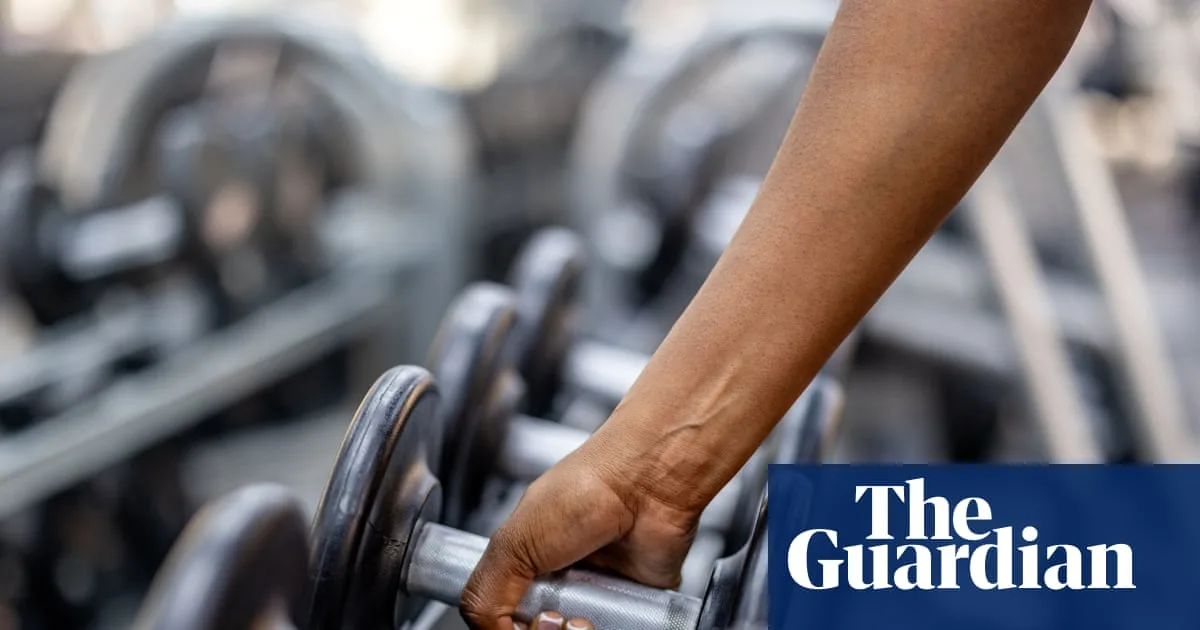
Guidance around taking GLP-1s, published in the JAMA Internal Medicine journal, advises users to eat “20-30g of protein (fish, poultry, yoghurt, beans) per meal” and use “protein shakes when GLP-1s severely reduce appetite”. It also encourages two or three weekly strength training sessions. “If the goal is to maintain muscle mass, strength and mobility while using these drugs, prioritise these two things,” Professor Phillips adds. “Resistance exercise is by far the most potent stimulus to retain muscle. Try to hit at least two to three sessions per week, covering the major muscle groups, and aim for a protein intake of about 1-1.5g/kg of body weight per day at minimum; for older adults, I often think toward the higher end of that range. In practice, getting 20 to 30g of high-quality protein at each meal is sensible.”
Professor Phillips also recommends including regular aerobic activity – any cyclical form of movement that raises your heart rate, such as walking, running, cycling and swimming – in your weekly plans. “Build toward at least 150 minutes per week, because movement matters for health,” he says. “But resistance training is the real priority if the conversation is about muscle.” Another thing to consider is the nutritional value of your diet. Weight-loss drugs help you eat less, but a diminished diet is likely to provide a smaller amount of certain nutrients, vitamins and minerals that help our bodies operate at their best. “The risk is that appetite falls, food intake drops, and some people end up consuming too little protein, too little fibre, too little fluid and, in some cases, too little calcium, vitamin D, B12 or iron, depending on the quality and restrictiveness of the diet.” This is a risk, he says, but not an inevitable one. Through constructing a balanced, nourishing diet or supplementation, these nutritional holes can be plugged.






