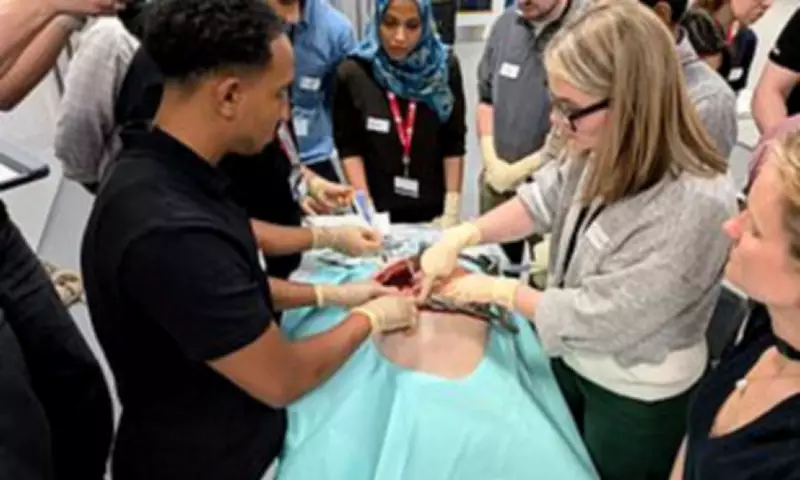
An eerily realistic manikin whose heart beats and bleeds just like a real human has been unveiled. While it might look gruesome, the dummy serves a crucial purpose: it allows trauma surgeons to train for emergency operations, including knife and gunshot wounds.
Purpose and Design
“The aim is to give trainee surgeons the opportunity to learn the technical aspects of emergency heart surgery in a safe environment, and to experience the time-pressure and tactile aspects of this life-saving operation,” explained research lead Dr. Richard Arm of the Anatomical Replication and Manufacturing Department at Nottingham Trent University. “This technology can simulate the bleeding from a traumatic injury to a vital organ, providing the actual experience and limited visibility that surgeons must face on the operating table.”
The models are based on scan data from real patients and feature a pulsating flow of synthetic blood made from water-based glycerine fluid. This is pumped through the artificial body, simulating arterial bleeding until the injury is repaired. As the chest cavity fills with synthetic blood, it becomes a race against the clock for the trauma team to practice locating the injury.

Materials and Reusability
The dummy is made from a unique combination of silicone rubber, gels, and fibres, which give it the same tactile qualities as a real heart. Surgical instruments can be used to suture the organs. The models are fully reusable and can be resealed, with new injuries added each time.
“This technology will help maximise the chances of surgeons being able to save people's lives by allowing them the space they need to practice this emergency operation and make them well prepared for real-life situations,” explained research assistant Andreea Pislaru.
Testing and Feedback
To put the dummy to the test, the researchers invited trauma surgeons to try it on a trauma course. Amanda Koh, a general surgical registrar, described it as “excellent.” “The trauma course was excellent – well-structured, engaging, and highly educational,” she said. “The faculty delivered high-quality teaching, focusing on real major trauma scenarios. The highlight was the realistic, high-fidelity 3D-printed thoracic and abdominal specimens used for simulation training.”
Affordability and Portability
To maximise access to the technology, the model is designed to be affordable, costing £6,000. It is also easily transportable, meaning it could be used across different hospitals. Mr. Adam Brooks, who co-led the project, said he hopes the dummies will help save lives. “The new models that we have developed bring together expertise of the Major Trauma Centre, MTIF, and ARM to deliver lifelike training for surgical trainees. This combined initiative will save lives.”