Iranian Women Footballers Withdraw Asylum Claims Amid Regime Pressure
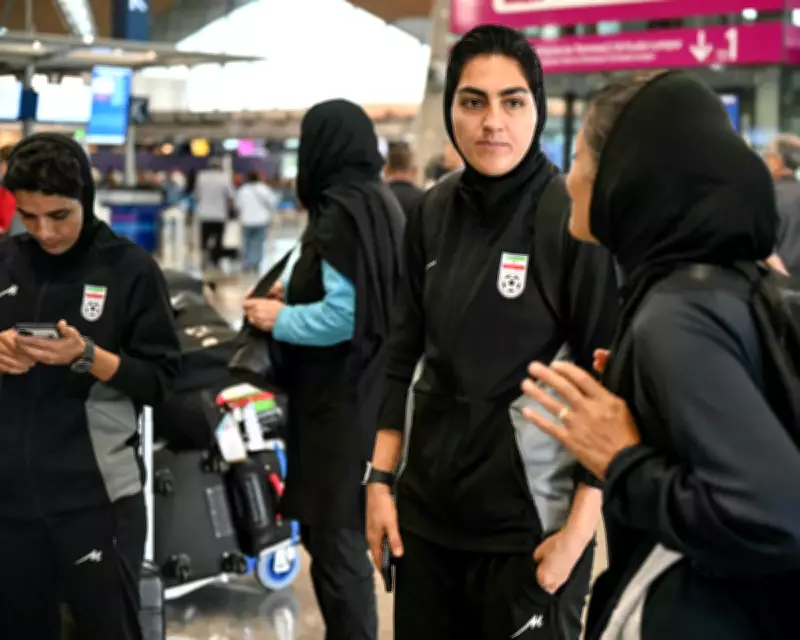
In a distressing turn of events, members of Iran's women's national football team have withdrawn their claims for asylum in Australia, returning to Iran under circumstances that suggest intense coercion from the regime. Captain Zahra Ghanbari was photographed arriving with teammates at Kuala Lumpur international airport on Monday, marking a reversal from their initial bid for safety.
A Lose-Lose Scenario for Female Athletes
Locked in a cruel lose-lose scenario, these players must contend with a regime designed to make resistance almost impossible. When seven members sought protection in Australia, it appeared they had finally found sanctuary, but within days, some made the difficult decision to return despite the risks. For many Iranian athletes, the most powerful opponent is not across the field but the regime that controls their lives, demanding obedience, restricting movement, and punishing dissent.
At home, state media has labelled the young women of the national football team "traitors" for refusing to sing the national anthem, while regime officials insist to the outside world that players will be welcomed "with open arms" without retribution. History, however, reveals a darker truth, as seen in past cases of athletes facing severe consequences.

Historical Precedents of Repression
The story of climber Elnaz Rekabi serves as a clear example. Her "crime" was competing without a headscarf in 2022, leading to an apology under duress, reported demolition of her family home, and house arrest. This pattern extends to other athletes, such as wrestler Navid Afkari, executed in 2020, and karate champion Mohammad Mehdi Karami, hanged in 2023, both after sham trials for protest involvement.
Female athletes have not been spared, with footballer Zahra Azadpour reportedly shot by security forces and volleyball captain Forouzan Abdi executed in 1988. These are not isolated tragedies but state-sanctioned acts designed to intimidate a nation into submission.
Transnational Repression Tactics
Transnational repression has become a defining feature of the regime's strategy, using methods like property seizure, abduction, threats against family members, forced confessions, and propaganda. Reports suggest pressure on the women's football team may have been delivered through regime-linked intermediaries, even while overseas, creating a cruel dilemma: remain abroad and risk retaliation against loved ones or return to face an uncertain future.
It is deeply concerning if messages from Iran Football Federation president Mehdi Taj reached players through local mouthpieces and minders, functioning as a borderless extension of the Islamic Revolutionary Guard Corps. Several members, including captain Zahra Ghanbari, returned amid claims of intense pressure on their families, decisions that should not be mistaken for free will but as byproducts of a system designed to make resistance almost impossible.
Global Sporting Community's Role
Athletes should never be forced to choose between their sport and their safety. The global sporting community cannot treat these incidents as isolated cases; when states intimidate athletes beyond their borders, sport becomes another arena of political repression. Organisations such as FIFA must develop mechanisms to protect athletes facing threats simply for competing.
Amid the tension, there has been a rare moment of encouraging news: Iranian footballers Fatemeh Pasandideh and Atefeh Ramezani joined Brisbane Roar FC for training, a reminder that with genuine safety and freedom, athletes can finally play the sport they love.
International Response and Future Steps
This situation highlights the reach of the Iranian regime far beyond its borders. The Australian government has taken an important step by offering protection to some players, but responses cannot remain ad hoc. Australia must recognise transnational repression as a growing reality and ensure legal systems are equipped to respond, providing clear pathways to protection and security.
For the Iranian regime, the message is simple: no matter where you go, you cannot escape us. The international community must prove that message wrong by standing firm against such coercion and supporting those at risk.