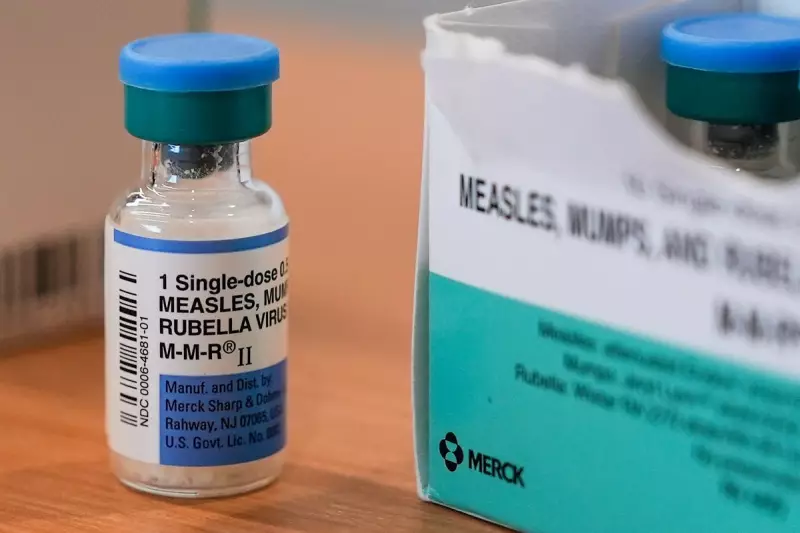
Health officials in the United States are battling a significant resurgence of measles, with two major outbreaks expanding rapidly. South Carolina has confirmed 124 new cases since Friday, 13 January 2026, while a separate, persistent outbreak along the Arizona-Utah state line continues to grow.
South Carolina Outbreak Balloons Post-Holidays
The situation in South Carolina has deteriorated quickly, transforming into one of the nation's worst clusters. The outbreak, centred on Spartanburg County, had reached 434 confirmed cases by Tuesday. The rapid spread follows the holiday period and has led to hundreds of children being quarantined due to exposures at school, some on multiple occasions.
Health authorities also reported a potential exposure at the South Carolina State Museum in Columbia on Friday. The scale of the outbreak is now approaching that of a major incident in Texas last year, which saw 762 reported cases and two child fatalities. Experts suspect that figure was an undercount.

A Separate Crisis on the Short Creek Border
Meanwhile, a distinct outbreak in the connected border towns of Hildale, Utah and Colorado City, Arizona—an area known as Short Creek—shows no signs of abating. Since August, 418 people have been infected across the two states.
On Tuesday, Arizona health officials added nine new cases, bringing the total in Mohave County to 217. Utah officials added two cases, for a total of 201. Public health experts in both states have expressed concern that the true number of infections is higher than official counts suggest.
"We did see our cases slow and then pick back up again after the holidays," said Nicole Witt of the Arizona Department of Health Services. "We're hopeful we'll see the end of this outbreak soon but, right now, we continue to see the same trickle of cases week over week."
National Context and the Critical Role of Vaccination
This surge contributes to a worrying national trend. Last year, 2025, was the country's worst year for measles transmission since 1991, with the Centers for Disease Control and Prevention (CDC) confirming 2,144 cases across 44 states. Three unvaccinated individuals died.
Measles, declared eliminated from the US in 2000, is a highly contagious airborne virus. It initially infects the respiratory tract, causing fever, cough, runny nose, and red eyes, followed by a distinctive rash. While most children recover, the disease can lead to severe complications like pneumonia, encephalitis (brain swelling), blindness, and death.
The most effective defence is the Measles, Mumps, and Rubella (MMR) vaccine. Two doses are 97% effective and provide lifelong protection. The CDC recommends the first dose at 12-15 months and the second at 4-6 years.
Community protection, or "herd immunity," requires vaccination rates above 95%. However, childhood immunisation rates have declined nationwide since the COVID-19 pandemic, exacerbated by an increase in parents seeking non-medical exemptions for required school shots.
The CDC defines an outbreak as three or more linked cases. The current crises underscore the ongoing public health challenge posed by vaccine-preventable diseases in an era of declining immunisation uptake.