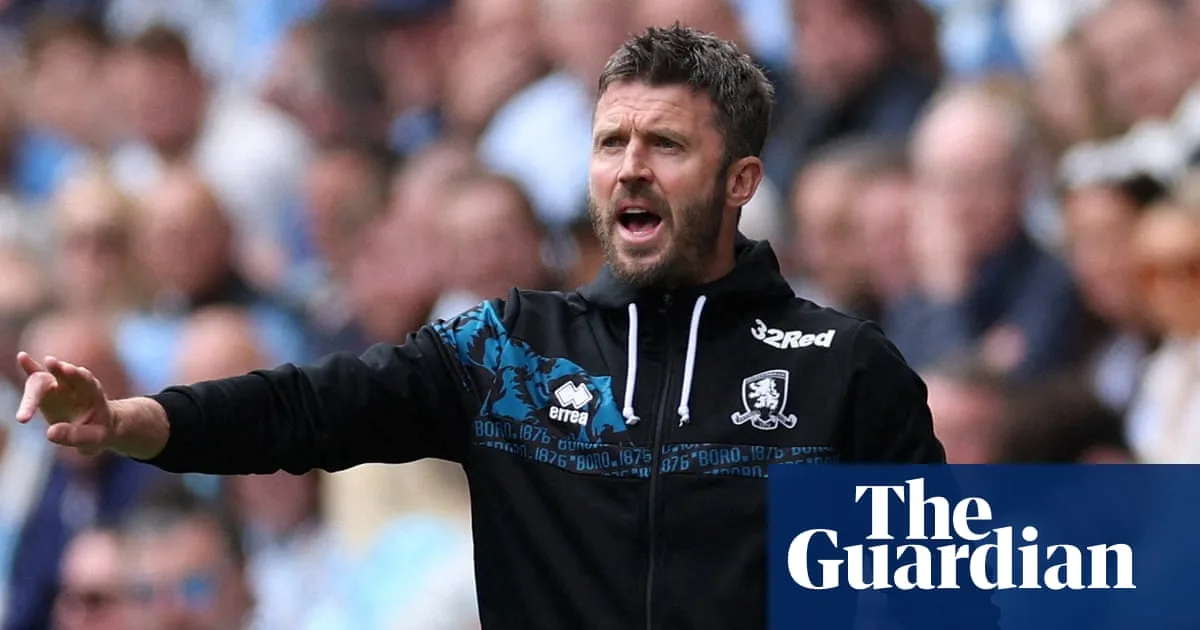
Michael Carrick is set to be appointed interim head coach at Manchester United, but his tenure at Middlesbrough offers a cautionary tale. Like predecessor Ruben Amorim, Carrick has shown a remarkable resistance to tactical change, a trait that ultimately cost him his job at the Riverside Stadium.
After guiding Middlesbrough from 21st to fourth in the Championship and reaching the Carabao Cup semi-finals in his first season, Carrick’s side faltered. They missed out on promotion in the playoffs and finished eighth and then tenth in subsequent campaigns, leading to a board review that resulted in his dismissal in June. Owner Steve Gibson and the board were reportedly reluctant to sack him but became frustrated by his unwillingness to alter the team’s possession-heavy style.
Critics noted that Middlesbrough were “too nice” and “too predictable”. Sunderland manager Régis Le Bris observed before a match that Boro had “only one distinct way of playing” and exploited that by ceding possession and countering effectively. Carrick’s poor in-game management, including slow substitutions and tactical adjustments, was highlighted as a weakness.
Despite these flaws, Carrick was praised for his integrity, man-management, and community work. He transformed players like Emmanuel Latte Lath, Hayden Hackney, and Morgan Rogers, and received backing from the dressing room. However, his overly cautious media approach and inability to adapt ultimately hindered his success.
At Manchester United, Carrick must demonstrate flexibility to avoid the pitfalls that plagued his Boro reign. His ability to evolve tactically will be key to his short-term success as interim boss.