
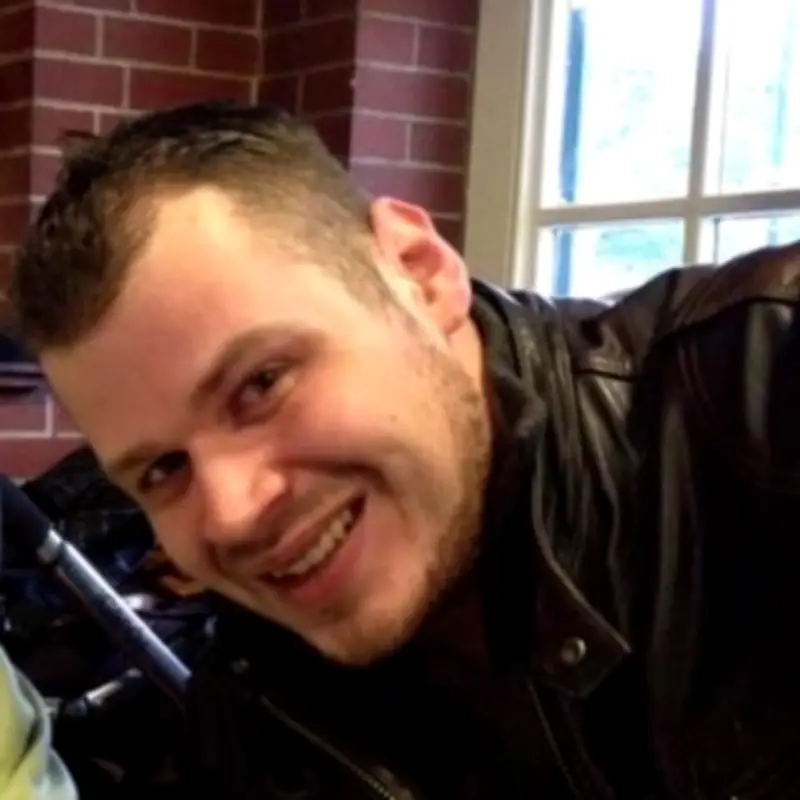
Had an ambulance crew arrived within the target time period after Andrew Watson called 999, there could have been the opportunity to get him to A&E before, or possibly just minutes after, the moment he went into cardiac arrest. That is the verdict of a consultant paramedic whose evidence to an inquest was that this could have led to “definitive” treatment.
Langley Moor man Andrew died aged 32 on October 10, 2019. He had quinsy, an abscess in his throat which is a complication of tonsillitis and which blocked his airway and caused respiratory failure.
The senior paramedic, Daniel Haworth, provided two statements to an inquest held at Crook Coroners’ Court. Mr Haworth considered in his statement that ambulance service clinicians are trained to minimise where possible time spent administering care at the scene of call-outs, with the preference being if necessary to transfer a patient to hospital. He said in his statement: “It’s likely the patient would have been on route to hospital within 15 to 30 minutes of a crew arriving.”
Mr Haworth considered four scenarios in his statement, which modelled what could have happened if an ambulance had arrived after either 18 or 40 minutes, and then spent either 15 or 30 minutes treating Andrew at the scene. The chosen time periods correspond to the mean target response time for category two 999 calls and the “90th percentile” target time.
Mr Haworth said: “Scenario A is that crew arrives on scene 18 minutes after the initial call and they depart for hospital after 15 minutes on scene. This would have meant leaving 33 minutes after the initial call.” He said that it could be approximated that travel time to hospital would be ten minutes, and that therefore Andrew could have made it to A&E within 43 minutes of calling 999. In reality, an ambulance did not even arrive until 67 minutes after the first call.
In three of the four scenarios, Mr Haworth said Andrew would have been in or close to hospital by the time his heart stopped. He said: “In most of these cases it is likely the patient would have arrived or been close to hospital when he had a cardiac arrest.” He continued that on the balance of probabilities this would have meant Andrew receiving “definitive” care for his quinsy.
The inquest heard how Andrew called 999 twice and told how he was “struggling to breathe” and had “coughed up blood” in the minutes before his death. Coroner Crispin Oliver heard how he had developed a rare condition called quinsy “rapidly” and this caused an abscess to swell on his throat. He first called 999 at around 5.40pm that evening, and it took 67 minutes for an ambulance to arrive.
The court heard the devastating audio of the phone calls he made, which saw him tell call handlers initially that he was “struggling to breathe”. During a second call at around 6.23pm, he told the North East Ambulance Service call handler that he had “coughed up blood” and complained of a swelling in his throat for “the past two days”. On both occasions, he was told an ambulance would arrive in eighteen minutes. During the second call, the court heard, Andrew was told how it was “extremely busy” and that this was why there were delays with the ambulance.
A third 999 call was made by support workers at the assisted living venue where Andrew was staying, Cecil Court in Langley Moor. One of those support workers, Beverley Richardson, also gave evidence. She spoke of how staff had “handed over” information including that Andrew had been to his GP practice that morning and given antibiotics for suspected tonsillitis, and that he had been told to call 111 if his symptoms worsened. Ms Richardson told the court how Andrew had been near to the reception area at Cecil Court and had been pacing, but that he had not looked “in pain” or “out of the ordinary”. “He said he was going to ring 111 as his throat was still sore,” Ms Richardson said. However after he went to call a second time, and he was no longer in sight of Ms Richardson or a second support worker, they heard a “thud” as he had fallen. The support workers ran to his aid and found him lying on the ground and thrashing his arms, Ms Richardson said. She then called the ambulance a third time.
By the time paramedics finally arrived on the scene, at around 6.45, the court heard how one of those to attend had described him as having a swelling “the size of a tennis ball” in his neck area. The court had previously heard on Monday morning from Home Office pathologist Dr Clive Bloxham and GP Dr Jonathan Wing who each agreed that it appeared Andrew’s quinsy had progressed “rapidly”.
Before the final 999 call, Andrew's case had been graded a category 2 call. Andrew's family have previously said how this should have been treated as a category 1 incident from his first call. Andrew’s case is one of several to have been implicated in the alleged “covering-up” of safety investigations by North East Ambulance Service personnel, as disclosed by whistleblowers in 2022. It is only after media coverage of this, which saw NEAS’ then chief executive Helen Ray accept there had been “historical failings”, that Andrew’s family became aware of any safety investigation in his case. In November 2024, the family told ChronicleLive of their five year fight for justice.
Other such cases include those of Quinn Evie Milburn-Beadle and Peter Coates, which were among those examined in a review commissioned by NHS England and led by Dame Marianne Griffiths. That review found "leadership dysfunction" led to NEAS not being as candid as it should have been with the coroner. However, Dame Marianne's review did not consider Andrew's case, something the Watson family say angered them.
The lack of disclosure meant that initially the inquest into Andrew’s death was closed in March 2020. It was only re-opened in 2024. Now, the inquest is expected to run until Thursday this week, June 18.




