The streets of Britain were alive with music, cigarette smoke, and the chatter of bustling weekend nightlife when, more than 1,000 miles away, one of the most catastrophic accidents in history occurred.
The Chernobyl Explosion
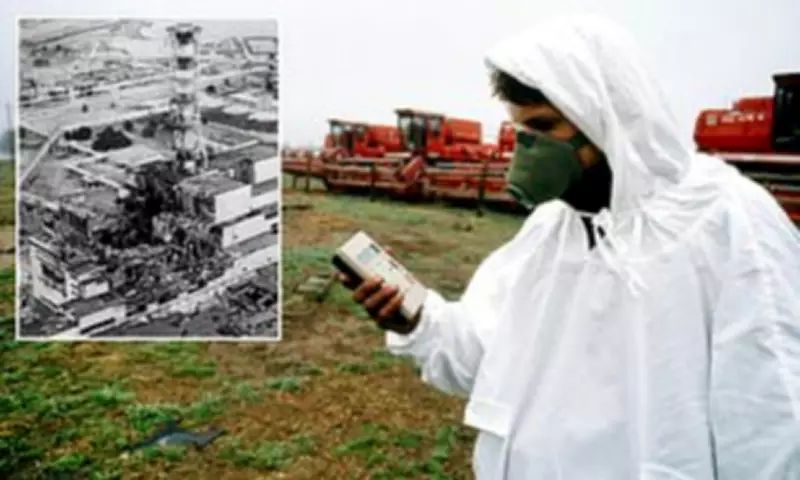
Reactor number four at Chernobyl, a then-Soviet nuclear facility near Pripyat, Ukraine, exploded at 1.23am local time - three hours ahead of the UK - on April 26, 1986, emitting more than 100 radioactive elements into the atmosphere. While many elements decayed quickly, some of the most dangerous ones carried far beyond neighbouring nations Russia and Belarus, spreading across the northern hemisphere and even to the UK. Among them were iodine, strontium, and caesium, linked to serious health conditions including thyroid cancer, leukaemia, and damage to organs such as the liver and spleen.
Yet, Britain remained unaware that the event had even occurred for days. As Soviet officials remained silent, newspapers rolled off the presses carrying front pages of political drama, while TV and radio broadcasts continued as normal. That was until Swedish nuclear engineer Cliff Robinson exposed the catastrophic revelations two days later. Conducting a routine safety test, the results were so extraordinary that he thought a nuclear bomb had gone off and quickly alerted the world.

As news began to filter through, BBC Newsnight reporter Peter Snow told the nation: 'It does now seem likely, that some time in the last couple of days, there has been perhaps the worst accident in the short history of the world's nuclear power industry.' While Soviet officials remained tight-lipped, the evacuation of 45,000 Pripyat residents was underway in an attempt to shield them from radioactive contamination. But for many it was already too late, and experts have now warned the true death and cancer toll from Chernobyl may be far higher than officially announced - raising an important question: how safe are Britain's nuclear workers today?
Health Impacts and Cancer Risks
At a gathering of reporters before the 40th anniversary of the disaster, Professor Jim Smith, a Chernobyl researcher from the University of Portsmouth who frequently visits the remains of the powerplant, says the health effects from the explosion are still felt today. During the late 1980s, Professor Smith explained that thyroid cancer cases stood at around one or two cases per 100,000 children in Belarus. Since then, this has increased to between six and eight cases per 100,000.
'There was a big increase in thyroid cancer after the accident,' he explains. 'And what the Soviet Union failed to do was stop people - particularly children - from consuming contaminated produce in the weeks after the accident. Lots of people, particularly children, got very, very high doses of radioactive iodine. Iodine is only around in the environment for a few weeks after a nuclear accident - it decays away very fast. But if you don't stop people consuming it in those weeks, then they get really high doses to the small thyroid gland in the neck. That has caused - up until 2015 - 5,000 extra cases of thyroid cancer.'
Though this is a major concern, there is some reassurance when Professor Smith explains that thyroid cancer often responds well to treatment - ironically, he says, through the use of iodine. However, one of the most troubling revelations concerns the death toll as a result of the Chernobyl disaster, which Professor Smith believes may have been understated for the past 40 years.
'People got acute radiation sickness [after the explosion],' he says. 'The official figure is 134 people: the firemen and plant operators got acute radiation sickness. Of those, about 40 deaths were caused by the radiation sickness - or that's what was attributed. But this is a contentious subject - and one which drums up debate 40 years on. If somebody was holding a gun to my head, and I had to get it right, I think I'd probably say 15,000. If we analyse the stats on air pollution, we know that around 700 million people in Europe got a tiny dose [of radiation] from Chernobyl. That is a tiny individual risk, but if you add that up over 700 million people and the 600,000 cleanup workers group, as well as evacuated areas and so on, then you can reach 25,000.'

UK Nuclear Workers Today
Such was the trauma of the Chernobyl disaster that skepticism over the use of nuclear power intensified for years in its aftermath. Those fears were further deepened in Britain by memories of the Windscale fire, which had occurred 29 years earlier during a routine heating test at one of the reactors in Cumbria. A blaze broke out and burned for three days, releasing radioactive contamination across the UK and Europe, and hundreds of deaths are thought to have been linked to the event.
Only recently has the UK lifted restrictions introduced after the Chernobyl disaster on farms, too, which were designed to prevent sheep carrying high levels of radioactivity from entering the food chain. The measures remained in place because radioactive caesium - which has a half-life of around 30 years - from Chernobyl contaminated grazing land in Wales, Scotland and Northern Ireland.
Today, nine nuclear reactors are in operation across the UK at five power plants, where workers may be exposed to some ionising radiation including gamma rays, alpha particles, beta particles and neutrons. These types of radiation can be harmful as they can cause skin burns and acute radiation syndrome - which brings on nausea, vomiting, and diarrhoea - as well as long-term cancer risks.
Public Health England calculated previously that, on average, people are exposed to about 2.7 millisieverts (mSv) of radiation per year. The 134 workers who battled the fire at Chernobyl were exposed to 700 to 13,400 mSv. Meanwhile, the average occupational exposure for a nuclear power station worker in the UK was calculated at 0.18 mSv.
Still, government statistics published this week shed an interesting light on cancer risks among nuclear workers. The figures, released by the UK Health Security Agency (UKHSA) this week, showed that between 1946 and 2011, 8.5 per cent of British nuclear workers - 12,556 out of 147,872 - died from a form of cancer. As a proportion, this was lower than the figure recorded among nuclear workers in the US, where 13.4 per cent died from cancer, but slightly higher than France where 8 per cent died from cancer over the same period. The report also found that greater radiation exposure over time was linked to a higher risk of developing the disease, with lung cancer identified as particularly common. The UKHSA has a dedicated radiation team which continues to investigate the effects of radiation on the body.
Safety Comparisons
During his chat with reporters, however, Professor Smith said it is highly unlikely that the UK would ever face a Chernobyl disaster-style event on its own shores. 'Chernobyl had a potentially dangerous reactor design, almost no safety culture and no strengthened containment building,' he explained. He then compared this to Sizewell B, a nuclear power station on the Suffolk coast. 'Sizewell B is designed and operated much more safely than Chernobyl was. It has a secondary containment building, which is a strengthened dome designed to withstand external and internal shocks.' While that may reassure many Britons, it also serves as a reminder of the safeguards now in place against a disaster which is remembered every day - perhaps even more sharply now, 40 years on.