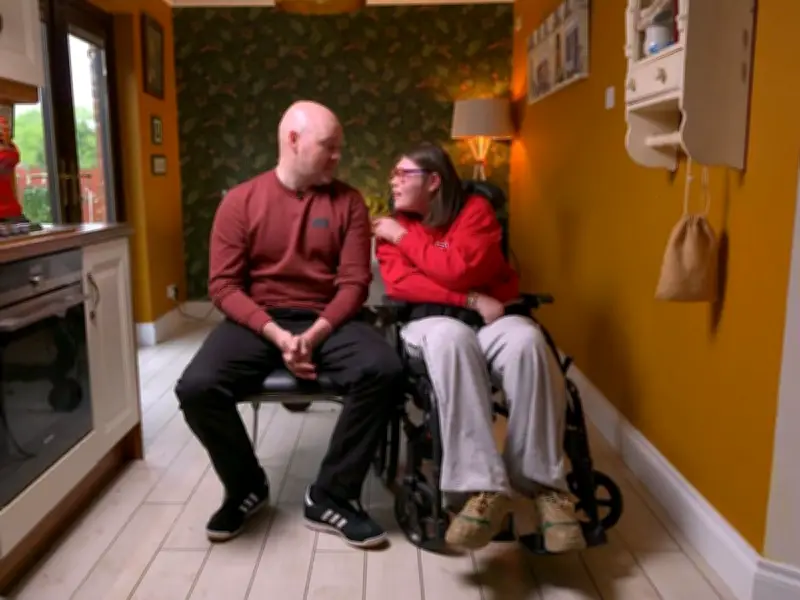
Comedian Paddy Raff has spoken out about his role as an unpaid carer for his sister, as new research reveals the immense time and financial pressures faced by millions of UK carers.
The hidden burden of unpaid care
Unpaid carers, including Northern Irish comedian Paddy Raff, are effectively working a second job just to help loved ones access healthcare. According to research by Specsavers, carers spend an average of 26 hours each month attending healthcare appointments, alongside nearly 12 hours a week organising, travelling and waiting for care.
Three in ten (30%) are spending more than 40 hours a month on healthcare support alone, the equivalent of a full working week.

Paddy Raff's story
Paddy Raff, 42, helps care for his younger sister Sarah, who lives with cerebral palsy, epilepsy and learning difficulties and requires 24-hour support. Sarah, 36, lives with their mother in Belfast, with Paddy and their wider family stepping in to help.
"We don't really see ourselves as carers. We're family first and foremost. It's just something that becomes part of your life," Paddy said. "My mum does the bulk of the care but all of us, siblings and aunties, we all chip in."
Sarah needs help with getting up, getting dressed, going to the toilet, transport – everything. "There's always someone there or within earshot," he added.
While Paddy's family don't consider it as work, the reality reflects the national picture – a demanding role that shapes daily life and relationships.
The stress of healthcare appointments
For carers like Paddy, even routine healthcare appointments can become complex and often overwhelming operations. Getting Sarah to appointments is rarely straightforward and usually requires careful planning, multiple people and mental preparation.
"It's a three-person job just to get her out. You're thinking, 'how far do we have to go? What's the access like? Will they see her on time?' These things will live in my mum's mind for weeks before the appointment. It can be very stressful," Paddy explained.
Paddy found Specsavers Home Visits, which deliver eye care and hearing services at home, made a huge impact. "I hadn't even thought that someone might come to the house to do it, it was a real godsend," he said.
"It alleviates a lot of stress. You don't have to plan how you're getting there or worry about whether it will work once you arrive."
For Sarah, the experience became far more positive at home. Rather than a stressful trip, her eye test became interactive and accessible with Graham Hanna and Matthew Brennan from Specsavers Home Visits Northern Ireland.
"Matthew and Graham turned it into a bit of a game, matching letters, and she loved it. She was buzzing, she gave me a massive high five. They were very accommodating of her needs and they did things at her pace," Paddy said.
"It's been really refreshing to have such a painless process and get a good result at the end of it, which is a thorough eye test. As long as the person you're caring for is happy, that's all that matters."
The financial toll on carers
The Specsavers research of 750 unpaid carers revealed that half (52%) listed reducing stress as the most important factor, with 27% stating home visit healthcare would allow greater comfort for the person they care for.
Two-fifths (43%) of carers lose income due to caring responsibilities or have had to adjust their working hours (44%), while one in ten have stopped working altogether. Alongside time and stress, there is a clear financial toll.
Unpaid carers spend an average of £68.90 per month supporting loved ones at appointments, with more than half (58%) spending up to £100 monthly, and nearly one in five (16%) spending more than £100.
The Specsavers Home Visits service provides eligible people with a comprehensive, NHS-funded eye test at their own home as well as free home hearing tests in several locations across the UK. Find out if your loved one is eligible for a Home Visit at specsavers.co.uk/home-visits.