Nasser Hospital Condemns MSF Withdrawal Amid Gaza Security Dispute
One of Gaza's last functioning major hospitals has strongly condemned the decision by an international medical organisation to suspend most of its operations, citing concerns over armed individuals on the premises. Nasser Hospital in Khan Younis issued a statement on Sunday, February 15, 2026, asserting that the facility had implemented a civil police presence to ensure security, directly contradicting the claims made by Médecins Sans Frontières (MSF), also known as Doctors Without Borders.
MSF Cites Security Breaches for Suspension
In a statement released on Saturday, MSF announced the suspension of all noncritical medical operations at Nasser Hospital due to what it described as serious security breaches threatening its teams and patients. The organisation reported a noticeable increase in patients and staff witnessing armed men in various parts of the hospital compound since the U.S.-brokered ceasefire agreement was reached in October. MSF detailed a pattern of unacceptable incidents, including the presence of armed individuals, intimidation tactics, arbitrary arrests of patients, and recent suspicions regarding the movement of weapons within the facility. Although this suspension was implemented in January, it was only publicly disclosed recently, highlighting ongoing tensions in the region.
Hospital Defends Civilian Police Presence
Nasser Hospital officials responded forcefully, labelling MSF's allegations as factually incorrect and irresponsible. They argued that the presence of armed men was due to a civilian police force deployed to protect patients and staff from repeated attacks by masked militias and armed groups. The hospital emphasised that this security measure is crucial for maintaining operations in one of Gaza's few remaining functional hospitals, which treats hundreds of patients and war-wounded individuals daily. Additionally, Nasser Hospital has served as a hub for Palestinian prisoners released by Israel as part of the current ceasefire deal, further underscoring its critical role in the territory.
Broader Context of Armed Groups and Violence
The dispute occurs against a backdrop of heightened violence and the proliferation of armed factions across Gaza. Hamas remains the dominant force in areas not under Israeli control, including the vicinity of Nasser Hospital, but other armed groups have emerged since the war began with the Hamas-led attack on Israel on October 7, 2023. Some of these groups are reportedly backed by Israel's army in the Israeli-controlled part of the strip. Throughout the conflict, Israel has repeatedly targeted hospitals, including Nasser, accusing militant groups of operating in or around these facilities. Reports indicate that Hamas security personnel have often been seen inside hospitals, restricting access to certain areas, and some hostages released from Gaza have claimed they were held in hospitals during their captivity.
Recent Casualties and Ceasefire Violations
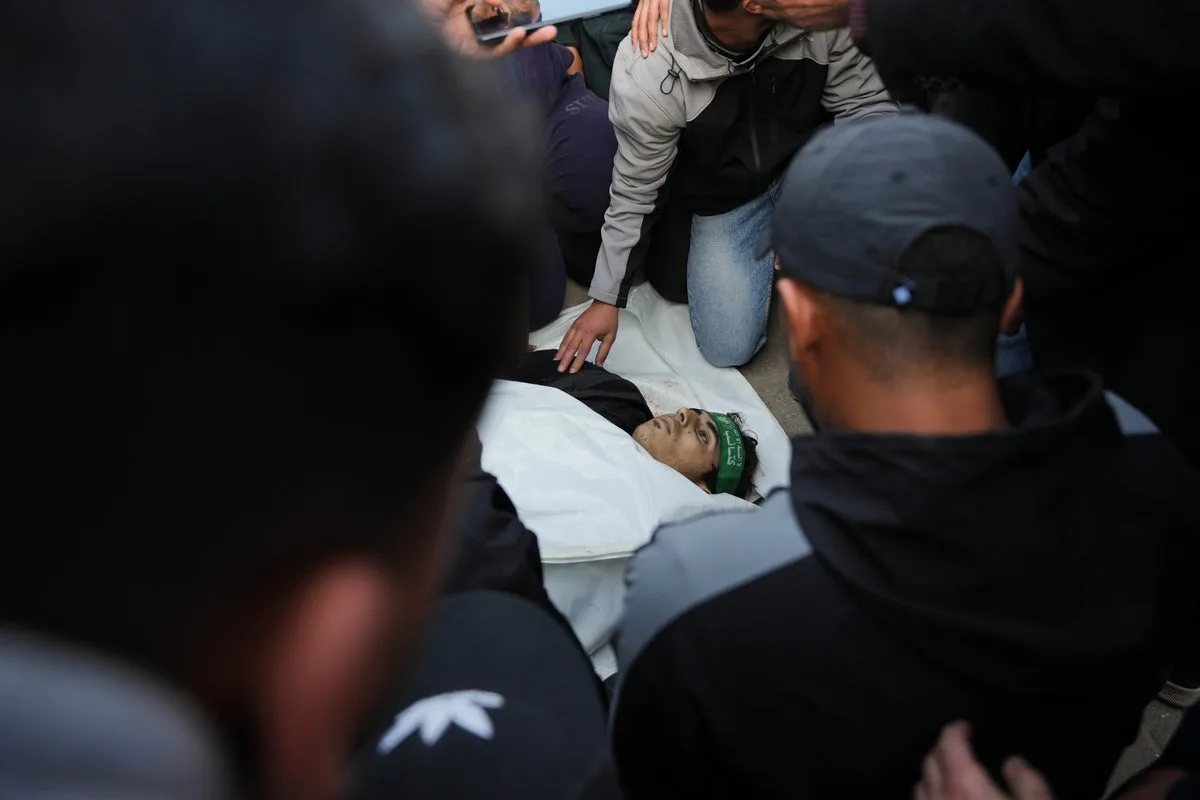
On the same day as the hospital's condemnation, at least ten Palestinians were killed by Israeli fire in the Gaza Strip, according to hospital authorities. Five men in their twenties died in an Israeli strike in eastern Khan Younis, near the Yellow Line separating Israeli-controlled areas from the rest of Gaza. Nasser Hospital received their bodies, and Associated Press footage from the morgue showed at least two wearing headbands indicating membership in the Qassam Brigades, Hamas's militant wing. In northern Gaza, a drone strike in the Falluja area of Jabaliya refugee camp killed five more people, as reported by Shifa Hospital. The Israeli military stated these strikes were responses to ceasefire violations, including militants attempting to hide in debris or cross the Yellow Line while armed.
Ongoing Conflict Despite Ceasefire
The October ceasefire deal, brokered by the United States, aimed to halt the more than two-year war between Israel and Hamas. While the most intense fighting has diminished, the ceasefire has been marred by almost daily Israeli fire. Gaza health officials, part of the Hamas-led government, report that Israeli forces have conducted repeated airstrikes and frequently fired on Palestinians near military-held zones, resulting in 601 Palestinian deaths since the ceasefire began. These casualty records are generally considered reliable by U.N. agencies and independent experts, though they do not distinguish between civilians and militants. In response, militants have carried out shooting attacks on troops, with Israel justifying its strikes as necessary countermeasures. Four Israeli soldiers have been killed in these incidents, highlighting the fragile and volatile nature of the current truce.




