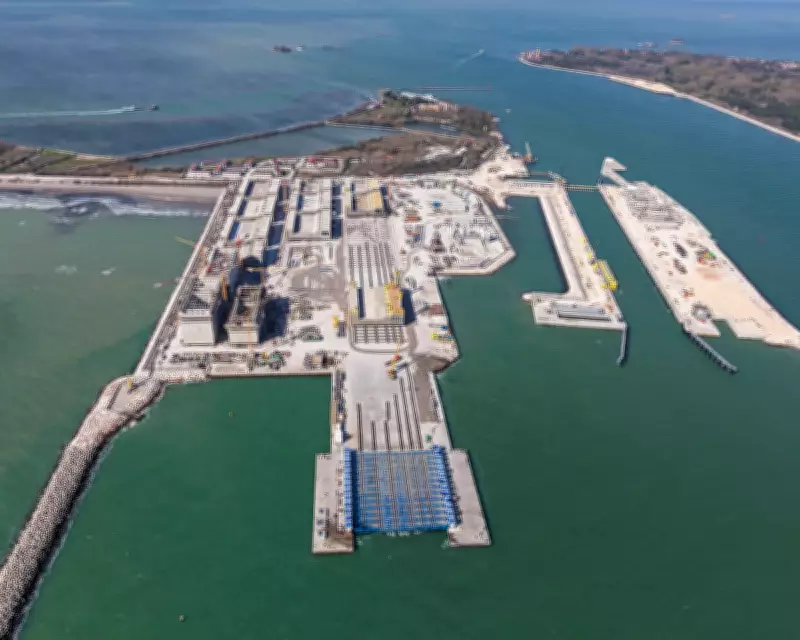
Venice's ambitious flood defence system, known as Mose, has successfully averted potential flooding on 154 separate occasions since its official launch in 2020. This experimental electromechanic module, inspired by the biblical figure who parted the seas, represents a technological marvel for a city historically plagued by devastating storm surges, locally termed 'acque alte'.
Immediate Need for a Successor
Despite its relatively brief operational period of just five years, Venetian authorities are already compelled to explore a contingency plan. The accelerating climate crisis, driving sea levels upward, necessitates more frequent deployment of the Mose barriers. This increased usage is inflicting significant harm on the delicate lagoon ecosystem.
Andrea Rinaldo, head of the scientific committee for the newly established Lagoon Authority, issues a stark warning. Projections indicate an additional metre of sea level rise by the century's end, which he describes as a 'death knell for the city'.

'With a metre more, you would have to close the Mose barriers on average 200 times a year, which means it's practically always closed,' Rinaldo explains. 'When this happens, the lagoon loses its nature of being a transitional environment. It would become a filthy pond.'
Ecological Consequences of Frequent Use
The natural tidal exchange of water and sediment between the Venice lagoon and the Adriatic Sea is vital. When the massive barriers are raised, this flow is blocked, leading to excessive algae growth. Subsequent decomposition of this algae depletes oxygen levels, resulting in the death of fish and other marine life.
Rinaldo is quick to clarify that the Mose system itself is not fundamentally flawed in design. It was conceived as a forward-looking project, but the anticipated future of severe sea level rise has arrived decades earlier than engineers predicted. He emphasises the urgency for action, stating the city and its lagoon could be lost within a timeframe comparable to the Mose's own lengthy development period.
A Long and Troubled History
The genesis of the Mose project stretches back over five decades, triggered by the catastrophic flood of November 4th, 1966. Initial concepts for flood barriers were developed in the 1970s, with construction following in the 1980s. However, bureaucratic delays and environmental concerns significantly postponed its completion.
The project was further marred by a major corruption scandal in 2014, which saw then-Mayor Giorgio Orsoni arrested. This revealed a network of cronyism and bribery that inflated the project's budget by millions. Many Venetians initially opposed Mose due to its soaring costs, environmental impact, and scepticism over its efficacy. Its subsequent success in keeping the city dry has, however, shifted public perception.
The High Cost of Operation
Operating the Mose system carries a substantial financial burden. Each activation to close the barriers costs the city upwards of €200,000. Furthermore, it halts maritime traffic through the Malamocco inlet to the Marghera port. During the 2024 Venice carnival alone, the barriers were raised 26 times in three weeks, incurring costs exceeding €5 million.
Giovanni Zarotti, the Mose technical director, notes that Venetians have grown accustomed to the protection. 'Venetians now take the Mose for granted,' he says. 'Many don't even own waders any more. Imagine, if you're six years old, you've never heard the sound of flood sirens.' The last major flood occurred in 2019, submerging 80% of the city under 187cm of water.
Envisioning Venice's Future
The search for a 'Plan B' is now a critical priority. Rinaldo advocates for a radical, multidisciplinary approach. He proposes a global call for ideas, engaging leading thinkers from fields as diverse as art, economics, history, and science. Selected expert groups would receive grants to develop proposals over a year, with the most viable concepts passed to city authorities for implementation.

Rinaldo frames Venice as a crucial test bed for future climate adaptation strategies, asserting that the challenge cannot be solved by science and engineering alone. He argues for a complete reimagining of the city, including diversifying its economy away from an over-reliance on tourism, which he views as a threat comparable to rising waters. With determined resolve, he concludes, 'Over my dead body!' would he allow the loss of this artistic jewel.