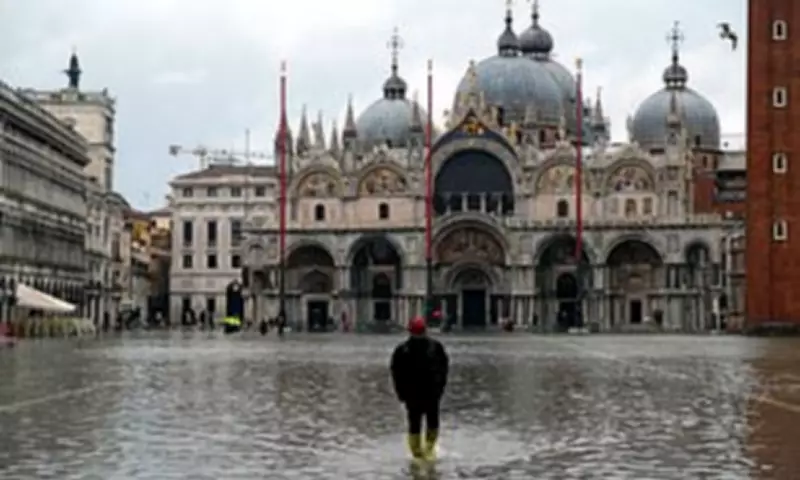
Venice, celebrated globally for its intricate canal network and iconic gondolas, confronts an existential threat from escalating sea levels. The 'Floating City', a premier tourist destination, is already vulnerable due to its sinking foundations and increasing flood events. Over the past 23 years, Venice has endured 18 extreme flooding incidents, highlighting its precarious position.
Projected Sea Level Rise and Protection Strategies
Scientific forecasts indicate that global sea levels could surge by up to seven metres within the next 300 years, with a potential 16-metre rise not excluded. In response, researchers from the University of Salento in Italy have meticulously evaluated four distinct measures to safeguard Venice from climate change impacts. Their study, published in Scientific Reports, scrutinises the cost and efficacy of each approach.
Current Defences and Their Limitations
Venice's existing flood protection system comprises three movable barriers at the lagoon's edge, designed to shield the area from high tides. However, even with enhanced pumping mechanisms to evacuate water during storms, these defences are projected to be effective only against sea level rises of approximately 1.25 metres (4.1 feet). Beyond this threshold, more radical solutions become imperative.

The Four Proposed Strategies
The research team assessed the following options:
- Implement more movable barriers: Expanding the current barrier system.
- Install ring dikes: Establishing a continuous line of flood defences.
- Close the Venetian Lagoon with a 'super levee': A permanent sealing of the lagoon.
- Relocate the city: Moving residents and historic landmarks inland.
According to the authors, dikes or lagoon closure may be requisite with a 0.5-metre sea rise, potentially occurring before 2100. Conversely, relocation could become unavoidable beyond 4.5 metres of sea level rise, anticipated after 2300.
The Case for Relocation
Relocating Venice's most historically significant sections might prove more viable than constructing additional flood defences, albeit at a staggering estimated cost of $100 billion (£87 billion). The researchers note that under extreme sea level rise scenarios, particularly with current climate policies and potential Antarctic ice-sheet collapse, 'relocation of monuments to suitable inland areas and abandonment would be the only remaining strategy, which might become unavoidable in the 22nd century.'
Historical Precedent and Practical Challenges
The study references the relocation of Egypt's Abu Simbel temples between 1964 and 1968, where structures were cut into over 1,000 blocks weighing 20–30 tonnes each and moved 65 metres higher and 200 metres inland to avoid flooding. A similar operation in Venice would be unprecedented in scale and complexity, involving dismantling buildings and reassembling them in elevated locations.
'This unprecedented and complex operation would not prevent the loss of the cultural, historical and monumental assets of the original settlement,' the team cautioned. 'The relocated monuments could be visited by tourists and new residential areas built around them. The flooded remains would progressively deteriorate and could be visited for a limited period by boat.'
Recent Flooding Events and Urgent Planning
Venice has experienced severe flooding in recent history. In 2019, Saint Mark's Square was submerged under several feet of water, with tides peaking at 187cm (6.1ft) above sea level, inundating over 80% of the city. The catastrophic 1966 flood saw water levels reach 194cm (6.4ft), severely damaging at least three-quarters of Venice's shops, businesses, and studios.
Given that large-scale interventions like permanent barriers may take 30 to 50 years to construct, early planning is critical. Co-author Professor Robert Nicholls from the University of East Anglia emphasised: 'This analysis shows that there is no optimal adaptation strategy for Venice. Any approach taken must balance multiple factors including the wellbeing and safety of Venice's residents, economic prosperity, the future of the lagoon's ecosystems, heritage preservation, and the region's traditions and culture.'

Broader Implications for Coastal Areas
The study underscores that all low-lying coastal regions must acknowledge the long-term challenge of sea level rise and commence adaptation planning immediately. As glaciers and ice sheets melt, global sea levels could rise dramatically, threatening cities worldwide from Shanghai to London, and entire nations like the Maldives.
In the UK, a rise of 6.7ft (2 metres) could submerge areas including Hull, Peterborough, Portsmouth, and parts of east London and the Thames Estuary. The potential collapse of West Antarctica's Thwaites Glacier, possibly within decades, could exacerbate these risks, submerging major cities such as New York and Sydney.
Ultimately, Venice's dilemma serves as a stark warning. The city's future hinges on balancing immediate protection measures with long-term strategies, with relocation looming as a costly but potentially inevitable solution to preserve its irreplaceable heritage against the relentless advance of the seas.