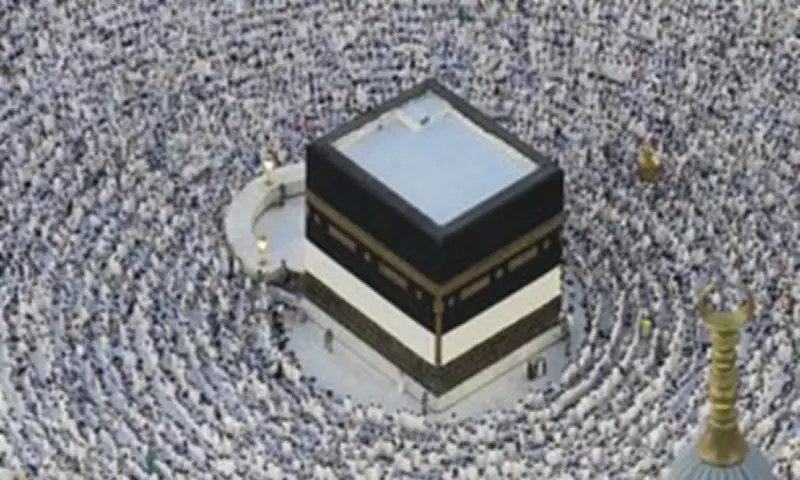
It is the largest religious gathering in the world, but the Hajj pilgrimage is becoming increasingly dangerous, a new study has warned. Experts from the European Geosciences Union say that climate change is creating serious and growing risks for the millions who attend the event in Mecca every year.
Study Findings from the 2024 Hajj
In their study, the researchers analysed the conditions during the 2024 pilgrimage. Their results revealed how attendees faced extreme heat and humidity that exceeded survivability thresholds, even for young, healthy adults. Over the five-day event, approximately 1,300 fatalities were reported amid the extreme heat, which reached over 50°C.
"On June 17, 2024, the combined effect of heat and humidity breached the survivability threshold for even young, healthy adults for approximately four consecutive hours," explained researcher Atta Ullah. "During this period, the human body cannot maintain a safe core temperature through sweating alone, making unshaded outdoor exposure life-threatening."

Rituals Under Threat
Hajj, also known as the Muslim Pilgrimage, is one of the five pillars of Islam and is mandatory for every Muslim who is physically and financially able to perform it at least once in their lifetime. Each year, millions travel to Mecca for the five-day event, which includes a sequence of rituals, most of which take place outdoors. This includes circling the Kaaba, walking between Safa and Marwa, standing in prayer at Mount Arafat, spending nights in Mina and Muzdalifah, and the stoning of the devil, known as Rami al-Jamarat.
In their new study, the researchers set out to understand the impact global warming is having on the pilgrimage. The team analysed the 2024 Hajj and found that the human survivability limits were exceeded for several hours on each day of the pilgrimage. Temperatures hit a staggering 51.8°C (125°F) at the Grand Mosque in Mecca, according to the Saudi national meteorology centre.
In particular, the Day of Arafat was found to be the highest-risk ritual. During this event, participants spend the entire day outdoors on an open plain, with little to no shade to protect them from the blazing sun.
Adaptations and Future Risks
Several adaptations have already been made to try to protect pilgrims. For example, the performance of Sa'i has been moved indoors, while more permanent shelters and structures have been built in Mina. However, these may not be enough to protect people as temperatures continue to rise, the researchers warn. They said: "Adaptation measures can reduce some of the danger, but they cannot fully eliminate the threat if warming continues."
The Islamic calendar operates on the lunar cycle, so it shifts forward approximately 11–12 days each year, compared to the Gregorian calendar. Looking ahead, the pilgrimage will occur during relatively cooler seasons for the next 20 to 30 years. However, from around 2050, it will move back to hotter periods, making future pilgrimages more dangerous.
"Climate change is no longer only an environmental issue: It is now affecting religious practice, human health, and mass gatherings on a global scale," the researchers added. "For Hajj, one of the most sacred and physically demanding journeys in the world, the threat is immediate, severe, and growing."