Iran has established a government agency to vet and tax vessels seeking passage through the strategically vital Strait of Hormuz, a shipping data company reported on Thursday, as Tehran announced it was reviewing the latest U.S. proposals to end the ongoing conflict.
New Iranian Agency Formalizes Control
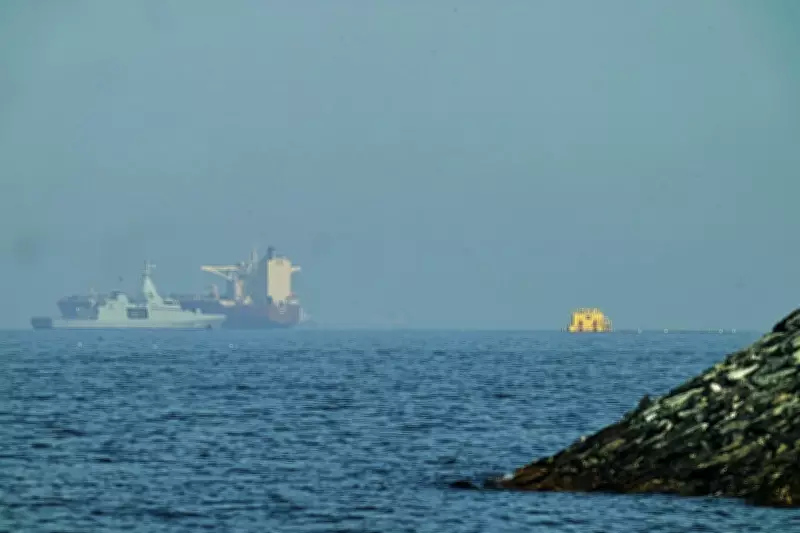
The Iranian effort to formalize control over the waterway has raised fresh concerns about international shipping, with hundreds of commercial vessels currently trapped in the Persian Gulf and unable to access the open sea. Despite this, hopes that the two-month conflict could soon conclude buoyed international markets.
Shipping data firm Lloyd’s List Intelligence reported that Iran has established a new government agency called the Persian Gulf Strait Authority, which is positioning itself as the sole authority to grant permission for ships transiting the strait. The agency reportedly emailed an application form to Lloyd’s for vessels seeking passage.

Iran has effectively closed the strait, a critical route for oil, gas, fertilizer, and other petroleum product shipments, while the U.S. maintains a blockade on Iranian ports. These disruptions have caused fuel prices to skyrocket and rattled the global economy. The new agency formalizes an existing but murky vetting process that guides vessels through the strait’s northern waters near the Iranian coastline, with Iran controlling which ships pass and imposing taxes on some cargoes.
Maritime law experts assert that Iran’s demands to vet or tax vessels violate international law, particularly the United Nations Law of the Sea treaty, which requires countries to permit peaceful passage through their territorial waters.
Diplomatic Developments
U.S. Secretary of State Marco Rubio discussed Middle East peace efforts at the Vatican with Pope Leo XIV, whose opposition to the Iran war has led to open disagreements with President Donald Trump. The Trump administration has sent mixed signals regarding its strategy to end the war. A fragile ceasefire and previous declarations that military operations were over have given way to new threats of bombing if Tehran does not accept a deal allowing for the resumption of oil and natural gas shipments disrupted by the conflict.
Trump also suspended a U.S. military effort to open a safe passage for commercial ships through the strait, stating the pause would allow more time to reach a peace agreement. An official in Saudi Arabia confirmed on Thursday that the kingdom, a U.S. ally, refused to support Trump’s attempt to reopen the strait by force.
The ceasefire between the U.S. and Iran has largely held since April 8, but in-person talks hosted by Pakistan last month failed to reach an agreement. The war began on February 28, when the U.S. and Israel launched strikes against Iran.
Pakistan’s Role in Mediation
Pakistani Foreign Ministry spokesperson Tahir Andrabi expressed optimism on Thursday, stating, “We expect an agreement sooner rather than later. We hope the parties will reach a peaceful and sustainable solution that will contribute not only to peace in our region but to international peace as well.” However, he declined to provide a timeline or disclose details of ongoing diplomatic efforts. Pakistani Prime Minister Shehbaz Sharif, in televised remarks, said Islamabad remains in continuous contact with both Iran and the United States day and night to stop the war and extend the ceasefire.
Iran’s Internal Dynamics
Top Iranian officials have indicated that Supreme Leader Mojtaba Khamenei is playing a key role in overseeing negotiations with the U.S. However, he remains in hiding and has not appeared publicly since being wounded early in the war. Iranian President Masoud Pezeshkian reported meeting recently with Khamenei for over two hours, praising the supreme leader’s sincere behavior during the lengthy in-person meeting. Khamenei has only released written statements since being named supreme leader in March, succeeding his father, Ayatollah Ali Khamenei, who was killed in the initial strikes.

Trump’s Assessment
President Trump insisted on Wednesday, “We’re dealing with people that want to make a deal very much, and we’ll see whether or not they can make a deal that’s satisfactory to us.” Meanwhile, Iranian Foreign Ministry spokesman Esmaeil Baghaei told state TV on Wednesday that Tehran was still examining the latest U.S. proposal. Baghaei said Iran had strongly rejected proposals reported by Axios, which included a moratorium on Iranian uranium enrichment, lifting of U.S. sanctions, distribution of frozen Iranian funds, and opening the strait for ships.
Saudi Arabia’s Stance
A Saudi official, speaking on condition of anonymity, revealed that Trump did not consult with Saudi Arabia before launching the short-lived effort to force open a shipping passage through the strait. The official stated, “We told them that we are not part of this and that they can’t use our territories and bases for this.” Saudi Arabia sent a message to Iran confirming the kingdom would not be involved in U.S. attacks related to Trump’s attempt to reopen the strait.
Trump suspended the effort, dubbed Project Freedom, during its second day on Tuesday. Only two American-flagged merchant ships are known to have passed through the U.S.-guarded route. The U.S. military reported sinking six Iranian small boats that threatened civilian ships. On Thursday, the price of Brent crude oil fell to around $97, down from over $115 earlier this week.