Netflix Writers Admit Creating Shows for Doomscrolling Viewers
Netflix Creates Shows for Doomscrolling Viewers

In a revealing admission that captures our modern media landscape, Netflix writers have confirmed they are actively designing television shows to appeal to viewers who cannot put their smartphones down. This strategic shift responds directly to the age of 'doomscrolling,' where audience attention is a fragmented commodity.

The 'Dumbing Down' of Narrative Complexity

According to reports, this new approach involves a conscious simplification of storytelling. Writers are reportedly instructed to craft simpler plot lines and incorporate regular recaps of ongoing events. This ensures that absent-minded viewers, who may have the programme on in the background, can easily follow the action. A directive from The Guardian suggests that writers are even told to have characters explicitly announce their actions.

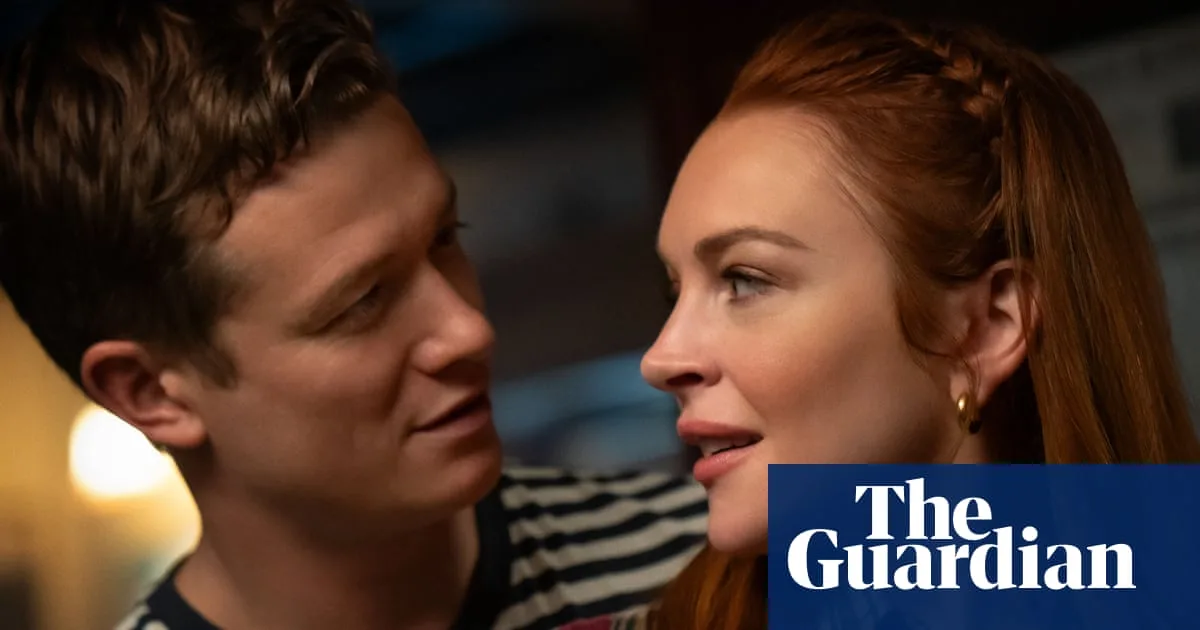
This phenomenon is not merely theoretical. A prime example cited is the 2024 romantic comedy Irish Wish, starring Lindsay Lohan. In one scene, Lohan's dialogue deliberately summarises the plot for any distracted viewers: 'We spent a day together,' she tells her love interest, played by Ed Speleers. 'I admit it was a beautiful day filled with dramatic vistas and romantic rain, but that doesn't give you the right to question my life choices. Tomorrow, I'm marrying Paul Kennedy.'

Another instance comes from the Netflix film A Castle For Christmas (2021). Despite the main character's name, Sophie Brown, being established early on, the script needlessly repeats it. Onlookers question if 'Sophie Brown the writer' has arrived, and just three lines later, she reiterates her name while checking into a hotel—a redundancy seemingly designed for viewers distracted by their festive scrolling.

The Industry's 'Second Screen' Mandate

The pressure to cater to this distracted audience is immense. Justine Bateman, a writer from Family Ties, claimed in The Hollywood Reporter that showrunners are frequently given the note: 'This isn't second screen enough.' This means the content cannot be easily consumed as background noise while a viewer is engrossed in their social media feed.

Bateman argues that this demand inherently stifles creativity, preventing writers from producing their best work because they are forced to write for a perpetually divided attention span. However, not all industry professionals view the trend in such a negative light.

Joe Barton, writer of Black Doves, offered a more nuanced perspective to The Guardian, stating, 'I would be surprised if any exec was basically like, "Write this badly." I don't think there's a sort of homogenised Netflix. It's a huge company with many different departments.'

James Hamilton, writer of Dogs in Space, added, 'I think it's okay to be mindful of how social media has mashed everyone's attention spans to a pulp.' He acknowledged that most people find it hard to put their phones down but expressed concern if executives were actively encouraging audiences to pay less attention.

The Psychological Cost and a Search for Solutions

Entertainment writer Ryan Broderick likened immersive television viewing to reading a novel, suggesting it's impossible to fully appreciate complex series like The Sopranos or The Wire while simultaneously scrolling through TikTok.

Psychotherapist Dr Nicole Gehl provided a deeper psychological analysis, telling the Daily Mail: 'Many people use television as a sedative for emotions they don't want to face. It looks like relaxation, but it's often avoidance.' She reframed the 'dumbing down' of TV, explaining, 'It isn't just about intelligence. It's about emotional reduction - turning complex feelings into punchlines or plot devices.' Her solution is to watch with intention, much like we consciously choose other aspects affecting our wellbeing.

Tech expert Andrew Smith from Click Consultant explained the mechanics behind our distraction. 'Social media is addictive because it's made up of instant rewards, such as comments, likes, and endless scrolling,' he said. 'They trigger dopamine hits in the brain... making it hard to stop.' He further noted that AI-generated content, or 'AI slop,' exacerbates the problem by flooding feeds with shallow information, training our brains for fast, low-quality stimulation.

For those seeking a fuller experience, the answer may lie in disconnection. The article's author shares a personal strategy of using flight mode on devices while writing and a plan to purchase a 'dumb' phone to 'go analogue.' They note that the only place they feel fully immersed in a film is at the cinema, where second screens are discouraged. The piece concludes with a compelling thought: Perhaps viewers will be rewarded with better, richer content if they can manage to pry their hands away from their smartphones.