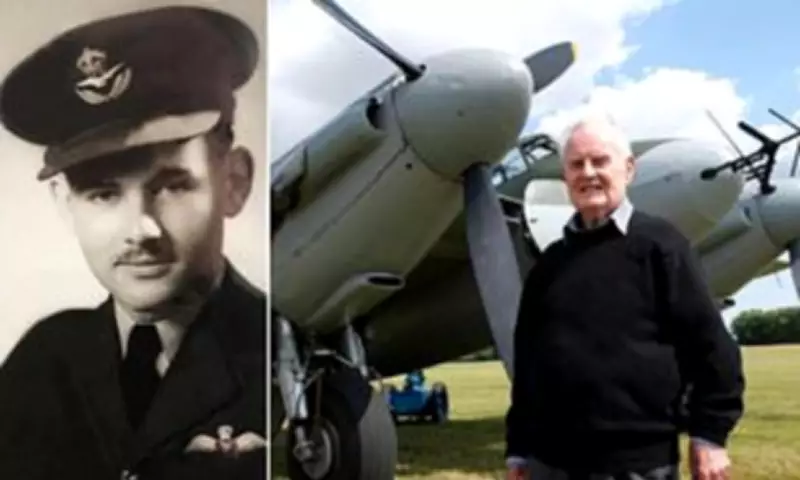
One of the last surviving members of Bomber Command has shared his remarkable wartime story for the first time at the impressive age of 104. Former pilot Colin Bell recounts in a newly published memoir how his station commander defiantly refused to ground his squadron of Mosquito fighter-bomber aircraft, despite urgent warnings from the manufacturer about a critical engine fault that required immediate fixing.
Stark Reality of Wartime Service
When questioned about the potential consequences if the Rolls-Royce Merlin engines failed during take-off, the commander responded with chilling bluntness: ‘You die like an officer and a gentleman.’ This stark statement underscores the immense risks faced by air crews during the Second World War, highlighting the daily peril they endured on every mission.
Personal Preparations for Survival
Mr Bell also discloses a personal survival strategy that diverged from typical wartime mascots. Rather than carrying a teddy bear for luck on his perilous bombing raids over Nazi Germany, he opted for a Smith & Wesson revolver loaded with 20 rounds of ammunition. This was a precautionary measure in case he was shot down behind enemy lines.

In his memoir, serialised today in the Daily Mail, he writes: ‘At this time, Hitler and Goebbels were actively encouraging the German population to lynch downed airmen. My intention, if captured, was to shoot at least half a dozen members of any approaching mob before taking my own life.’ This revelation paints a vivid picture of the extreme dangers and psychological pressures faced by Bomber Command personnel.
Bravery and Loss Among Comrades
The modest war hero’s account captures the incredible bravery of the air crews who confronted unimaginable danger with each mission. During his service with 608 Squadron, based at RAF Downham Market in Norfolk, Mr Bell shared a mess with approximately 30 pilots and navigators. Tragically, by the time he departed after six months, 13 of these comrades had lost their lives, illustrating the high casualty rates within Bomber Command.
His final raid occurred over Berlin in March 1945, just before his 24th birthday. In a poignant twist of fate, two days later, the very Mosquito aircraft he had piloted was shot down, resulting in the deaths of both crew members. This incident underscores the narrow margins between survival and tragedy in wartime aviation.
Addressing Historical Controversies
Mr Bell, who will celebrate his 105th birthday next week, also tackles recent criticisms of Bomber Command’s devastating attacks on German cities, such as Dresden, which affected civilian populations alongside military targets. He reflects thoughtfully on the moral complexities of wartime strategies.
He writes: ‘There is certainly an argument to be had about this, but I often wonder how that argument would unfold if we had lost the war. People might be expressing reservations about living as slave labourers under a Nazi regime, with concentration camps established in every city for its opponents.’
‘So, when people ask, “What about Dresden?” I reply that Dresden was indeed horrific. But so too was the blitzing of London, Coventry, Plymouth, Exeter, Liverpool, and Southampton, to name but a few.’ This perspective adds depth to ongoing debates about the ethics of aerial bombardment during conflicts.
Legacy and Publication
Colin Bell’s memoir, titled Bloody Dangerous, is set to be published by Abacus on March 5. His firsthand account not only preserves a vital piece of history but also honors the sacrifices and courage of those who served in Bomber Command, ensuring their stories are remembered for generations to come.