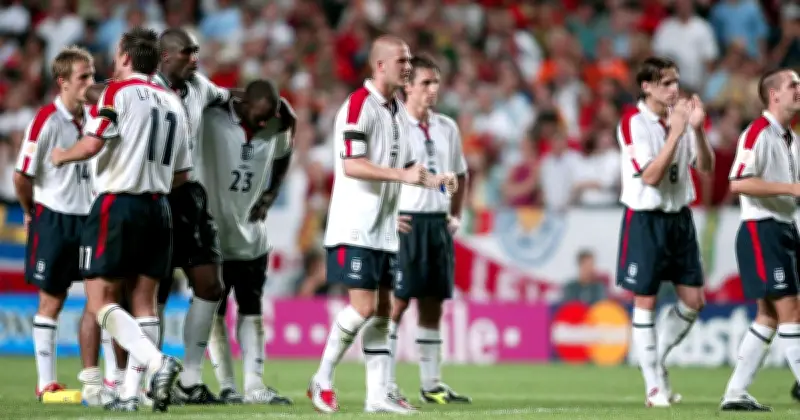
Former England and Manchester United defender Rio Ferdinand has opened up about the emotional devastation he suffered after being banned from football for eight months in 2004. The ban, imposed for missing a drugs test, left him in tears as he watched his teammates compete for club and country.
Eight-Month Suspension and Fine
Ferdinand was handed an eight-month suspension and fined £50,000 in 2004 after failing to attend a drugs test at Manchester United's Carrington training ground in September 2003. The punishment ruled him out of the second half of the Premier League season and Euro 2004, where England were eliminated on penalties by Portugal in the quarter-finals.
Speaking on the BBC's The Real Story in 2004, Ferdinand said: "I love playing for England, I love playing for my club. My club means so much to me. I go out there and play for the fans and for my family and for myself and to have that taken away from me in such a way was disheartening and something that really did shock me. I'm man enough to admit that I did cry."
Impact on Career
At the time, Ferdinand was one of the world's top centre-backs. He had joined Manchester United from Leeds United in 2002 for a then-British record £30 million, becoming the world's most expensive defender. The ban not only affected his club career but also halted his international progress just as he was becoming a regular under manager Sven-Goran Eriksson. Ferdinand went on to earn 81 caps for England.
Ferdinand's Defense
Ferdinand has always maintained his innocence, insisting he simply forgot about the test after leaving training. He said he was reminded twice that testers were waiting but only realized his mistake after driving away to go shopping. Upon realizing, he contacted officials at Manchester United and the Football Association to rectify the situation.
"I made a conscious decision to phone the FA," Ferdinand explained. "I had done my utmost to try and rectify the position that I was in at the time and to rectify the mistake I'd made, but there was no safety net there for me to go back and do the test. A person that is trying to get away from doing a test for some reason doesn't make attempts to phone back the club doctors and the FA to rectify his position."
Ferdinand also noted that he later took a voluntary drug test, which he passed, and offered to undergo a hair follicle test. Despite his efforts, the FA rejected his appeal and upheld the eight-month suspension, one of the longest in English football history.