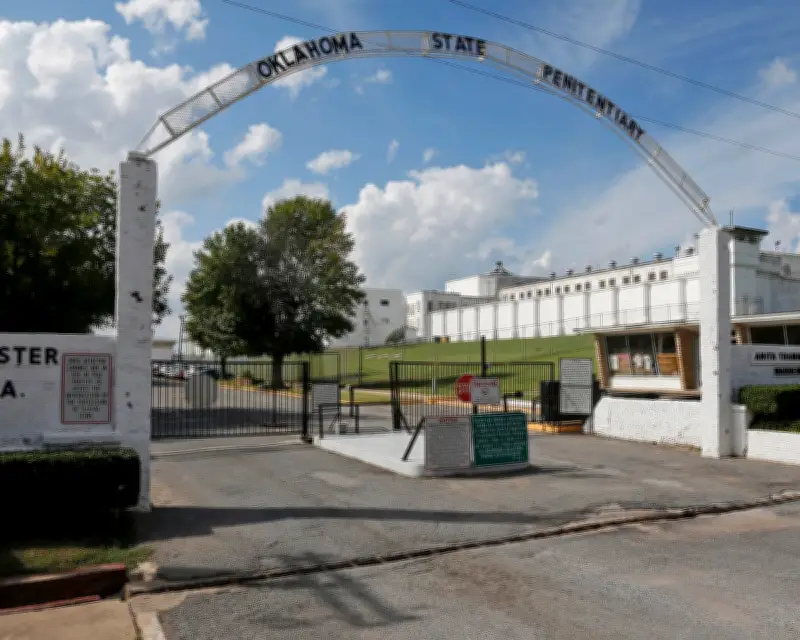
The Oklahoma state penitentiary has come under fire for allegedly incarcerating individuals in an underground "dungeon" characterized by vermin, squalor, and a complete absence of natural light. This revelation follows the release of prisoners' letters to The Guardian.
Conditions in H Unit
The prison, located near the rural town of McAlester, contains a section known as H Unit. This area features a series of windowless cells built banked into the earth, which prisoners refer to as the "tombs." According to the letters, inmates endure vermin infestations, unsanitary conditions, and physical and sexual violence.
Edward Sparks III, a 24-year-old prisoner, wrote: "They [prisoners] may be getting beat or raped and the staff just walk on by. I've heard men scream and yell and seen them pulled out of cells with blood and waste running down their leg from sexual assault." Another anonymous inmate stated: "The [food] trays are kicked in by the guards through human waste. I went 50 days without a shower, and it was dark 75% of the time as the power was blown off."
Psychological Impact
Tremane Wood, 47, who was on death row in H Unit until his sentence was commuted, described the experience: "You end up losing track of days and nights and what day it is … It's a real form of psychological torture that some people never come back from." Dr. Sondra Crosby, an expert in torture survivors and a public health professor at Boston University, emphasized that the lack of sunlight constitutes "a form of cruel, inhuman, and degrading treatment and torture." She noted that sunlight deprivation leads to mood disorders, depression, spatial disorientation, and increased risks of chronic disease and mortality.
Legal and Institutional Response
Randy Bauman of the ACLU of Oklahoma commented: "The lack of access to sunlight and the outdoors exacerbates the mental health harms of solitary confinement." The ACLU had threatened to sue the Oklahoma state penitentiary in 2019 over conditions in H Unit, prompting the prison to move many death row inmates out of the unit. However, there is no national database tracking prisons that use buried or partially buried facilities, and such practices remain rare.
The Oklahoma Department of Corrections dismissed the allegations as inaccurate, stating: "The Oklahoma Department of Corrections follows all state and federal laws when housing and caring for inmates. ODOC takes all conditions within its facilities very seriously, as we do the safety and security of both inmates and staff. Maintenance-related issues are addressed as soon as they are identified to ensure facilities remain safe and operational."