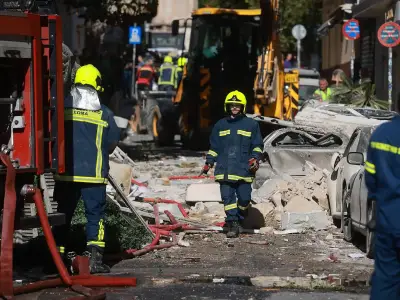
When a 3,300lb bomb exploded in Manchester city centre on the morning of June 15, 1996, Steve Cope felt the full force of the blast. He was standing with friends in the cosmetics department on the ground floor of Debenhams when the device detonated at 11.17am. It was a moment that changed his life.
He had been late for work that morning after a few beers the night before and had hurried past the van containing the bomb as it was being ticketed by a parking warden on Corporation Street. At around 10am, word came that there was a suspected explosive device in the city centre. But despite a city-wide evacuation, staff at Debenhams were told to remain open.
"The skies went dark," says Steve, now 50. "The bottom of Market Street just disappeared. After the bang there was a second or two of complete silence. I was put on my arse and in that second or two I thought I was dead. Then you heard the alarms, the sirens and the screams."
Steve has been talking to Damon Wilkinson about that moment and the difficult hours, days and years that followed. He spent years struggling with PTSD and anxiety but failed to get any kind of support or treatment. Although more than 200 people were injured in the blast, mostly from falling debris, remarkably no one was killed. "I know we were so lucky it didn't kill anyone," says Steve. "People talk about it being a great thing for Manchester, but it wasn't for me and the other poor b******* who were there. I live with it every day."
Samantha Shaw's Experience
Damon has also spoken to Samantha Shaw, who describes the explosion as a 'sliding doors' moment. She was working overtime in a second-floor office of the Halifax bank on Cross Street when the bomb went off just 200 yards away. "We'd been left in the building by mistake," she says. "We were in an L-shaped office and were sat round the corner. When they did the security check they just looked through the window and didn't see us. So the first I knew about it was when the bomb went off."
Police Constable Lee Cullen's Account
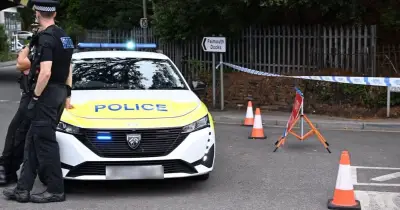
Lee Cullen had slightly more warning. As he stood at the hastily erected cordon close to Victoria Station, the then 29-year-old police constable was warned to expect a 'bang'. Seconds later the 3,300lb device went off. "It was just an incredible explosion of power," he tells Damon. "The shockwave was instantaneous. It came all the way down Corporation Street. All the windows were going in. Glass was just spraying onto the road. The immediate aftermath was something I could never get out of my mind. People were running, screaming, children absolutely distraught. I was thinking, 'My God, did that really happen?' And then the radio just filled up with frantic shouts for help."
Manchester's Rebirth from the Ashes
Manchester city centre has changed beyond recognition from the town that stood before the 1996 bombing. Three decades later, the remarkable renaissance is still ongoing. Within a week of that terrible day, which left large parts of the city centre in ruins, political and business leaders had already begun to plan its rise from the rubble. Damon has spoken to former council leader Richard Leese, who says planners decided 'fairly quickly' that 'we were not just going to rebuild in the same way'. "This was an opportunity to do something about the past mistakes in the 60s and 70s," he says. "There was a feeling that we were not going to be beaten that permeated the entire population."
Marking the Moment
A service at Manchester Cathedral this evening marked the 30th anniversary. A survivor of the bombing fought back tears as he recounted his experience at the special church service, held just a few hundred yards from the scene of the blast on Corporation Street. Reporter Chris Slater was there and filed a report from the event.
Troubles Pension Scheme
Victims of the bombing are being urged to apply to a pension scheme for those left permanently disabled from an incident in Northern Ireland's troubled past. Applications to the Troubles Permanent Disablement Payment Scheme will close in August. The Victims' Payments Board is keen to reach those who suffered a permanent disablement, either physical or psychological, as a result of a Troubles-related injury, and may now live in England, Scotland or Wales. They include those caught up in the June 15, 1996 attack on Manchester city centre which injured more than 220 people. The scheme has paid out more than £123 million to victims to date.