
New Transport Deputy Minister Mark Hooper Aims to Accelerate Wales's Mobility
New Man in the Driving Seat Looks to Get Wales Moving
In a wide-ranging interview with WalesOnline, Mark Hooper gives his take on a number of transport projects around Wales.
They say a week is a long time in politics, but how about four weeks? That is how long the man in charge of transport in Wales has been in his new job. If he did not know it already, the last month or so since the Senedd election has proved just how much there is to do to get the country moving faster. Hardly a day goes by without complaints about closures and traffic congestion on the M4 or while trying to cross the Menai Strait in north Wales, or delays on Wales's much maligned rail network.
Who Is the New Man in One of the Hottest Seats in Wales?
Mark Hooper, appointed deputy minister for transport on May 13, was elected as a Member of the Senedd for the Pen-y-bont Bro Morgannwg constituency. Before that he was a town and county councillor, having joined Plaid Cymru in 2016.
Transport has been something of a political hot potato in Wales in recent years, from 20mph zones to HS2 rows, from Brynglas Tunnel-shaped dilemmas to day-long quests to get home by rail - there is something for everyone to moan about when it comes to fixing transport in this country.
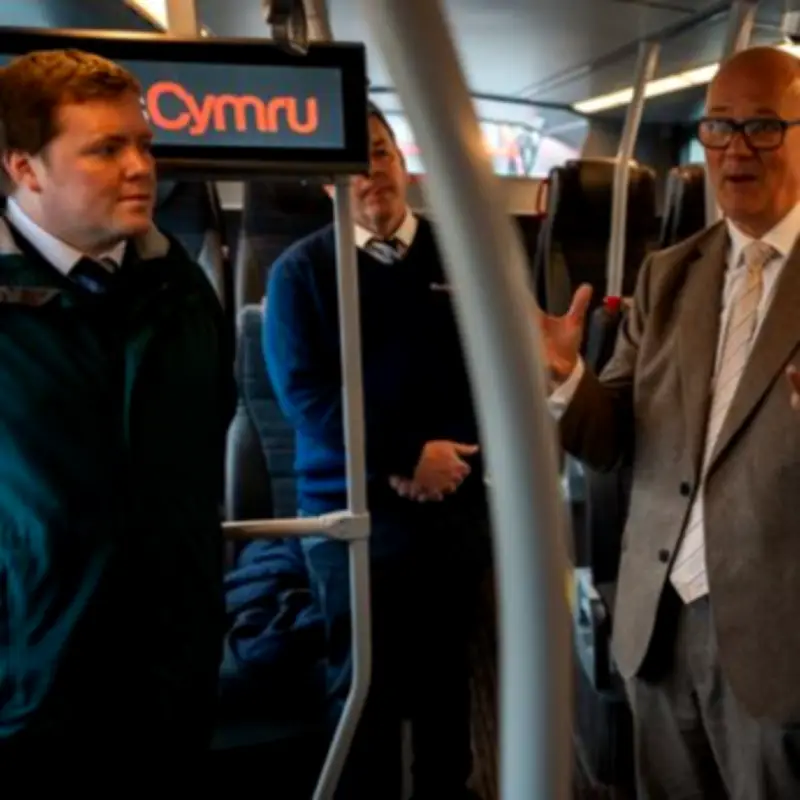
"It is a really challenging opportunity," said Mr Hooper, speaking on a train during a whistle-stop tour of south and mid Wales this week. "The last 20-odd days have been really interesting. The most important thing is to recognise that what we do can make a difference in the long-term. I make sure I engage across the Senedd so that we can collectively approach these challenges. Politicians and policymakers need to focus more on what Wales needs."
A Fresh Approach to Transport Policy
The Welsh Government has in the past put a stop on all new road projects while it carried out a review. That was rolled back in 2024 after Mark Drakeford stepped down as First Minister, and the new transport minister is open to whatever gets Wales moving, including new roads.
"All solutions will be considered, and every issue will be judged on its own merits," said Mr Hooper. "But data and evidence is what we want to focus on."
One daily burning issue for thousands of motorists is the congestion on the M4 in south east Wales, a section Mr Hooper has described as "one of the most constrained and heavily used transport corridors in Wales." He added: "While a range of interventions has been considered over many years, no single solution will fully resolve these pressures. Incremental improvements alone have had limited impact, and the corridor continues to operate beyond capacity, particularly at peak times. Communities and businesses have lived with congestion, uncertainty and delay for too long, while previous governments - on both sides of the border - have failed to turn debate into delivery."
No to the Black Route, Yes to Realistic Options
The deputy transport minister has ruled out reopening the can of worms that was 'the Black Route' - a much-discussed 14 mile six-lane stretch of motorway south of Newport that would cost more than £1.5bn to construct. Rather, this week Mr Hooper announced a "short, focused programme of work to explore realistic options across road, rail and bus interventions," including "targeted measures to improve flow and resilience on the existing road network" and "better integration between strategic and local transport systems."
A detailed plan of these "realistic options" is expected to be laid bare in the Senedd this autumn.
One of those options is the acceleration of "public transport alternatives" so that more and more people can be enticed from behind the wheel of their cars and onto the seats of trains or buses. That could be easier said than done. Just last week Great Western Railway opposed Transport for Wales's plans to run more train services from Wales to Bristol because the proposals would have a "significant effect" on the former's revenue.
"I am really keen to have a conversation with Heidi Alexander (The UK's secretary of state for transport)," said Mr Hooper. "I want to get things done from a Welsh point of view."
When asked if he is already finding the job of deputy transport minister frustrating due to the obstacles in his way, he is keen to stress: "I am not frustrated. I am looking forward to having a continued conversation with the UK Government. Wales has changed (on the back of the Senedd election) and the UK Government needs to recognise that. I am arguing on behalf of three million people. I am focusing on the stuff that is most acute at the moment: The Menai Strait, congestion around the Brynglas Tunnels - they are examples of what we need to address. How we build up a transport system for Wales requires a long-term plan. I want people's journeys to be better and easier and I think public transport is the answer."
Public Transport Can Work, Says Hooper
Despite coming in for some heavy criticism in recent years, public transport in Wales can and does work, stressed Mr Hooper. "Today (Thursday) I have been on the trains all day," he said. "This is my fourth train, I have taken two buses, and everything has been on time. I wanted to prove that these things can work. But we need to make it more consistent, and I am committed to being the transport minister for the whole of Wales, and where there are problems I will be making sure they are top of my priority list."
Menai Crossings: A Persistent Problem
One of those priorities has to be the ongoing issue of trying to cross the Menai Strait. Work on the Menai Suspension Bridge will now extend until spring 2027 after further setbacks. It was shut abruptly in October 2022 due to safety concerns, and while a huge amount of work has already been carried out - including the replacement of all 168 hangers - the bridge is still the subject of weight restrictions and has been beset by problems. Recently the bridge was forced to shut on three occasions in just two days.
The nearby Britannia Bridge - the only alternative route if you want to drive to Anglesey - is frequently impacted by lane closures, full road closures or speed restrictions due to high winds. The woes of the two bridges combine to make the short journey to and from Anglesey something of a nightmare for many. A third crossing has been discussed for some time, and the hope remains that such a structure can be built in the future to alleviate the pressures on the existing routes.
Mr Hooper said this week: "The Menai crossings operate as a system. Britannia Bridge carries most traffic but is vulnerable to high winds, while the Menai Suspension Bridge has lower capacity and requires ongoing maintenance. When one crossing is restricted, the impact is felt immediately across the region. We are progressing recommendations from the North Wales Transport Commission. This includes proposals for wind deflectors on Britannia Bridge to reduce weather-related disruption, alongside broader work to improve how the two crossings operate together during periods of pressure. We are also progressing options to improve traffic management on the A55, including signalling upgrades and variable speed limits on Britannia Bridge, so that disruption can be managed more effectively when restrictions are required on either crossing. Looking at the longer term, we will now start looking at detailed options for a third Menai Crossing, building on the work already undertaken."
Investment in New Buses
As mentioned, Mr Hooper used a lot of public transport on Thursday as he headed to Aberystwyth to support the launch of 30 new TrawsCymru buses which the Welsh Government says represents a "significant investment in sustainable, inclusive transport for communities across Wales helping to improve connectivity between towns and rural areas." Wales currently has the oldest fleet of buses in the UK, so the hope is that the investment in new vehicles is just the start of what will be an ongoing improvement in the country's public transport infrastructure.
"Transport plays a key role in supporting economic growth by helping people access work, education, and other services," said Mr Hooper. "Simplified fares, more frequent services, connectivity with other bus services and newer vehicles are all part of this service. I am really excited to be building on Wales's existing transport connections with a fleet of new, modern, accessible vehicles designed for comfort and sustainability and I look forward to seeing Welsh communities benefit from these enhanced services."
A Big Few Years Ahead
It is a big few years ahead for Wales's new transport boss. There is a lot to do to get Wales moving in the way that he wants it to, but it is clear he has a real passion for his new role. "I am really grateful for the opportunity to do this job," he said. "I have already got my teeth stuck in and the key now is to start moving forward."




