Nashville's Historic Acme Feed & Seed Faces Demolition Threat After Property Tax Skyrockets
An iconic Nashville music venue and restaurant, celebrated for preserving the city's authentic character, now confronts potential destruction following a staggering 365% increase in property taxes. The Acme Feed and Seed, a beloved fixture in downtown Nashville since its revival in 2014, may be forced to close its doors permanently if city officials fail to intervene.
From Seed Store to Music Hub: A Storied History
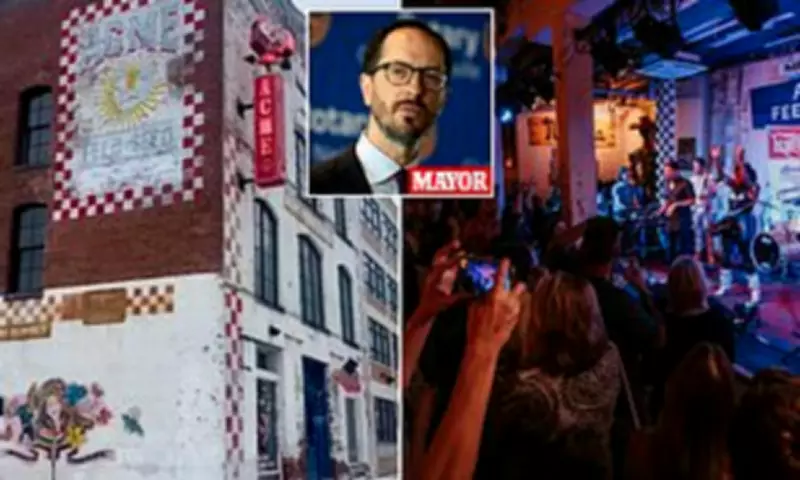
The building at 101 Broadway was originally constructed in 1890 by JR Whitemore as a grocery store. It first opened as Acme Feed & Seed in 1943, operating continuously for 56 years before closing in 1999. After sitting vacant for 15 years, local entrepreneur Tom Morales spearheaded a meticulous restoration project, reopening the historic four-story brick structure in 2014 as a vibrant live music venue and restaurant.
Today, Acme Feed and Seed stands as one of the last authentic remnants of old Nashville, offering a rooftop bar, dance lessons, and a steadfast commitment to showcasing original local artists rather than cover bands. The venue also houses Acme Radio Live, dedicated to promoting Nashville's music scene, and maintains remarkably affordable pricing with $3 beers, $5 frosés, and $6 shots—consciously avoiding tourist trap pricing.

'Punitive' Tax Hike Threatens Survival
The crisis emerged when the property's annual tax bill ballooned from $129,000 to $600,000. 'That’s more than our rent and net profit combined,' Morales revealed to Fox 17 Nashville. 'We can’t pay it. It's punitive,' he added, emphasising the impossibility of sustaining operations under such financial strain.
Morales has repeatedly requested a meeting with Mayor Freddie O'Connell to discuss potential relief measures, but has received no response. The mayor publicly stated that it wasn't 'up to me whether he keeps that business open,' adding, 'The market evolves. New businesses start, even as beloved old businesses close.'
Political Backlash and Cultural Concerns
The mayor's comments have sparked significant criticism, particularly from Councilman Jacob Kupin, whose district includes downtown Nashville. 'To hear the mayor... flippantly disregard the concerns is disappointing and appalling,' Kupin told the Daily Mail. He argued that O'Connell's stance signals a disregard for Nashville's cultural foundation, noting, 'To hear him say that he is not responsible for a business keeping their doors open... tells Nashvillians that he doesn’t care about our culture.'
Kupin, who is collaborating with state lawmakers to identify tax relief options for businesses, warned, 'We must do something before it is too late. We can’t lose what has made Nashville the "it" city so many want to come to.'
A Fight for Authenticity in Music City
Morales, who has spent 40 years contributing to Nashville's landscape—including saving landmarks like the Loveless Cafe and Woolworth Building—expressed profound frustration. 'I’ve spent 40 years doing something for this city, and I can't even get a meeting,' he lamented.
He emphasised that Acme represents the genuine Nashville experience tourists seek, contrasting it with artificial alternatives. 'The way we survive as a city is embracing what is authentic,' Morales asserted. 'Tourists see through make-believe. There are towns across America that wish they were Music City—and we're trying to be Las Vegas. Why?'
As the building faces an uncertain future, its legacy as a cornerstone of Nashville's identity hangs in the balance, with advocates urging immediate action to preserve this irreplaceable piece of Southern heritage.