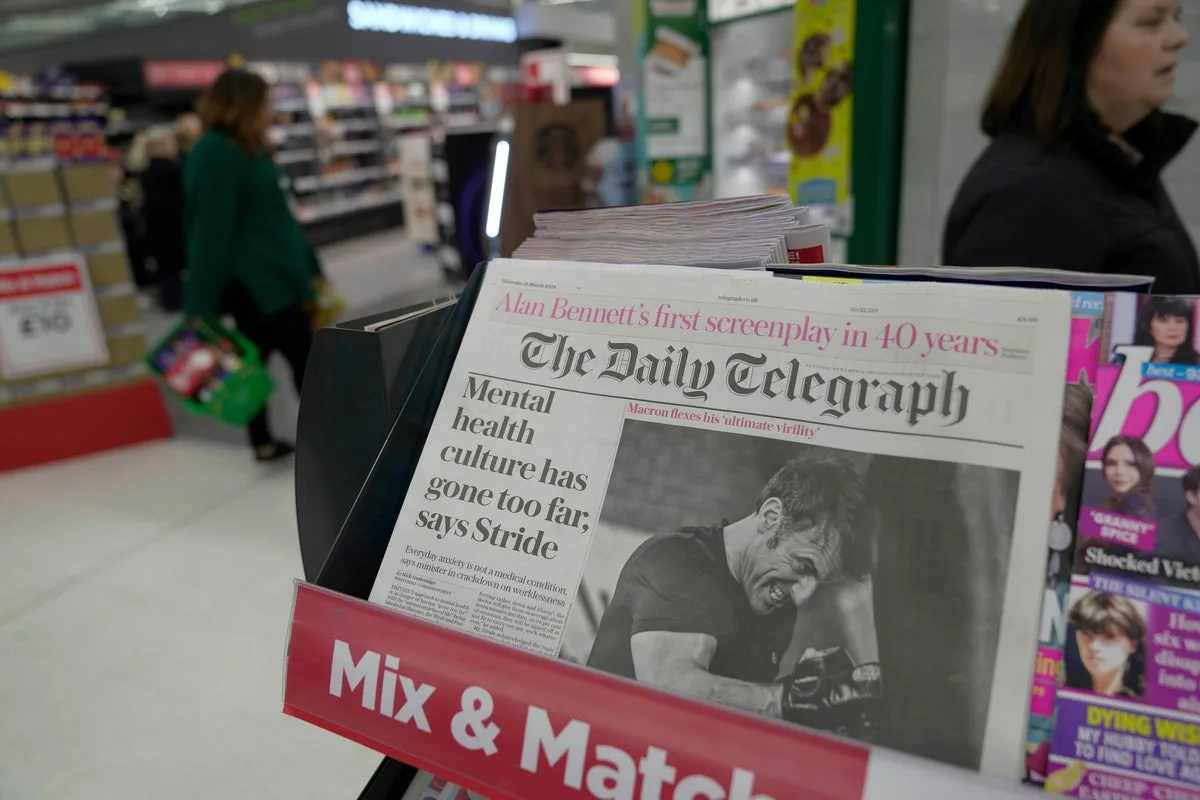
German Media Giant Axel Springer Finalises $766 Million Telegraph Acquisition
In a landmark media deal announced on Friday, 6th March 2026, the German publishing powerhouse Axel Springer has agreed to purchase the owner of Britain's renowned Daily Telegraph newspaper for a substantial sum of 575 million pounds, equivalent to approximately $766 million. This significant acquisition concludes a protracted and complex ownership saga surrounding the Telegraph Media Group, which has been the subject of intense speculation and rival bids for several years.
Ending Years of Ownership Uncertainty
The agreement effectively brings to a close a period of considerable uncertainty regarding the future of the Telegraph titles, which include the historic, 171-year-old Daily Telegraph and its Sunday counterpart. The Telegraph group was originally placed on the market in 2023 by the Barclay family, its previous owners, as part of efforts to address substantial family debts. This move triggered a competitive bidding process that saw multiple interested parties vying for control of one of Britain's most influential conservative-leaning publications.
Axel Springer's CEO, Mathias Döpfner, expressed profound satisfaction with the outcome, stating, "More than two decades ago, we attempted to acquire The Telegraph but were unsuccessful. Today, that long-held aspiration has finally been realised." The German conglomerate, which already boasts an impressive portfolio including the Bild and Welt newspapers alongside the political information group Politico, now adds a cornerstone of British journalism to its international media empire.
Strategic Vision and Expansion Plans
Axel Springer has outlined ambitious strategic objectives for the Telegraph Media Group, pledging substantial investment to transform it into what they describe as "the leading centre-right media outlet in the English-speaking world." A key component of this vision involves aggressively accelerating expansion efforts into the lucrative United States market, a move characterised by the company as "turbocharging" its American ambitions.
This acquisition also effectively derails a competing offer from the owner of the Daily Mail, which had previously tabled a bid of 500 million pounds. However, earlier this year, the UK government intervened by ordering an investigation into that proposed purchase, citing concerns about potential impacts on media competition and the essential "plurality of views" within Britain's press landscape.
Navigating Regulatory and Political Hurdles
The path to this acquisition was far from straightforward, with the deal emerging against a backdrop of significant regulatory scrutiny and political intervention. Prior to Axel Springer's successful bid, a consortium known as RedBird IMI—backed by RedBird Capital Partners and Sheikh Mansour bin Zayed Al Nahyan, a prominent member of Abu Dhabi's royal family and Vice President of the United Arab Emirates—had expressed interest in purchasing the publications.
However, this foreign-backed consortium ultimately withdrew its offer in 2024 following robust opposition from the UK government, which had initiated legislative measures specifically designed to prevent foreign state ownership of British press entities. This regulatory environment underscored the sensitive nature of media ownership and the government's commitment to safeguarding editorial independence from external state influence.
Separate Sale of The Spectator
It is also noteworthy that The Spectator, the right-leaning news magazine which was formerly part of the Telegraph group, was sold separately in 2024 to British hedge fund investor Paul Marshall. This transaction further illustrates the broader restructuring and divestment processes that have characterised the Telegraph Media Group's recent history, as various assets were repositioned under new ownership structures.

Overall, Axel Springer's acquisition of the Telegraph Media Group represents a pivotal moment in international media consolidation, marking a significant expansion of German media influence into the heart of British journalism while simultaneously reshaping the competitive dynamics of the UK's conservative media landscape.





