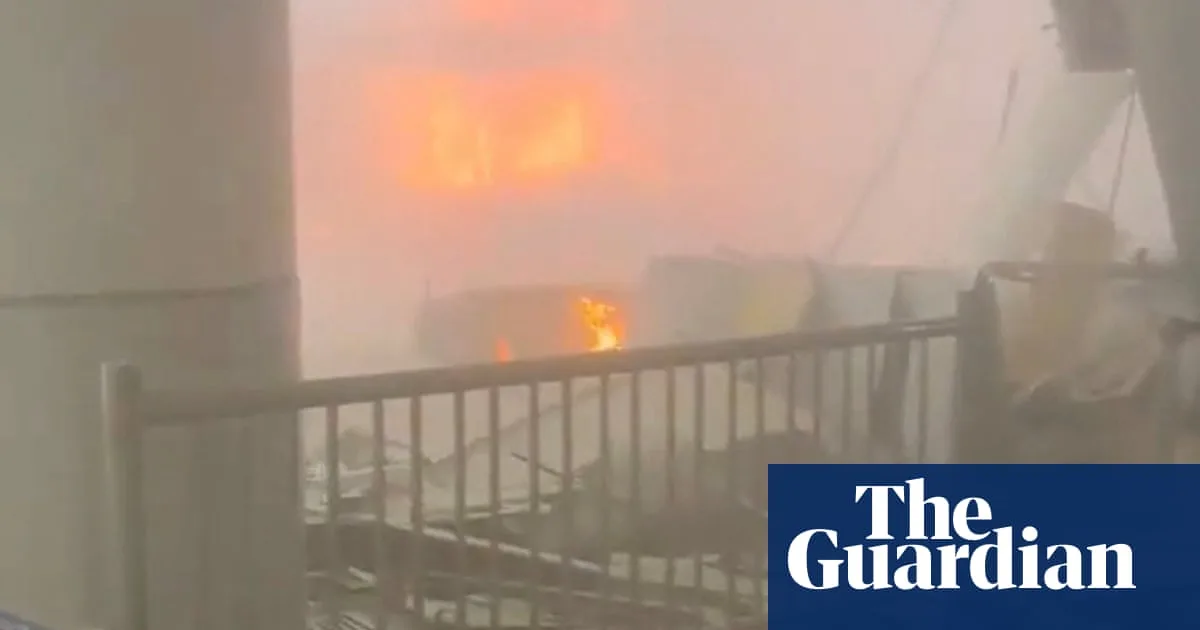
Kuwait's military confirmed that Iranian strikes hit a terminal at its international airport, killing at least one person and wounding 63, including Americans. This marks the first deadly attack in the Gulf since a ceasefire on 8 April came into effect.
The US and Iran exchanged fresh missile and drone strikes, further jeopardising efforts to secure a new ceasefire agreement. President Donald Trump said in an interview released on Wednesday that talks with Iran were continuing and he was not looking to escalate, adding: 'We don’t need boots on the ground now.' He later claimed Iran was 'pretty close' to signing a peace agreement.
Israeli Prime Minister Benjamin Netanyahu said Iran was 'playing with fire' after the Kuwait attacks and warned that Trump could order a 'full-scale return to military action' if negotiations fail. 'It’s [Trump’s] decision: Israel is ready, and the US forces are ready,' he added.
Overnight, US forces fired a Hellfire missile to disable a tanker trying to break the American blockade of the Strait of Hormuz. Iran’s Islamic Revolutionary Guard Corps (IRGC) said it attacked the US Fifth Fleet headquarters in Bahrain with missiles and drones in response, a claim denied by US Central Command.
Kuwait summoned Iran’s chargé d’affaires to protest and ordered a reduction in Iranian embassy staff, declaring two diplomats persona non grata. Iran’s foreign ministry blamed Kuwait and Bahrain for the attacks, condemning the 'colonialist use' of their territory by the US.