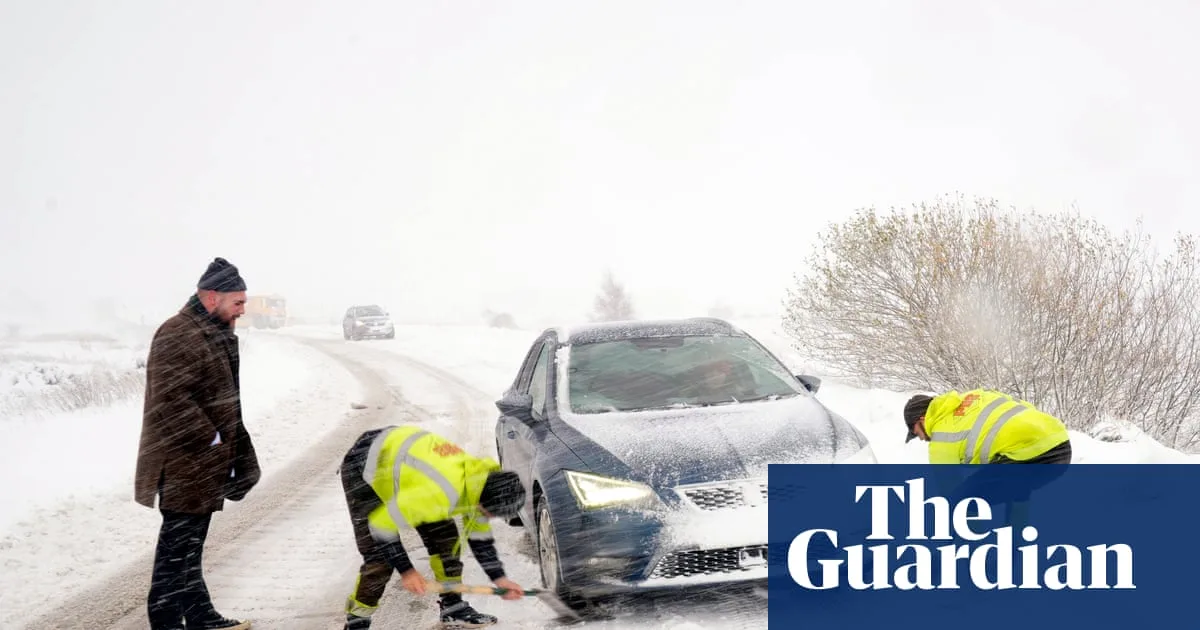
The UK is experiencing its first significant blast of winter, with blizzards, ice, and freezing temperatures causing widespread disruption. The Met Office has issued eight yellow snow and ice warnings for Thursday, covering Devon, Cornwall, parts of Kent, the east coast, East Anglia, north-east England, south-west and north-west Wales, Northern Ireland, and northern Scotland. A rare amber warning is in place for the North York Moors and Yorkshire Wolds from 3am to 9pm, warning of blizzards and up to 25cm of snow on hills, likely to cause substantial disruption.
Hundreds of schools have closed, including over 90 in Aberdeenshire, 36 in Pembrokeshire, and 30 in North Yorkshire. Many roads are blocked or treacherous, with closures on the A1 northbound near Morpeth and the A171, among others. Drivers in North Yorkshire and Pembrokeshire are advised to make only essential journeys due to hazardous conditions.
The cold snap has brought the coldest night of the season so far, with temperatures dropping to -6.6°C at RAF Benson in Oxfordshire. The Met Office warns of potential lows of -10°C in rural Scotland on Thursday night. 'Thundersnow' has been reported in Aberdeenshire and off the north-east coast, with a risk of more on Thursday.
An amber cold health alert from the UK Health Security Agency remains in force across northern England until Saturday. However, temperatures are expected to rise closer to average by the weekend, with wetter and windier weather arriving. Bookmaker William Hill has shortened odds on a White Christmas, offering 6/5 in Aberdeen and 7/4 in Newcastle.