The Art of Iranian Diplomacy Faces American Pragmatism in Nuclear Standoff
As the United States and Iran prepare for crucial nuclear talks in Geneva this Tuesday, the diplomatic stage is set for a fascinating clash of negotiation styles. The outcome of these discussions could determine whether the two nations can avoid escalating into a full-scale regional conflict, requiring both sides to make significant concessions while navigating their fundamentally different approaches to diplomacy.
Contrasting Backgrounds and Approaches
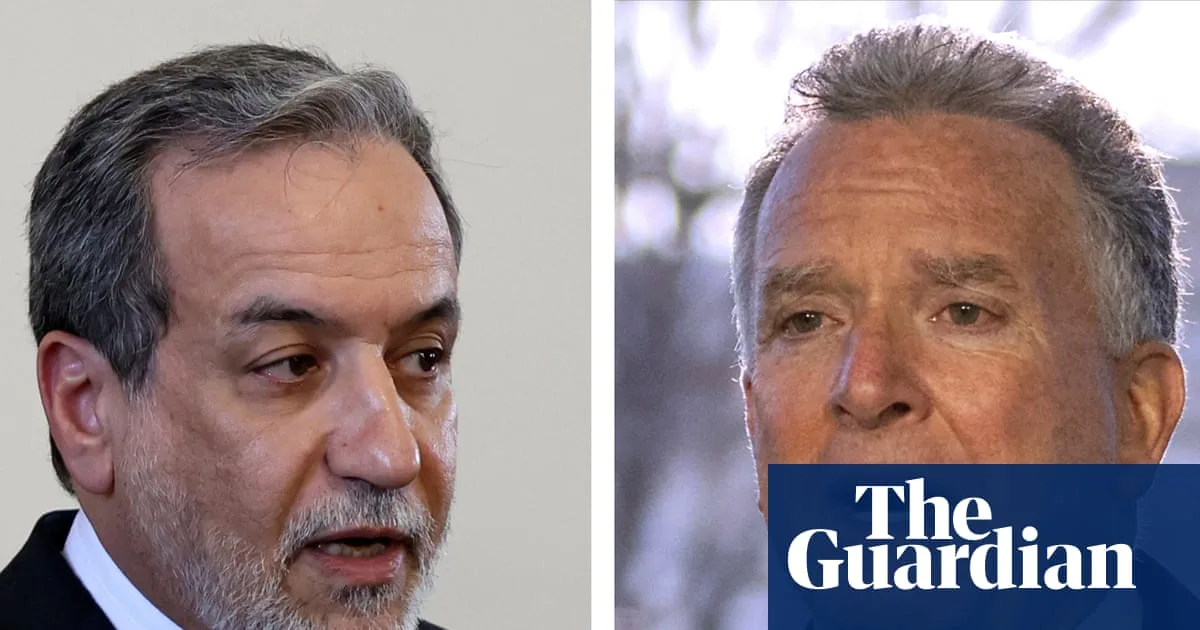
Leading the Iranian delegation is Foreign Minister Abbas Araghchi, a career diplomat with nearly fifteen years of experience in nuclear negotiations. Araghchi holds a bachelor's degree from Iran's faculty of international relations, a master's in political science from Islamic Azad University, and a doctorate in political thought from the University of Kent in the United Kingdom. He has authored a book titled The Power of Negotiation, which reveals the intricate techniques of Iranian diplomatic practice.
Facing him across the negotiating table will be White House special envoy Steve Witkoff, who studied law at Hofstra University on Long Island before building his fortune in property development. While Araghchi operates as a consensus figure within Iranian politics, having consulted extensively across government spectrums including with Supreme Leader Ali Khamenei, Witkoff works to a shifting brief dictated primarily by one man: former President Donald Trump.
The Iranian 'Market Style' of Negotiation
In his book, written during a period out of office in 2014, Araghchi provides remarkable insight into the Iranian diplomatic mindset. He describes what he terms the "market style" of negotiation, which he traces to Iran's traditional bazaar culture inherited from his merchant family background. "The Iranian negotiation style is generally known in the world as the 'market style,' which means continuous and tireless bargaining," Araghchi writes. "It requires a lot of time and energy, and he who gets tired and bored quickly will lose."
This approach emphasizes repetition and persistence, with Araghchi noting that "insisting on positions and repeating demands is a necessity that must be done each time with different rhetoric and reasoning." The philosophy reflects a fundamental difference in how the two nations view diplomacy: while the Trump administration often approached negotiations as a form of confrontation akin to professional wrestling, Iranian officials regard diplomacy as a sophisticated art form more comparable to chess.
Power Dynamics and Diplomatic Strategy
Araghchi's theoretical framework emphasizes that a negotiator's true power derives from national cohesion back home and military strength. He argues that without at least a balance of power with one's adversary, it is preferable to decline talks until equilibrium is achieved—a principle Iran followed after the bombing of its nuclear sites in June of last year.
The Iranian diplomat also stresses the importance of maintaining an inscrutable demeanor during negotiations. "The face of a skilled diplomat is inscrutable, and it is impossible to catch any emotion from it," he writes. "The ability to control the expression of emotions on the face is not easy and requires continuous work and practice." This emphasis on opacity contrasts with more transparent Western negotiation styles.
Building Bridges and Seeking Compromise
Despite his reputation for tough bargaining, Araghchi acknowledges the importance of providing adversaries with what he calls "the Golden Bridge"—a graceful way out of difficult positions, a concept he adopted during his four years as ambassador to Japan. This suggests that if the United States were to return to a version of the 2015 nuclear agreement from which Trump withdrew in 2018, Araghchi would avoid triumphalism. "Diplomacy is not a game that you must necessarily win," he writes, "but a process where you must necessarily understand the other side."
Ellie Geranmayeh from the European Council on Foreign Relations notes that Araghchi represents a more technocratic approach compared to his predecessor Javad Zarif. "Araghchi is much more technocratic and careful in walking the tightrope necessary to survive," she observes. "Zarif was more political and outspoken, and willing to test the boundaries of what was digestible for the regime." Some analysts believe Araghchi was placed in nuclear talks with Washington by Iranian conservatives specifically to provide a check on Zarif's more expansive approach.
Potential Pathways to Agreement
Geranmayeh anticipates that the United States will likely demand significant reductions in Iran's stockpile of highly enriched uranium. However, such irreversible steps by Iran would require corresponding irreversible concessions from the American side, potentially including the release of substantial Iranian assets frozen abroad. The bombing of Iran's nuclear facilities has created a window of opportunity, making enrichment impossible for three to five years, which could form the basis for compromise.
This would necessitate the return of United Nations nuclear inspectors from the International Atomic Energy Agency to visit the bombed sites—an issue that was probably central to discussions between Araghchi and IAEA Director General Rafael Grossi on Monday. Beyond strictly nuclear matters, Geranmayeh suggests that "in this Trumpian world, do not expect every agreement to be written down on paper. There could be a series of not verifiable understandings, including a non-aggression pact between Iran, and the US and its allies."
Domestic Considerations and Historical Context
Ali Ansari, professor of modern history at the University of St Andrews, believes Iran may offer concessions primarily to maintain dialogue, noting that "Trump is in no rush at present anyway." Significant economic concessions, such as allowing American oil companies to operate in Iran, would represent a dramatic shift in Iran's longstanding anti-American revolutionary doctrine.
Araghchi, a veteran of the Iran-Iraq war who maintains closer relations with the Islamic Revolutionary Guard Corps than his predecessor, understands that any agreement will face domestic criticism. He recalls a telling conversation with Zarif following Hassan Rouhani's 2013 presidential victory, when Zarif had not yet accepted the position of foreign minister. When Araghchi asked why, Zarif replied presciently: "In the end, we'll be found wanting, and we will be the victims."
As these crucial negotiations unfold, the contrasting styles of Araghchi's patient, repetitive "market" diplomacy and Witkoff's more direct American approach will test whether two nations with profoundly different worldviews can find enough common ground to prevent regional escalation. The outcome will depend not only on the substance of their discussions but on their ability to navigate each other's diplomatic cultures and provide those essential "Golden Bridges" to compromise.




