Scotland's Six Nations Campaign Ends in Familiar Disappointment Against Ireland
For the third consecutive year, Scotland found themselves as unwelcome spectators at another team's championship celebration. The fireworks and triumphant music that echoed around the Aviva Stadium in Dublin marked yet another Six Nations conclusion where Scottish dreams were left unfulfilled. Gregor Townsend and his players were left to contemplate what might have been after a campaign that showed late promise ultimately collapsed in familiar fashion.
Irish Dominance Continues in Dublin Showdown
Ireland, who had previously crushed Scottish hopes in championship deciders at the Aviva two years ago and in Paris twelve months prior, proved too formidable once again. This time, Scotland entered the final round with genuine aspirations—needing victory in Dublin combined with an England win over France to secure both the Triple Crown and championship trophy. Instead, Ireland demonstrated their customary superiority in this fixture, emerging as 22-point victors in a contest that exposed Scottish limitations.
The final scoreline perhaps flattered the hosts slightly, given Scotland remained competitive until the final twelve minutes, but there could be no disputing that the better team deserved their comprehensive victory. This was an error-strewn, strangely flat performance from Townsend's side, who managed three tries through Darcy Graham, Finn Russell, and Rory Darge but never truly appeared to believe they could secure their first Dublin triumph since 2010.
Early Exchanges Set the Tone for Irish Control
Predictions of a cagey affair following Scotland's frenetic encounter with France the previous week proved misguided as the teams shared four tries within the opening eighteen minutes. Unfortunately for Scottish supporters, three of those early scores went to the hosts as Ireland quickly established control—a pattern that has become familiar in this fixture over the past decade.
Ireland needed just two minutes to breach the Scottish defense for the first time through a try of clinical simplicity. After Scotland conceded a scrum penalty, Ireland kicked to the corner, executed a smooth lineout, and moved the ball through hands until Jack Crowley created space for Jamie Osborne to sprint over untouched.
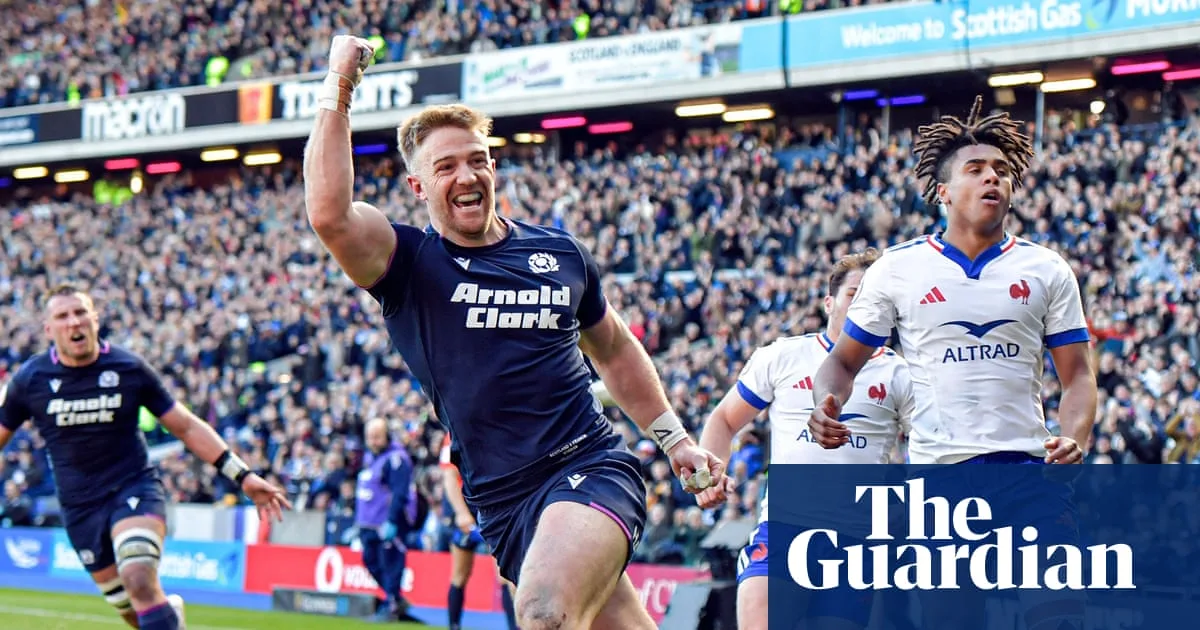
Scotland demonstrated their resilience by responding quickly, with George Turner and Pierre Schoeman carrying powerfully before the backs combined to send Graham over in the corner for his 38th international try. This momentary success proved deceptive, however, as Ireland simply shrugged off the setback to add two more first-half tries through Dan Sheehan and Rob Baloucoune.
Second-Half Fightback Proves Insufficient
The second half began with Scotland showing renewed determination, and Russell's clever dummy and burst through the Irish defense brought them within five points after he converted his own try. This hope proved fleeting as Ireland responded within four minutes with a fourth try from debutant Darragh Murray, restoring their twelve-point advantage.
Scotland mounted another response through Darge's try following brilliant work from Kyle Steyn, but the visitors still trailed as the contest grew increasingly frantic. Instead of completing a remarkable comeback, Scotland watched Ireland finish stronger, with Tommy O'Brien scoring twice in the closing stages to seal the victory.
Campaign Assessment and Future Prospects
This patchy, topsy-turvy Six Nations campaign concludes with Scotland finishing third—an improvement on the previous two years but nevertheless disappointing given their recovery from an opening-day loss in Rome to win three consecutive matches. The tournament revealed both promise and persistent limitations, with Ireland again proving the insurmountable obstacle.
The Scottish performance was characterized by:
- Momentary flashes of attacking brilliance
- Defensive vulnerabilities under pressure
- Inability to maintain momentum against elite opposition
- Critical errors at decisive moments
As the Irish players lifted the Triple Crown silverware before a jubilant home crowd, Scotland were left to contemplate another near miss in a championship that has repeatedly seen them fall just short. The question now becomes whether Townsend's side can bridge the gap to the tournament's elite teams or whether they are destined to remain perennial contenders rather than champions.