Ukrainian Skeleton Athlete Returns Home After Olympic Disqualification Over Tribute Helmet
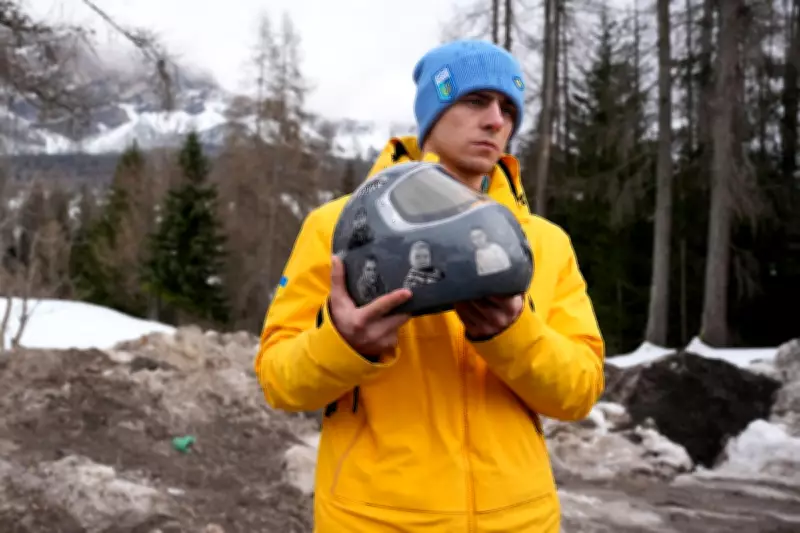
Ukrainian skeleton racer Vladyslav Heraskevych has returned to Kyiv following his disqualification from the Milan Cortina Winter Olympics, where he was barred from competition for refusing to remove a helmet honoring over 20 athletes and coaches killed since Russia's invasion of Ukraine four years ago. Despite arriving in a capital grappling with disruptions to power, heating, and water supplies, Heraskevych expressed relief at being home, stating, "Despite all that, home is the warmest place."
Disqualification and Failed Appeal
Heraskevych, a likely medal contender, was disqualified approximately 45 minutes before his scheduled race on February 12 after declining a last-minute request from the International Olympic Committee (IOC) to not use the tribute helmet. The Court of Arbitration for Sport rejected his appeal the following day, though his race had already commenced, eliminating any chance of participation even if the appeal had succeeded.
He described a pre-race conversation with IOC President Kirsty Coventry as respectful but ultimately unproductive, noting, "Unfortunately, we were not heard," and criticizing the IOC for failing to clearly explain how the helmet violated rules. Coventry defended the decision, citing guidelines that emphasize focusing on athletic performance during competitions and ceremonies.

Fundraising Initiative and Media Spotlight
The helmet controversy generated significant global media attention, which Heraskevych now plans to leverage for a fundraising effort to support the families of the fallen Ukrainians depicted on his helmet. He emphasized, "It wasn't me who drew attention to Ukraine — it was them. It is their voices that are heard very loudly." The IOC has not confirmed whether it will contribute directly to this initiative.
Questions Over Inconsistent Enforcement
Heraskevych raised concerns about inconsistent rule enforcement, pointing to Italian snowboarder Roland Fischnaller, who displayed a Russian flag on his helmet without apparent sanction. Fischnaller's helmet featured multiple flags as a tribute to past Olympic venues, including the 2014 Sochi Games. Heraskevych also noted that Ukrainian athletes observed Russian flags in Olympic stands, despite IOC bans.
Russian athletes have not competed under their national flag at Winter Olympics since 2014, with some participating as neutral athletes. Ukraine's sports minister recently criticized IOC actions that may ease restrictions against Russian athletes, with Heraskevych remarking, "I told her that, from the outside, based on what I read in the media, it looks like you are playing along with Russia."
IOC Response and Support Offers
Following the meeting with Heraskevych and his father, Coventry stated she would be "more than happy to work with him and his dad to go out and to ask leaders, governments to try and help" address urgent needs in Ukraine, such as generators for its troubled power grid. She highlighted that the IOC has provided over $10 million to Ukraine in recent years for sports and athletes.
Personal Sacrifice and No Regrets
Heraskevych's decision came at a high personal cost, as he had trained extensively with his father since 2014, when skeleton was virtually non-existent in Ukraine. He showed strong form in Cortina, with top-six finishes in all five official training runs and the fastest time in one session. Reflecting on the loss, he said, "It truly hurts, and we have really been working toward this for a very long time."
However, he expressed no regrets, noting that the helmet portraits represent only a fraction of the "countless" friends and acquaintances lost in the war. "Many people I knew left us far too early, at the age when they should have been starting families and building their lives," he added. "Instead, we now have death in their place — and it hurts."