During a recent address at the Davos summit, former US President Donald Trump made headlines with a remark that sent shockwaves across the international community. He suggested that his NATO partners should look up to him and refer to him as "Daddy," a statement that united many in a collective sense of discomfort. This incident, far from being an isolated gaffe, offers a revealing window into Trump's psychological makeup and his evolving approach to leadership.
The Davos Declaration: A Glimpse into Trump's Worldview
Trump's comments at Davos were delivered with apparent relish, as he positioned himself as the paternal figure overseeing global affairs. He claimed to have been "helping" Europe and NATO, before digressing into a rambling anecdote about being called "Daddy" by NATO Secretary General Mark Rutte six months prior. This moment, while bizarre to many observers, underscores a deeper narrative Trump is crafting—one where he is the head of the household, footing defence bills and demanding unwavering loyalty in return.
European leaders, who might view Trump more as a disruptive force than a benevolent patriarch, were left bemused. Yet, this was no offhand remark. Trump's embrace of the "Daddy" role is a calculated move, reflecting a psychological need for authority and control that traces back to his upbringing.

The Shadow of Fred Trump Snr: A Father's Lasting Influence
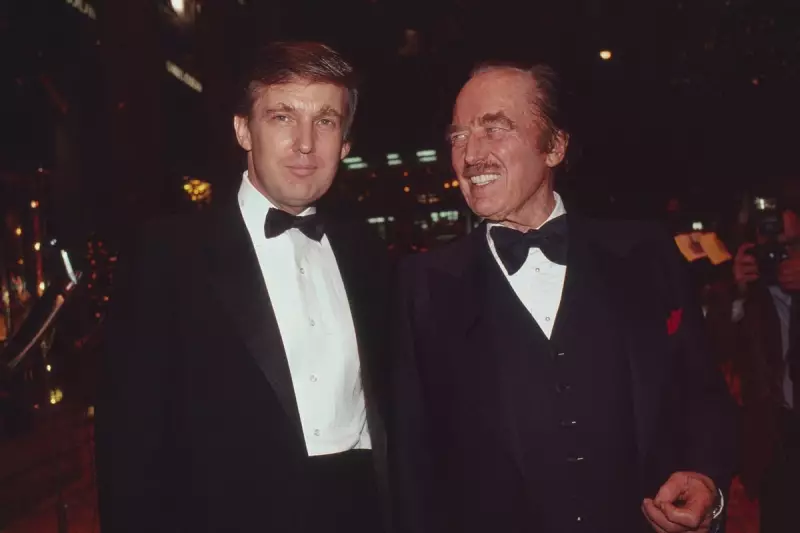
Trump's behaviour is increasingly authoritarian, and he seems to draw inspiration from the man who shaped his worldview more than any other: his father, Fred Trump Snr. Described by family members, including his niece Mary Trump, as a high-functioning "sociopath," Fred Snr instilled a "winner takes all" mentality in his children. Mary Trump's accounts paint a picture of a dysfunctional family where sensitivity was mocked, and children were pitted against each other in a stark black-and-white reality.
Trump, as the second son, witnessed his older brother Fred Jnr's humiliation at their father's hands and learned to align himself closely with Fred Snr to avoid similar fate. This over-identification with his father, as noted by Tony Schwartz, co-author of The Art of the Deal, has left Trump haunted by the "frightened child" of a critical and bullying patriarch, even as he projects an image of bluster and certainty.
From Family Dynamics to Global Stage: The 'Daddy' Persona Takes Hold
Trump's adoption of the "Daddy" figure began in earnest last June, after Mark Rutte jokingly compared Trump's intervention in Middle East tensions to a father using strong language. Trump latched onto this framing, paraphrasing Rutte in ways that exaggerated the paternal analogy. The White House quickly capitalised, releasing merchandise and social media content with slogans like "Daddy's home," which resonated with his base.
This persona taps into conservative ideals in the US, where the authoritative male head of household is revered. For Trump's supporters, "Daddy" symbolises a strong, disciplinarian figure who will restore order amid chaos, whether targeting political opponents, migrants, or foreign allies. Figures like Tucker Carlson and Mel Gibson have amplified this narrative, framing Trump's potential return to power as a father coming home to mete out punishment.
Psychological Underpinnings: Narcissism, Ageing, and Control
Mental health professionals have long noted narcissistic traits in Trump's personality, with a pronounced need for admiration and authority. As he approaches his 80th birthday, experts suggest that ageing may intensify these tendencies, leading to a "narrowing" of identity where he clings to roles that offer certainty and control. Psychotherapist Tina Chummun explains that under stress, individuals often revert to early relational dynamics—for Trump, the father role represents dominance and unquestioned authority.
Dr Joy Conlon adds that ageing leaders frequently grapple with legacy, seeking to be seen as purposeful and historically significant. By embodying "Daddy," Trump may be constructing an emotional defence against the shame of failure, positioning himself as an invulnerable authority figure who cannot be contradicted.

The Global Implications of a Personal Survival Strategy
What began as a childhood survival strategy to impress a demanding father has evolved into a leadership style with real-world consequences. Trump's authoritarian leanings, reflected in policies like aggressive immigration enforcement, are bolstered by this paternal persona. As his leadership faces challenges—from a faltering economy to declining approval ratings—reverting to the archetype of the all-knowing father allows him to maintain a facade of control.
The problem, however, extends beyond Trump himself. The scared child who once sought his father's approval now wields immense power, and the psychological patterns forged in the Trump family home are influencing global politics. Understanding these dynamics is crucial for navigating the complexities of his leadership and its impact on international relations.
In summary, Trump's "call me daddy" moment is more than a bizarre soundbite; it is a manifestation of deep-seated psychological needs rooted in his relationship with his father. As he continues to embrace this role, the world must contend with the implications of a leader whose personal history shapes his approach to power and authority.