Supreme Court Likely to Uphold Birthright Citizenship Amid Trump Challenge
In a pivotal moment for American identity, the Supreme Court is poised to reject former President Donald Trump's aggressive assault on birthright citizenship. This foundational principle, enshrined in the 14th amendment, grants automatic citizenship to anyone born on US soil, and its potential dismantling threatens to reshape the very essence of what it means to be American.
Trump's Personal Appearance and Misleading Claims
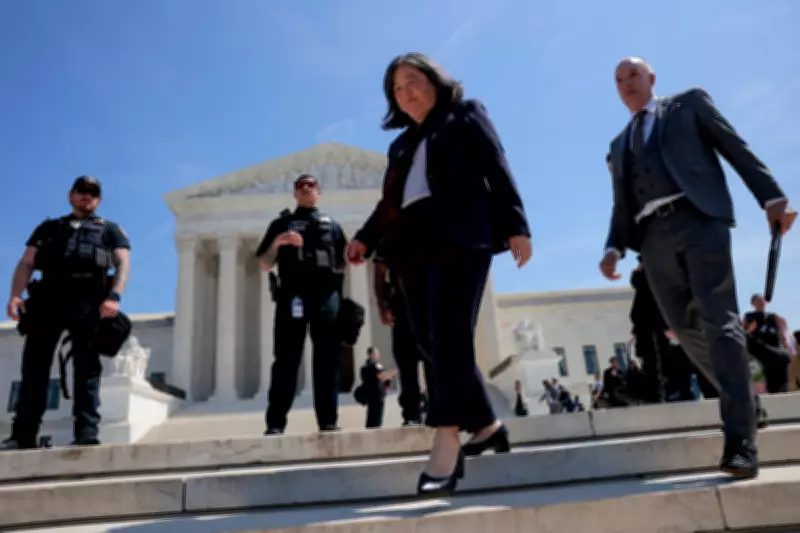
During oral arguments for the case Trump v Barbara, Trump made a rare personal appearance at the Supreme Court, signaling his deep investment in the issue. His presence was likely intended to intimidate the justices, but he departed shortly after Cecillia Wang of the ACLU began presenting arguments against his position. Shortly after leaving, Trump took to Truth Social to echo a common right-wing fallacy, falsely claiming that the United States is "the only Country in the World STUPID enough to allow 'Birthright' Citizenship."
This assertion is categorically untrue. Birthright citizenship is standard across the Americas, with only a few exceptions in the Western Hemisphere. Historically, this policy emerged from the legacy of slavery, leading most nations in North and South America to adopt it. The United States' commitment to birthright citizenship is not an outlier but a reflection of regional norms and constitutional clarity.

The Moral and Legal Stakes of Ending Birthright Citizenship
Beyond the factual inaccuracies, the Trump administration's push to deny citizenship to children of undocumented immigrants carries profound implications. Such a move would create a permanent underclass—individuals who live their entire lives in the US but are barred from calling themselves Americans. These people would be subjected to American laws without representation, forced to navigate an informal economy, and excluded from the democratic process solely due to their heredity.
Critics argue that ending birthright citizenship would not only cause bureaucratic chaos and economic disruption but also fundamentally alter America's moral fabric. It would shift the nation from a creedal democracy, built on ideals of equality and diversity, to one defined by ethnicity and inheritance. This transformation would strip the country of its aspirational vision, reducing it to a vulgar system where birthright dictates destiny.
Supreme Court Skepticism and Potential Outcomes
Despite the gravity of the case, the Supreme Court justices displayed broad skepticism toward the Trump administration's arguments during the hearing. Conservative justices, including Trump appointees Amy Coney Barrett and Neil Gorsuch, appeared contemptuous of the administration's position. Chief Justice John Roberts and Justice Brett Kavanaugh also showed doubts, while Justice Samuel Alito attempted to craft a supportive argument but found little sympathy among his colleagues.
Predicting court outcomes is inherently risky, especially with a Roberts court dominated by far-right justices. However, the hearing suggested a likely decisive rebuke, with potential for a 7-2 or 8-1 opinion against Trump. Such a ruling would represent a victory for the rule of law, yet the mere fact that this case reached the Supreme Court underscores the degraded state of American democracy.
Trump's Agenda and the Future of American Polity
Trump's decision to attend this particular hearing, over others related to his tariffs or personal immunity, reveals his true priority: reshaping the American polity permanently. His aim extends beyond personal enrichment to fundamentally redefining citizenship and identity. Fortunately, initial indications suggest he may not succeed in this instance, preserving birthright citizenship for now.
The attack on birthright citizenship challenges a cornerstone of American law and self-conception. As the Supreme Court deliberates, the nation watches a battle over whether America will remain a land of equals or devolve into a hierarchy based on birth. The outcome will resonate for generations, defining the soul of the United States in an era of profound political division.