New York Times Faces Social Media Ridicule Over NATO Acronym Error
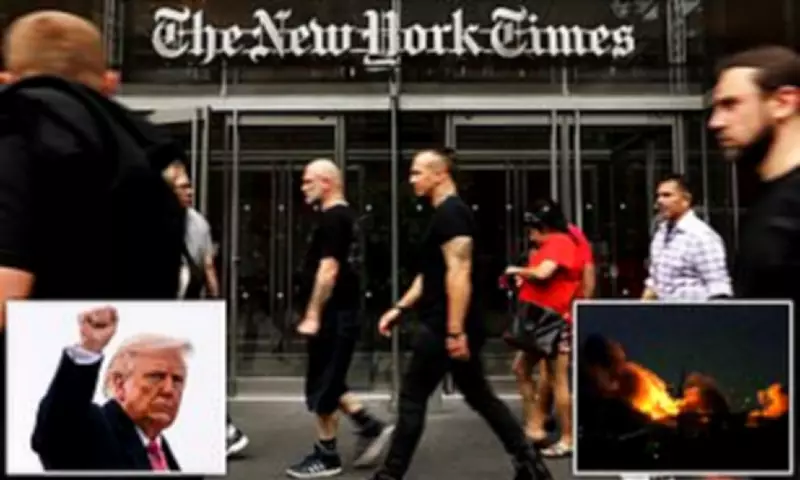
The New York Times has become the subject of intense mockery across various social media platforms following the publication of a headline that contained a significant factual error regarding the NATO military alliance. The newspaper's reporting on former President Donald Trump's recent threats to potentially withdraw the United States from the organisation featured a headline on Friday that incorrectly identified the acronym's meaning.
Headline Blunder Quickly Circulates Online
The erroneous headline, which read 'A North American Treaty Organization Without America?', mistakenly substituted 'North American' for the correct 'North Atlantic' in describing the treaty organisation. This basic error in understanding what NATO stands for – the North Atlantic Treaty Organization – was first highlighted by Politico editor Sasha Issenberg in a post on the social media platform X.
Issenberg directly questioned the newspaper's editorial oversight, posting: 'Does the @nytimes know what NATO stands for?' His observation quickly gained traction, with the mistake being viewed millions of times as it circulated among journalists, political commentators, and the general public.

Newspaper Issues Formal Correction
Following the widespread attention and criticism generated by the headline error, The New York Times announced it would issue a formal correction in Saturday's print edition. The newspaper acknowledged the mistake in a statement, clarifying: 'A headline with an article on Friday about President Trump’s threats to leave NATO misstated the full name of the body. It is the North Atlantic Treaty Organization, not the North American Treaty Organization.'
This correction came after social media users expressed astonishment that such a fundamental error could pass through the editorial processes of a publication with The New York Times' reputation and stature. Many questioned how the mistake could have possibly slipped through what are typically rigorous fact-checking and editing procedures.
Social Media Reaction and Criticism
The response on social media platforms was swift and largely critical, with users expressing both amusement and concern about the editorial oversight. One commentator on X remarked pointedly: 'How did an editor not catch that? Amateur hour.' Another user responded to the newspaper's correction with sarcasm, joking: 'So you finally googled NATO?'
The Daily Mail has reportedly contacted The New York Times for additional comment regarding the incident and the editorial processes that allowed the error to reach publication. The blunder has raised questions about fact-checking standards even at established media organisations, particularly when covering complex international alliances and geopolitical matters.
Context: Trump's NATO Remarks Spark Article
The article containing the erroneous headline was prompted by controversial remarks made by former President Donald Trump during an interview with The Telegraph newspaper. Trump indicated he is strongly considering withdrawing the United States from the 77-year-old military alliance, describing the possibility as being 'beyond reconsideration.'
In his comments, Trump expressed longstanding scepticism about NATO's effectiveness, stating: 'I was never swayed by NATO. I always knew they were a paper tiger, and Putin knows that too, by the way.' These remarks followed apparent frustration with NATO allies' responses to international conflicts, including the war with Iran and related issues concerning the Strait of Hormuz.
The former president specifically criticised what he perceived as insufficient support from NATO members during recent Middle Eastern tensions, noting: 'Beyond not being there, it was actually hard to believe. I just think it should be automatic.' He contrasted this with American support for Ukraine, which he described as automatic despite not being a formal treaty obligation.

Trump also directed criticism toward the United Kingdom during the interview, questioning British military capabilities and specifically mentioning concerns about the Royal Navy's operational readiness. His comments about NATO and international alliances have reignited debates about America's global commitments and the future of transatlantic defence cooperation.