
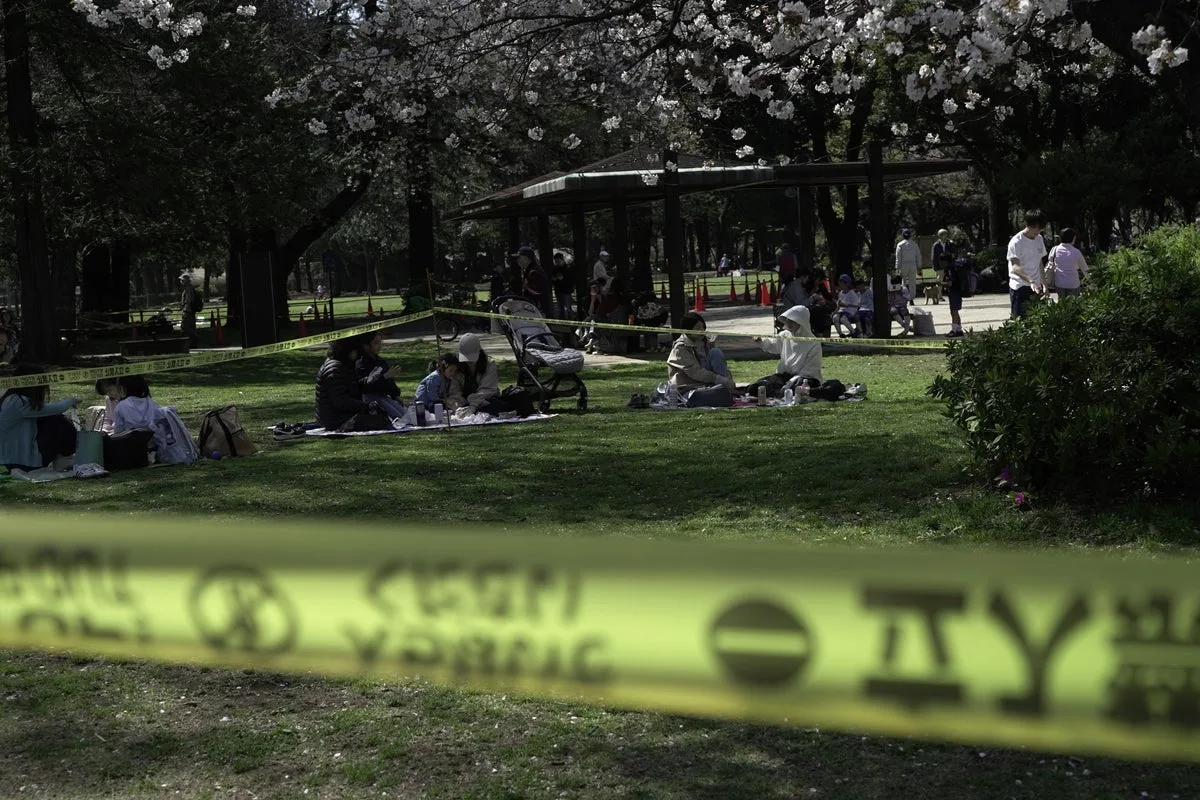
Tokyo's iconic cherry blossom season is being overshadowed by safety concerns as many of its beloved Somei Yoshino trees, planted during Japan's post-war boom, are now succumbing to old age. The fragility of these historic trees was starkly highlighted on Thursday when two collapsed in the capital.
One at Kinuta Park damaged a fence, while another at the Chidorigafuchi greenway narrowly avoided falling into the Imperial Palace moat. Fortunately, no one was injured in these incidents. The Kinuta Park tree, an 18-metre giant with a 2.5-metre diameter, was believed to be over 60 years old, officials confirmed. This follows a separate incident in March at the same park, where an old cherry tree collapse resulted in injuries to a passerby, underscoring the growing risk posed by the ageing flora.
Last year, 85 trees fell in Tokyo parks, injuring three people, and many were cherry trees, according to Masakazu Noguchi, a Tokyo metropolitan official in charge of public parks. People gather under the trees during the season of hanami, or cherry blossom viewing, and the collapse of trees has alarmed officials in Tokyo, the birthplace of the cherry blossom variety.
Tokyo assembly member Yutaka Kazama expressed concern on social media last month that “cherry blossom trees with their roots partially exposed or obviously rotten seem dangerous,” calling for firm safety measures but without quickly resorting to tree felling. Aging and erosion by internal fungus growth are among the main causes for the deterioration of the cherry blossom trees.
A tree doctor, Hiroyuki Wada, said heavy tilting, flowering on lower trunks and mushrooms growing at the bottom are signs to look for in order to avoid risk-prone trees. Risks increase when tree trunks retain water after rain, he said. “Many trees in our daily lives were planted soon after the war and are now 70-80 years old and getting weaker,” he said, adding that they are affected by extreme heat in the summer and an extensive dry season.
Following the March incidents, officials conducted tree health checks at Tokyo's main parks ahead of the cherry blossom viewing season. At the Kinuta Park, officials have conducted preliminary inspections of more than 800 cherry trees. They chopped down a number of trees and posted warning signs near some trees but the tree that fell Thursday was without caution signs. “At the moment, our measures are mostly temporary, not fundamental steps such as replanting,” Noguchi said. “We call on visitors to use caution because we cannot say it’s safe even after inspection.”




