Senate Democrats Threaten Government Shutdown Over DHS Funding Dispute
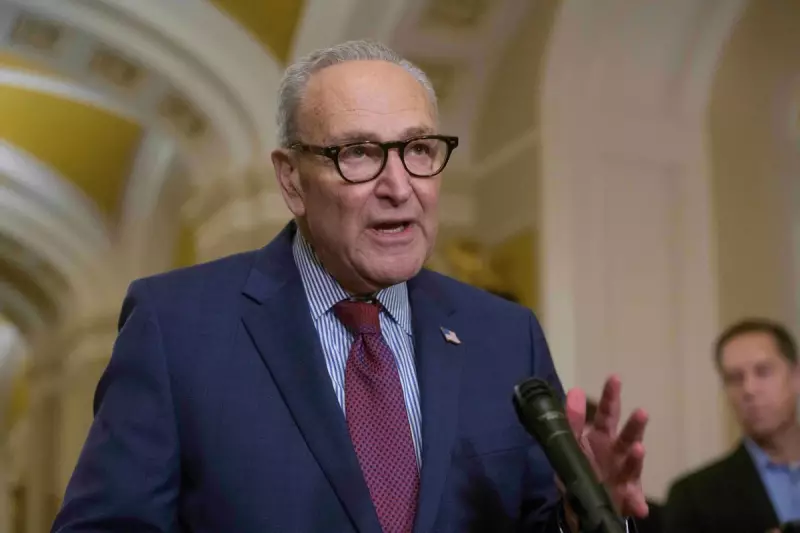
Senate Minority Leader Chuck Schumer has declared that Democrats will oppose crucial government funding legislation if it includes appropriations for the Department of Homeland Security, dramatically increasing the risk of a partial federal shutdown. This decisive stance follows the fatal shooting of 37-year-old Alex Pretti by Border Patrol agents in Minneapolis on Saturday morning, an incident that has intensified existing tensions surrounding immigration enforcement operations.
Funding Crisis Escalates After Minneapolis Tragedy
The House of Representatives narrowly passed a bill to fund the Department of Homeland Security earlier this week with a 220-213 vote, receiving support from all but one Republican and seven Democrats from districts that previously voted for President Donald Trump. However, Schumer's announcement has thrown the entire appropriations process into uncertainty as Congress works to pass spending bills for the remainder of the fiscal year.
"What's happening in Minnesota is appalling — and unacceptable in any American city," Schumer stated emphatically. "Democrats sought common sense reforms in the Department of Homeland Security spending bill, but because of Republicans' refusal to stand up to President Trump, the DHS bill is woefully inadequate to rein in the abuses of ICE. I will vote no."

Immigration Crackdown Fuels Political Standoff
The Minneapolis shooting occurred against the backdrop of intensified Immigration and Customs Enforcement operations in the city's Somali-American community under the Trump administration. This crackdown has already resulted in significant unrest, including the earlier killing of Renee Good this month. Democrats argue that ICE already possesses excessive funding following last year's passage of the One Big, Beautiful Bill Act, which allocated $29.9 billion for enforcement operations and an additional $45 billion for new detention facilities with exclusively Republican support.
Despite some accountability provisions in the current spending package — including $20 million for mandatory body cameras during operations, de-escalation training requirements, and $20 million for independent oversight of detention facilities — Schumer indicated Democrats would not support a "mini-bus" bill combining all four remaining appropriations measures unless DHS funding is removed entirely.
Historical Precedent for Shutdown Threats
This confrontation echoes previous government funding crises, most notably last year's record-breaking shutdown when Democrats opposed a continuing resolution over Affordable Care Act tax credit extensions. Although a handful of moderate Democrats eventually joined Republicans to reopen the government with promises of future votes on tax credits, no bipartisan agreement has materialised since. Remarkably, even those moderate Democrats who supported reopening the government previously have indicated they will oppose DHS funding this time.
"My personal guiding principle has always been 'agree where you can and fight where you must,'" explained Senator Jacky Rosen of Nevada. "And I believe this is a time when we must fight back."
Broad Democratic Consensus Against DHS Funding
The opposition spans the Democratic ideological spectrum, with moderate Senator Mark Warner of Virginia, who chairs the Intelligence Committee, criticising what he termed the "brutal crackdown" in Minneapolis that led to "another senseless killing." Warner declared on social media platform X: "I cannot and will not vote to fund DHS while this administration continues these violent federal takeovers of our cities." His position received immediate endorsement from Representative Alexandria Ocasio-Cortez, who responded simply with "Thank you."
With only eight spending bills passed so far this fiscal year — covering Education, Labor, Health and Human Services, Transportation, Housing and Urban Development, Homeland Security, and Defense — and Schumer's unequivocal statement that "Senate Democrats will not provide the votes to proceed to the appropriations bill if the DHS funding bill is included," the stage is set for another potentially protracted government funding battle with significant implications for federal operations and immigration policy enforcement.