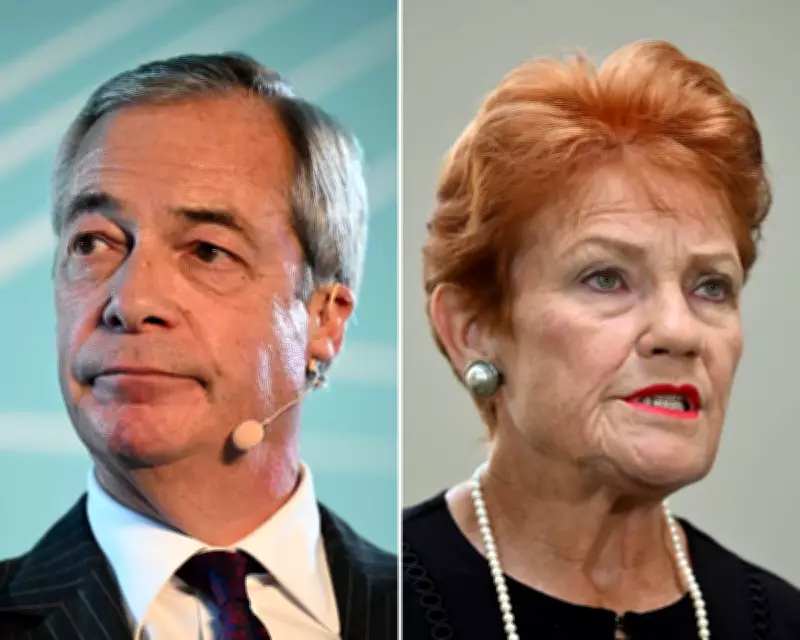
One Nation's Resurgence Mirrors Reform UK's Ascent in Populist Politics
As Pauline Hanson's One Nation experiences a dramatic resurgence in Australia, political observers are drawing parallels with the rise of Nigel Farage and Reform UK in British politics. A recent Redbridge poll places One Nation's primary support at 26%, surpassing the Coalition and positioning it close to Labor, with Hanson's favourability rating exceeding that of Prime Minister Anthony Albanese.
Striking Similarities in Populist Strategies
One Nation is effectively capitalising on public concern about immigration, a strategy that has proven successful for Reform UK. In Britain, the crisis of migrant boat arrivals has reinforced perceptions of lost border control, while in Australia, anxieties are more closely tied to housing affordability and cost-of-living pressures amid steady population growth.
The political landscape reveals uncanny parallels: a rightwing populist party led by an anti-establishment figure gaining momentum while a Labour government struggles despite a comfortable parliamentary majority. This description fits both contemporary British politics and Australia's current situation.

Cultural Anger and Political Disillusionment
Tim Soutphommasane suggests that One Nation's explosion of support may indicate more than just immigration and economic anxiety. It appears to have uncovered a significant constituency disillusioned with mainstream political parties, driven by a sense of cultural anger and loss that is taking new political shape.
Hanson has demonstrated her ability to thrive under such conditions, recently reverting to extreme rhetoric with her comment about there being no "good Muslims," which has been widely condemned as divisive and hate-stoking.
Diverging Approaches in Populist Politics
While Australian populists favour direct, confrontational rhetoric, Farage has increasingly adopted more subtle messaging as Reform positions itself as a potential governing party. This shift toward respectability reflects Reform's growing political maturity compared to One Nation's more remote prospects for government.
Former Liberal Prime Minister Tony Abbott has contributed to this discourse by suggesting Australia's Anglo-Celtic and Judeo-Christian character is under threat, advocating for a return to assimilation policies of the 1950s and 60s.
Structural Differences in Political Context
Unlike Reform UK, One Nation lacks the ability to tap into widespread visceral anger toward an incumbent government. While British Prime Minister Keir Starmer appears politically vulnerable following the Peter Mandelson scandal, Anthony Albanese does not face the same level of existential threat.
Australia's relative economic stability and avoidance of Brexit's harsh consequences provide a different context for populist discontent. Farage's message that "Britain is broken" resonates because many Britons feel they have little to lose by giving him a chance.
The Evolution of Populist Messaging
Farage has notably shifted his tone as he positions himself as a potential prime minister. Recent Reform party broadcasts present a softer, more patriotic image—Farage in tweed flat cap walking his dogs along the Essex coast, embodying a gentler, more serious nationalism compared to his previous pugilistic persona.
This professional discipline and humanised presentation may represent a model that the Australian right could emulate, combining nationalist populism with more polished political packaging.
Vigilance Required in Changing Political Landscape
The resurgence of One Nation challenges previous assumptions about Australia's immunity to angry rightwing populism. Last year's federal election, which saw voters reject Peter Dutton and re-elect Anthony Albanese, had suggested Australia might resist the "Trump effect" that has influenced other Western democracies.
Experts warn that vigilance is needed beyond just monitoring Hanson's rhetoric. The political climate may be shifting toward more extreme positions on immigration and national identity, potentially reviving debates about policies that many considered historical artifacts.

While Reform UK continues to grow in strength ahead of the next British general election, its victory is not assured. Similarly, One Nation's surge may prove temporary, potentially reflecting Coalition dysfunction rather than structural disaffection. However, the parallels between these populist movements across continents suggest broader trends in contemporary politics that merit close attention and analysis.