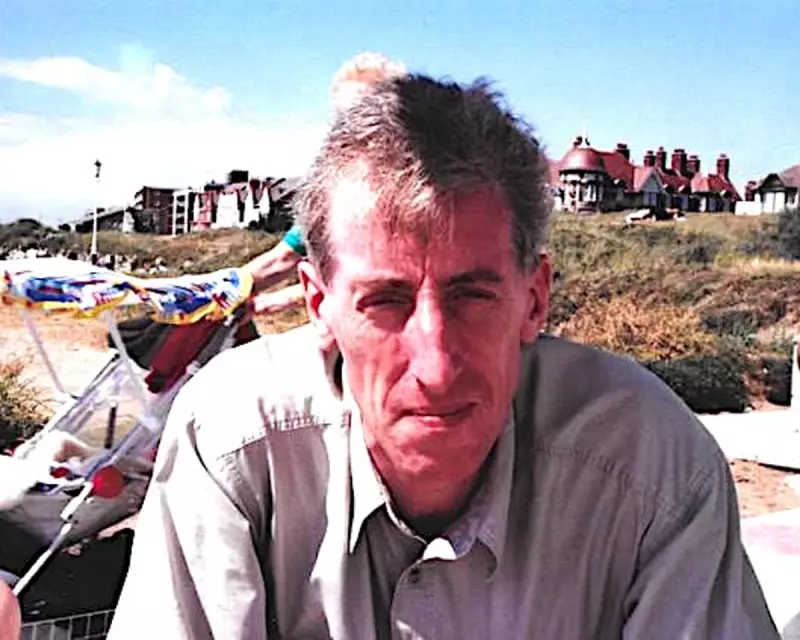
Gwyn Jones, who has died at the age of seventy-five, made the profound decision to forsake a promising future in the legal profession, instead committing his entire existence to working alongside and within various left-wing political movements. His life was a testament to an unwavering belief in revolutionary change, a passion that defined his every action and thought.
A Life Defined by Revolutionary Fervour
My friend Gwyn Jones lived and breathed revolutionary politics, embodying a perpetual restlessness for societal transformation. Any report of an uprising, no matter where in the world it occurred, would send him into a state of rapturous excitement. He felt an irresistible urge to involve himself, to contribute in any capacity possible to the cause of popular revolt against established powers.
European Missions for Socialism
In the mid-1970s, following the demise of Franco's regime, Gwyn relocated to Spain, immersing himself in the struggle to support socialist initiatives during the nation's fragile transition. His journey did not end there. He later spent several significant years in post-Soviet Eastern Europe, specifically in Romania and Hungary, pursuing a similar mission: to aid and encourage left-wing political development during a period of immense upheaval.

While his endeavours frequently met with limited tangible success, he invariably attracted a dedicated circle of like-minded individuals who shared his profound convictions. Gwyn was a fundamentally sweet-natured man, a flawed genius—but a genius nonetheless. He possessed an extraordinary capacity to achieve complete mastery over any subject he chose to investigate. His deep understanding of historical processes and Marxist theory was a marvel to witness.
Early Life and Radicalisation
Gwyn was born in Llandudno, situated in north Wales. His parents were Berwyn Jones, who worked as a bank clerk, and Buddug (née Williams). His early childhood was spent in Conwy, north Wales, before the family moved to Ellesmere in Shropshire. A precocious student, he passed the eleven-plus examination at just nine years old, subsequently beginning his secondary education at Oswestry Boys’ High School alongside pupils two years his senior.
Upon returning to Wales, he completed his schooling at Ysgol Friars in Bangor. In 1968, he embarked on a law degree at King’s College London. It was here that his political radicalisation accelerated rapidly. He joined the International Marxist Group (IMG), a small but fervent revolutionary party. After graduating, he commenced an MA in Industrial Relations Law at the University of Warwick in 1973. However, he ultimately abandoned his academic studies to work as a labourer in the building trade. In this role, he was active within the UCATT trade union, striving to build socialist consciousness among his fellow workers.
Teaching and Campaigning Across the Continent
Following Franco's death in 1975, Gwyn's journey took him to València, Spain, where he taught English at the Berlitz International School. He used this position to forge connections with local trade unionists and students, aiming to promote a more decisively left-wing path during Spain's transition from dictatorship. By 1978, he had moved to Turin, Italy—then a hotbed of intense labour struggles—once again teaching English while campaigning tirelessly with socialist groups and trade unions.
Return to London and Eastern European Revolutions
Back in London during the 1980s, and now a member of the Socialist Workers Party (SWP), Gwyn retrained as a computer programmer. He secured employment in this capacity with the Trafalgar House group. The seismic events of 1989, with revolutions erupting across Eastern Europe, proved irresistible. He resigned from his job and flew directly to Bucharest, Romania, to join the street protests. In a memorable act, he once climbed atop a box in Palace Square and, with the aid of a translator, urged the crowds to rely on their own collective power and resist those attempting to hijack their revolution.
He spent the subsequent years teaching English in Romania, financing his ongoing political campaigning through the support of friends back in the UK. He later adopted a similar model in Hungary, travelling frequently between countries to fundraise among SWP members and sustain his activist work.

Later Years and Enduring Passion
By 1997, Gwyn had returned to the UK full-time, working itinerantly in south-east London while still considering himself a full-time revolutionary. In his later years, after leaving the SWP, he became a somewhat more isolated figure. Nevertheless, his fervent enthusiasm for revolutionary politics and the cause of the working class never diminished. It remained the bright, constant flame that had guided his entire adult life.
He is survived by his siblings, Ieuan and Lis.