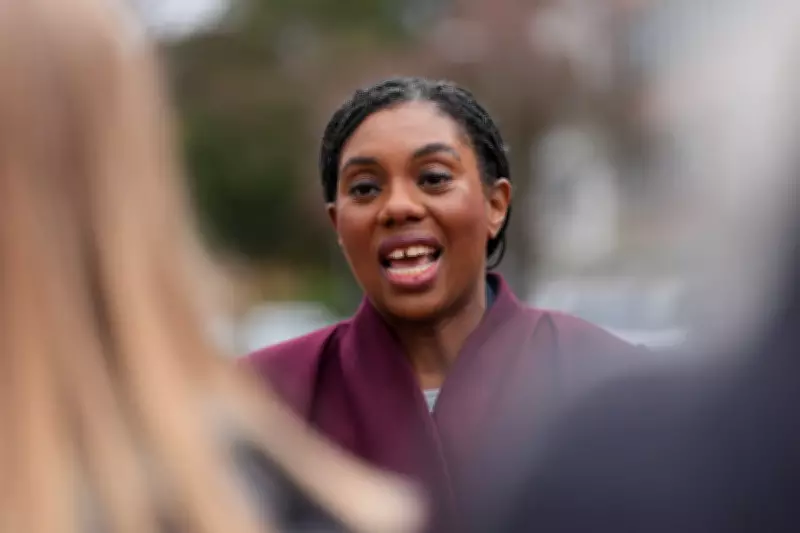
Kemi Badenoch Issues Stark Warning to Donald Trump Over Middle East Conflict
Conservative Party leader Kemi Badenoch has delivered a blunt message to US President Donald Trump, cautioning him against walking away from the Middle East war he started. In a pointed statement to broadcasters on Thursday, Mrs Badenoch invoked the famous phrase attributed to former US Secretary of State Colin Powell, declaring her message would be "if you break it, you own it."
Special Relationship Extends Beyond Personalities
Mrs Badenoch emphasized that the special relationship exists between the United Kingdom and the United States as nations, not between individual office holders. "The special relationship is between the UK and the US, not between Donald Trump and Prime Minister Keir Starmer or whoever happens to be holding those offices," she stated clearly.
She acknowledged America's crucial role as a military ally that significantly contributes to British security. However, her tone turned more critical when addressing the current Middle East situation. "He started this war," Mrs Badenoch asserted regarding President Trump's actions. "He should now not be abandoning a mess that he's made, if he thinks that it is a mess."

Lack of Coordinated Strategy and Domestic Energy Solutions
The Conservative leader expressed concern about the apparent absence of a coherent plan for the conflict with Iran. "It doesn't feel like there is a coordinated plan," she observed. "What we want to see is our government showing that it is thinking ahead, it is prepared."
Mrs Badenoch proposed that increasing domestic energy production represents the most effective immediate response to insecurity stemming from the conflict. "The best thing it can do right now for our insecurity is increasing supply by drilling our own oil and gas in the North Sea," she recommended, highlighting energy independence as a strategic priority.
Reform UK Leader Questions Trump's Motivations
Reform UK leader Nigel Farage joined the criticism, questioning President Trump's underlying motivations for engaging in warfare against Iran. Mr Farage, whom Trump has previously described as a friend, suggested that military intervention in Iran contradicts the president's established instincts.
"I'm not angry with him for starting this war if – and by the way, he's been elected saying no more endless foreign wars. His instincts are not to do this," Mr Farage remarked during a press conference. He noted that Trump has questioned open-ended military engagements for over two decades, predating his political career.
Mr Farage speculated about potential influences on Trump's decision-making, mentioning Israeli security concerns as a possible factor. "If the goal of removing Iran as a nuclear power is achieved, the world will have been done a massive favour even if there are some quite big short-term costs," he conceded, while emphasizing that nations should not have allowed themselves to become so vulnerable to such disruptions.
Chancellor Expresses Anger Over Economic Consequences
Chancellor Rachel Reeves voiced strong disapproval of President Trump's decision to initiate Middle East hostilities. "I'm angry that Donald Trump has chosen to go to war in the Middle East – a war that there's not a clear plan of how to get out of," she told BBC Radio 2 on Wednesday.
Ms Reeves acknowledged the conflict's inevitable economic repercussions for the United Kingdom. "Yes, it will have implications for our economy. I get that," she stated. The Chancellor outlined government efforts to mitigate these effects, explaining, "We are monitoring very closely what is happening, trying to bring the oil and gas into the UK so that those supplies are there and to try and get the prices down."
Political Outreach Following Trump's Election
The article notes that both Mrs Badenoch and Mr Farage sought to cultivate relationships with Trump administration figures following the president's 2024 election victory. Both British political leaders met with Vice-President JD Vance during separate visits to the United States in December of that year, indicating ongoing diplomatic engagement despite current policy disagreements.

This political discourse unfolds against the backdrop of an escalating Middle East conflict with significant implications for international relations, energy security, and global economic stability, as British leaders from across the political spectrum voice their concerns and criticisms.