Prince Harry vs Daily Mail Verdict: A Curious Throwback to Pre-Leveson Era
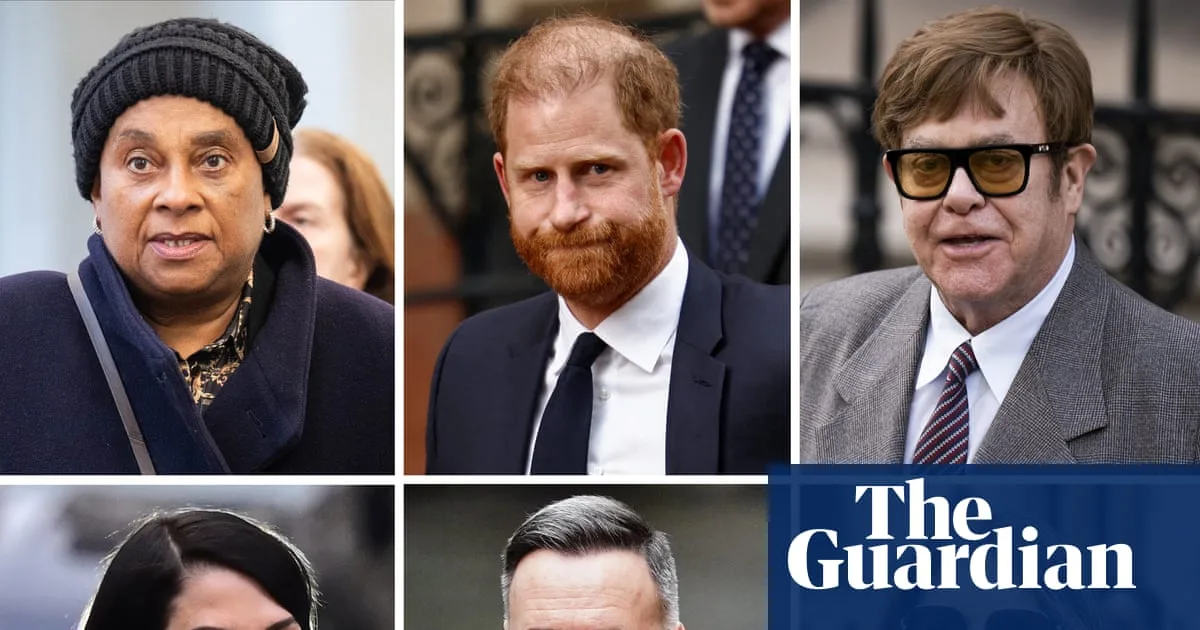
As the High Court prepares to deliver its verdict in the long-running privacy case against the Daily Mail, one thing is clear: regardless of the outcome, this will be a pyrrhic victory for either side. The legal battle, which has spanned ten arduous weeks, has seen Prince Harry, Sadie Frost, Elizabeth Hurley, Baroness Lawrence, Simon Hughes, Elton John, and David Furnish pitted against Associated Newspapers, the publisher of the Daily Mail.
A Feud Out of Time
The proceedings have often felt like a private feud, disconnected from the realities of modern life. While lawyers traded blows in court, the world outside grappled with more pressing issues, including actual conflicts involving real missiles. This case has served as an eerie throwback to an era before the Leveson Inquiry, when newspaper security was laxer and private detectives could easily blag confidential information.
The hacking scandal that led to the closure of the News of the World, Rupert Murdoch's parliamentary grilling, and the public outrage over Millie Dowler's phone invasion forced the industry to clean up its act. Since then, reputable editors have been on high alert, with every story heavily vetted by lawyers and the industry code of practice generally followed scrupulously.
Outdated Methods in a Digital Age
Technology has advanced dramatically since the articles in question were published decades ago. Today, social media acts as the court of first instance, where reputations can be instantly shattered. No modern news platform wants to risk losing subscribers or advertisers by engaging in practices that now seem positively antediluvian.
Watching the barristers and the judge, Mr Justice Nicklin, debate was akin to viewing a tennis match played with wooden rackets—quaint, slow, and out of step with today's faster, sharper media environment.
Reputation Over Money
This case has not primarily been about financial compensation, though it has cost millions. Instead, it has centered on reputation. On one side, seven public figures who guard their privacy fiercely; on the other, Britain's best-selling newspaper, formerly edited by Paul Dacre, who was forced to defend his newsroom against accusations of illegality in what may prove to be his swansong.
The evidence presented was unedifying: the Mail used 14 private investigators, claimed tips from celebrity circles, and had journalists in direct contact with figures like Prince Harry, who exchanged Facebook messages with a reporter under the nickname "Mr Mischief."
Raw Wounds and Legal Challenges
The emotional toll remains high. Liz Hurley broke down when her son's paternity was questioned, while Harry's anger was palpable. Journalists, too, expressed frustration that their painstaking, old-fashioned craft was being ridiculed in court.
David Sherborne, the barrister for the claimants, admitted in his summing up that proving the case was like "playing pin the tail on the donkey with us being partly blindfolded and there being very little donkey left." He often relied on inferring guilt from the Mail's "propensity" to use unlawful methods, a strategy that drew criticism from the judge for shifting the burden of proof.
A Final Chapter?
Whatever the verdict, this should mark the end of such litigation. The passage of time and industry changes make a repeat unlikely. Yet, the scars from this case will not heal easily, leaving both sides bruised in a battle that feels increasingly anachronistic in today's media landscape.