
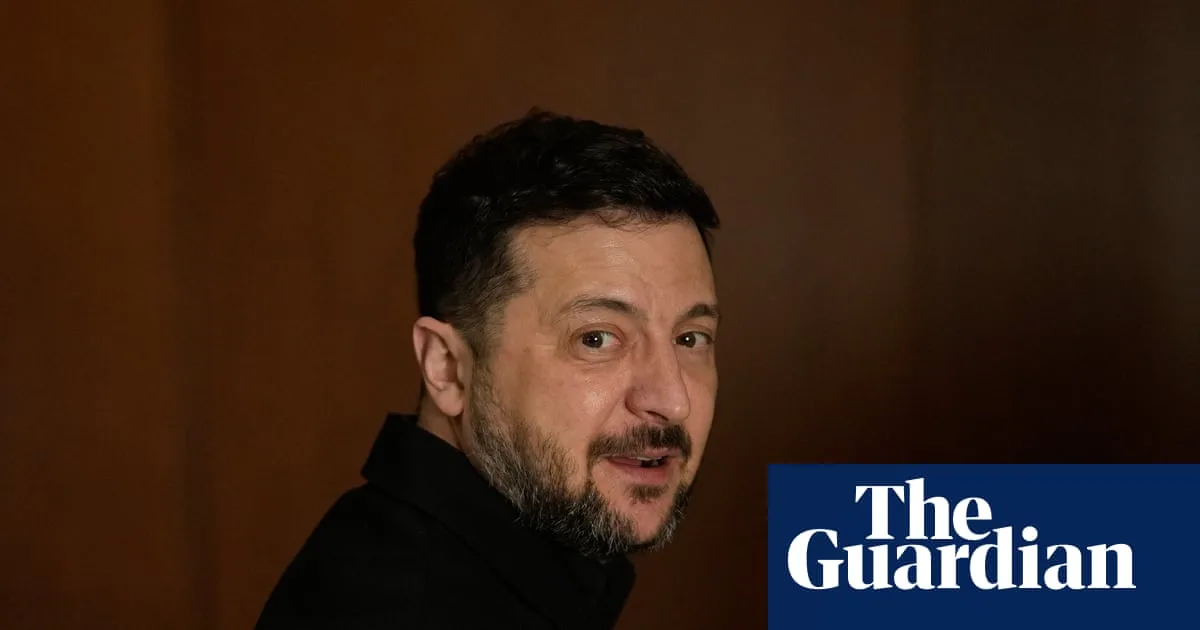
Volodymyr Zelenskyy has accused the United States of ignoring compelling evidence that Russia is helping Iran target US bases in the Middle East because it 'trusts' Vladimir Putin. In an interview with Alastair Campbell on The Rest is Politics podcast, the Ukrainian president said he had tried to draw the White House's attention to the close collaboration between Moscow and Tehran.
Zelenskyy claimed that Russian military satellites had photographed critical energy infrastructure in Gulf states and Israel, as well as the locations of US army bases across the region. The Kremlin then passed these details and images to the Iranian regime to facilitate its attacks, he said. 'I said this publicly. Did we hear a reaction from the US to Russia that they have to stop it?' Zelenskyy asked rhetorically, adding: 'The problem is they trust Putin. And it's a pity.'
The Ukrainian leader said Donald Trump's team had failed to 'really understand the details of what Russia wants', attributing this to Trump's negotiators Steve Witkoff and Jared Kushner having 'spent too much time' with Putin and his senior officials. The pair travelled to Moscow five times last year but have not visited Kyiv. The Trump administration has pressed Ukraine to cede the eastern Donbas region, which Putin has suggested as a condition for a ceasefire.
Zelenskyy warned that Putin would not stop if he secured Donbas, but would next target the regional capitals of Dnipro and Kharkiv. 'We have to recognise that partially Americans are feeling that [Donbas is] nothing for us,' he said. 'They don't want to recognise that Putin will lie to them and that he can continue the occupation even after such steps. The Americans are sure that they can trust Putin.'
Zelenskyy also suggested that Europe needed to maximise its power amid US threats to withdraw from Nato. He called for the EU to join forces with Ukraine, the UK, Turkey and Norway to create a military bloc capable of deterring Russia. 'Without Ukraine and Turkey, Europe will not have a similar army that Russia has,' he said.




