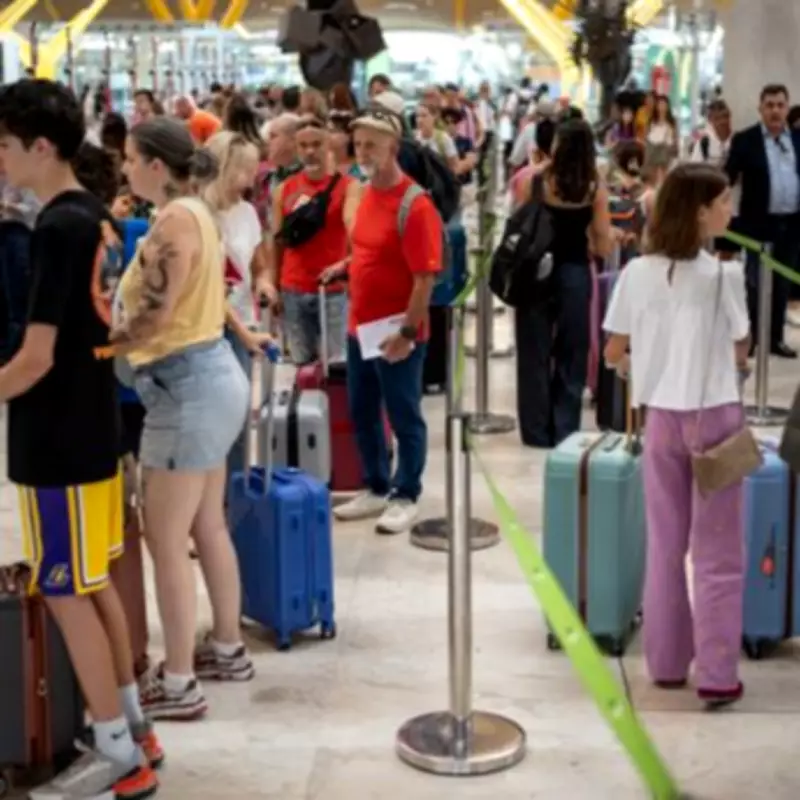
Spanish airports are implementing additional measures to alleviate border control chaos for British travellers following the full rollout of the European Union's Entry/Exit System (EES). The new digital system, which became operational across airports on April 10, 2026, has caused severe travel disruptions, with holidaymakers reporting queues lasting up to four hours and hundreds missing flights due to significant delays.
Measures to Ease Disruption
The Spanish airport authority AENA has instructed staff to take steps to streamline the process and reduce waiting times, according to the Majorca Daily Bulletin. These adjustments include diverting families with young children and passengers with reduced mobility to border control points using the former passport-stamping process when wait times for the new digital system exceed 25 minutes. Additionally, flight arrivals may be staggered through coordination with AENA's ground team. These actions are described as adjustments rather than a suspension of the EES requirements.
Impact on Major Airports
The disruptions have been particularly acute during peak periods, such as the Easter half-term, at key Spanish airports including Alicante, Barcelona, Madrid, Málaga, and Palma. The surge in holidaymakers overwhelmed checkpoints even when the system functioned correctly. The new measures aim to ease pressure during the upcoming May half-term and summer holidays.

Greece Exempts Brits from Biometric Registration
In contrast, Greece has opted to exempt British passport holders from biometric registration at its border crossing points. A statement from the Greek Embassy confirmed that as of April 10, 2026, UK travellers are not required to provide fingerprints or facial scans. The Foreign, Commonwealth and Development Office (FCDO) updated its travel guidance on April 20, advising travellers to follow local authorities' instructions and to present residence documentation if applicable to avoid EES registration.
Understanding the EES
The EES requires all British travellers entering the Schengen area to create a digital record and register biometric details, including fingerprints and a photograph, upon first arrival. This registration remains valid for three years. The Schengen area comprises 29 countries, including Austria, Belgium, Bulgaria, Croatia, Czechia, Denmark, Estonia, Finland, France, Germany, Greece, Hungary, Iceland, Italy, Latvia, Liechtenstein, Lithuania, Luxembourg, Malta, Netherlands, Norway, Poland, Portugal, Romania, Slovakia, Slovenia, Spain, Sweden, and Switzerland.