A man convicted of fatally shooting a police officer with the officer's own service weapon during a routine traffic stop over three decades ago is set to be executed in Florida on Tuesday evening. This execution represents the third scheduled in the state for 2026, following a record-breaking year for capital punishment under Governor Ron DeSantis.
Details of the Scheduled Execution
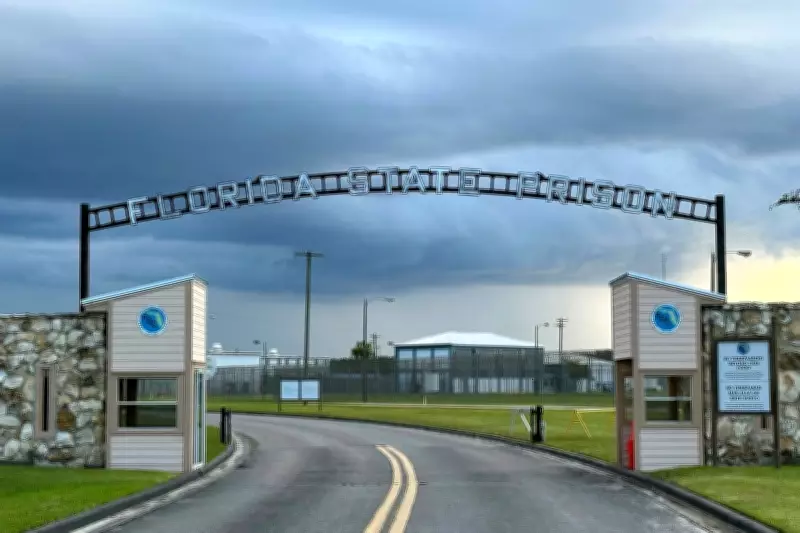
Billy Leon Kearse, aged 53, is scheduled to receive a lethal injection at 6 p.m. at Florida State Prison near Starke. The execution will be carried out using a three-drug protocol consisting of a sedative, a paralytic agent, and a drug that stops the heart, as standardised by the Florida Department of Corrections.
Historical Case and Legal Proceedings
Kearse was initially sentenced to death in 1991 after being found guilty of first-degree murder and robbery with a firearm. The conviction stemmed from the January 1991 incident where Fort Pierce Police Officer Danny Parrish pulled over Kearse for driving the wrong way on a one-way street.

When Kearse failed to produce a valid driver's licence, Officer Parrish ordered him out of the vehicle and attempted to handcuff him. A violent struggle ensued, during which Kearse seized Parrish's firearm and fired fourteen rounds, striking the officer nine times in the body and four times in his protective body armour.
A nearby taxi driver heard the gunshots and used Parrish's police radio to summon emergency assistance. Parrish was rushed to a nearby hospital but succumbed to his gunshot wounds. Police quickly identified Kearse using licence plate information that Parrish had called in before approaching the vehicle, leading to his arrest at his home address.
Appeals and Resentencing
The Florida Supreme Court later determined that the original trial court had failed to provide jurors with certain crucial information regarding aggravating circumstances, leading to an order for a new sentencing hearing. Kearse was subsequently resentenced to death in 1997, a penalty that has now reached its final stage.
Last week, the Florida Supreme Court denied appeals filed by Kearse's legal team, who argued that he was unconstitutionally deprived of a fair penalty phase and that his intellectual disability should render his execution unconstitutional. Final appeals were pending before the U.S. Supreme Court as of Tuesday.
Florida's Execution Trends
This execution marks Florida's third scheduled for 2026, following a remarkable nineteen executions carried out in 2025. Under Republican Governor Ron DeSantis, Florida witnessed more executions in a single year than any other governor since the death penalty was reinstated in the state in 1976.
The previous highest annual totals were eight executions in both 1984 under Governor Bob Graham and 2014 under Governor Rick Scott. In 2025, Florida led the nation with a flurry of death warrants signed by DeSantis, far outpacing other states with active death penalty systems.
Nationally, forty-seven people were executed across the United States in 2025. Besides Florida's nineteen executions, Alabama, South Carolina, and Texas each conducted five executions. So far in 2026, besides the two Florida executions already carried out, Texas and Oklahoma have each executed one individual.
Future Scheduled Executions
Florida has already scheduled two additional executions for March 2026. Michael Lee King, aged 54, is scheduled to die on March 17, followed by James Aren Duckett, aged 68, whose execution is set for March 31. These continued executions maintain Florida's position as one of the most active death penalty states in the country.
The case of Billy Leon Kearse represents both a long-delayed conclusion to a tragic police murder case and a continuation of Florida's aggressive capital punishment policies under current leadership.