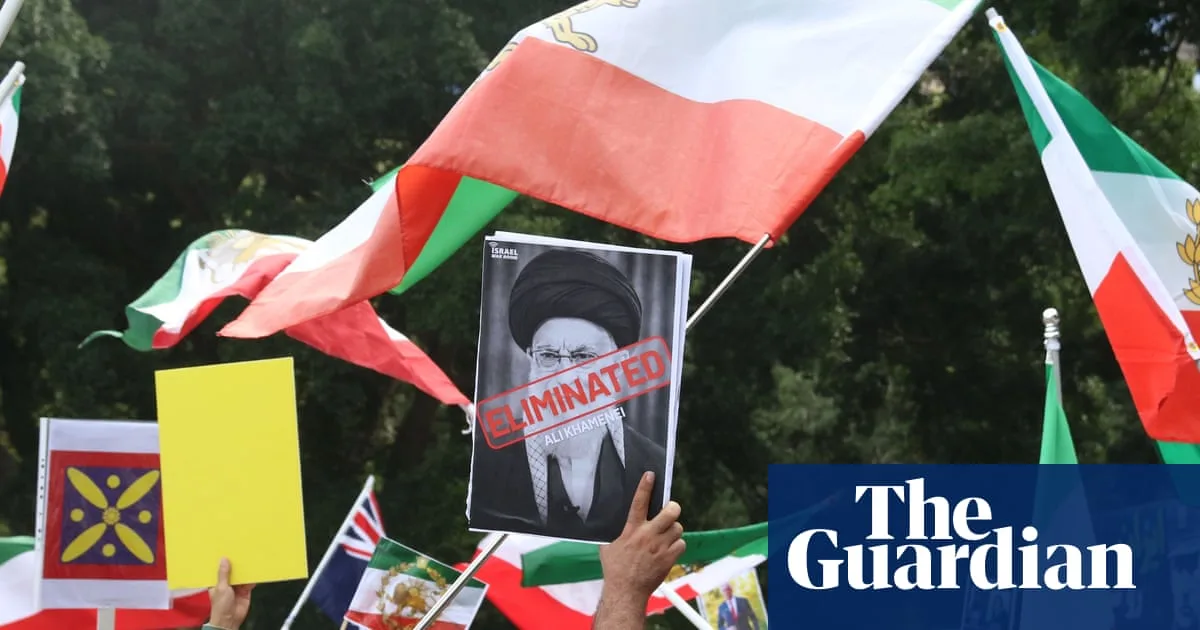
Australian Vigils for Khamenei Spark Outrage from Political Leaders
Hundreds of individuals have gathered across Australia to mourn the death of Iranian Supreme Leader Ayatollah Ali Khamenei, with vigils held at mosques in Sydney, Melbourne, and Brisbane for a second consecutive night. The long-time leader was killed in his compound by a US-Israel airstrike on February 28, amid escalating tensions in the Middle East, marking a significant geopolitical shift.
Khamenei's Controversial Legacy
Khamenei, who held power for over three decades after becoming commander-in-chief of the Iranian armed forces, was responsible for hundreds of thousands of deaths through state-sponsored terrorism campaigns both domestically and abroad. He led the 'axis of resistance,' an anti-Western alliance comprising terrorist groups such as Hezbollah in Lebanon, Hamas, Shia militias in Iraq, and Houthi rebels in Yemen.
Internally, Khamenei brutally suppressed opposition, with security forces killing more than 30,000 protesters on his orders in January alone—the largest death toll in modern Iranian history. While refugees who fled his regime have welcomed news of his death, it has also sparked celebrations of his 'martyrdom' among some supporters.
Vigils Across Australian Cities
Dozens of families, including young children, attended Kingsgrove's Masjid Arrahman Mosque in Sydney's south on Monday night, coinciding with the month of Ramadan. Several framed photos of Khamenei were displayed inside the mosque, with a police presence outside ensuring no disturbances occurred.
Additional services have been held in recent days at various locations:
- The Flagbearer Foundation and Al Zahra Mosque in Sydney
- The El Zahra Centre in Melbourne
- The Zainabia Islamic Centre in Brisbane
Husaineyat Sayeda Zaynab Mosque in Sydney's south also announced a sitting event 'for the soul' of 'Grand Ayatollah Sayyed Ali Hosseini Khamenei.' Rallies mourning his death were similarly organized in Sydney and Melbourne, reflecting divided sentiments within the community.
Political Condemnation and Public Backlash
The vigils have ignited widespread criticism, led by Prime Minister Anthony Albanese, who expressed strong disapproval. 'I don't think they're appropriate, and certainly I think that, overwhelmingly, people won't be participating,' he told ABC's 7.30 on Monday night. Albanese emphasized Australia's commitment to human rights, democracy, and freedom, stating that hatred or prejudice should be left behind when entering the country.
NSW Premier Chris Minns also condemned the events, calling them atrocious. 'I think it's atrocious, I mean by any objective measure, the Ayatollah was evil and I don't think that we should be mincing words about this,' he said. Minns highlighted the regime's brutal practices, including the killing of 30,000 protesters and the murder of young boys suspected of being gay, urging a clear stance against mourning such a tyrant.
As the Iranian people now face the task of determining their future, the Australian vigils have underscored deep societal divisions and sparked a national conversation about tolerance, human rights, and the appropriate response to controversial global figures.