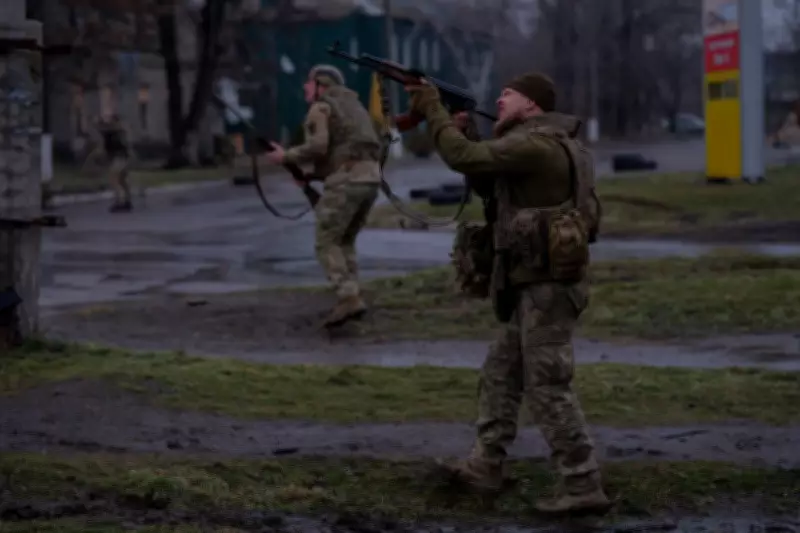
Ukrainian President Volodymyr Zelensky has declared that Russian forces are encountering significant obstacles in fulfilling their planned military advances, casting doubt on Moscow's ability to achieve its strategic objectives in the ongoing conflict. Speaking to journalists in Kyiv, Zelensky emphasised that while Russia's ambitions to seize eastern Ukraine and southern regions remain unchanged, its military lacks the current capability to accomplish these tasks.
Assessing Russia's Military Challenges
Zelensky revealed that Ukraine has obtained maps outlining Russian plans for 2026-2027, but he dismissed these as having "nothing in common with reality" due to Russia's operational limitations. He specifically mentioned Russian intentions to occupy the Donetsk and Luhansk regions, advance towards Zaporizhzhia and Dnipro, and potentially target the Odesa region on the Black Sea coast.
The Ukrainian leader stressed that Russia's success depends heavily on weapon supplies to Kyiv and Ukraine's domestic production capabilities. This assessment comes as the Institute for the Study of War reports Russia's slowest advance since 2024, coinciding with Elon Musk cutting Starlink access for Russian forces, while Ukrainian troops have made localized gains along the southern frontline.

Peace Talks Face Uncertainty
The planned trilateral peace talks between Ukraine and Russia, brokered by the United States, now face jeopardy due to escalating tensions in the Gulf region. Zelensky confirmed that "no one has cancelled" the meeting but acknowledged difficulties with the originally proposed Abu Dhabi venue.
"If there are difficulties with Abu Dhabi due to missiles and drones, then I think we have Türkiye, we have Switzerland - venues that have already worked and allowed us all to meet," Zelensky stated. "We will definitely support any of these three venues for the meeting. We are waiting for a response from our partners."
Drone Warfare Escalates
In a significant development, a massive Ukrainian drone attack targeted Novorossiysk, a key Russian port city and naval base in the Krasnodar region. The overnight assault injured at least five people and damaged 20 buildings, including residential blocks, private houses, and kindergartens.
Russia's defence ministry reported intercepting 172 Ukrainian drones, with 67 shot down over the Black Sea and 66 over the Krasnodar region. A state of emergency was declared in Novorossiysk following what the regional governor described as the "strongest strike." Although drone debris fell on a grain terminal, officials confirmed no damage to the facility.
Iranian Drone Technology Proliferates
The conflict has highlighted the transformative impact of Iranian-designed Shahed drones, which have become a familiar presence in Ukrainian skies over the past four years. These cost-effective weapons, priced at tens of thousands of dollars compared to million-dollar ballistic missiles, are now increasingly heard across the Persian Gulf as Tehran employs them following attacks by the US and Israel.
Broader Conflict Developments
Separate incidents underscore the war's continuing toll. A Russian drone strike hit a commuter train in Ukraine's Dnipropetrovsk region, killing one person and wounding seven, including two children. Meanwhile, Zelensky offered rare personal reflections, admitting the war's impact on his family life while emphasising his duty to lead Ukraine.
On the diplomatic front, Ukraine continues to pursue EU membership as key to its post-war future. Zelensky reiterated that Ukraine would be technically ready for EU accession by next year, though EU officials caution that reforms addressing transparency, corruption, and rule of law may require many years.
"If they truly believe in Ukraine, if they want to see Ukraine in the EU, then this is the opportunity: at the end of the war, to give Ukraine a concrete date and not repeat the mistake they made with NATO," Zelensky asserted.
The situation remains fluid as military assessments, diplomatic efforts, and technological warfare continue to shape the conflict's trajectory, with peace talks hanging in the balance amid regional tensions and battlefield developments.