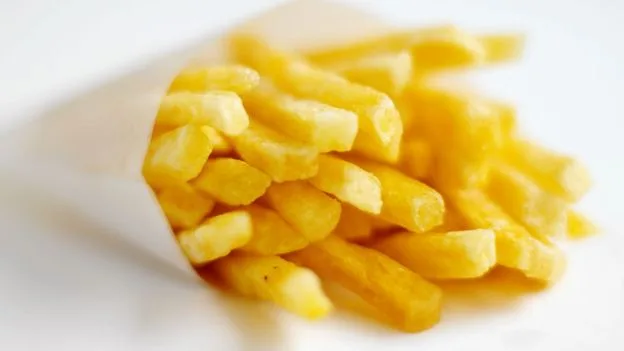
The perfect chip combines a crisp crust with a snowy-white, fluffy interior. This culinary ideal arises when potatoes meet hot oil, but the science behind it is complex. Deep-frying has been described as 'a pretty violent type of cooking', as moisture on the chip's surface instantly vaporises upon contact with oil, creating a hard crust while trapped steam cooks the interior.
Potatoes are naturally suited for frying due to their high starch content. The russet variety is often touted as the best because of its high starch and density, which prevent oil from penetrating too deeply. Most experts agree that chips are best fried twice: first at a low temperature, then at high heat to form the crust. However, McDonald's blanches and freezes their potato strips before frying on demand.
Food scientist J Kenji Lopez-Alt found that the first fry changes the structure of the chip's outer layer. Water boils away, and starches combine with remaining moisture to form a gel that stiffens the edges. This primes the chip for a thicker crust during the second fry. Boiling alone cannot achieve this because water does not get hot enough.
Chef Heston Blumenthal takes it further with a three-stage method: light boiling, vacuum chamber drying, then two deep-frying stages. The result is a glassy texture with a fluffy interior, arguably the finest chips on the planet. Nathan Myhrvold, author of Modernist Cuisine, has developed 'ultrasonic French fries' using a vacuum chamber and ultrasonic transducer, yielding a 'hugely satisfying crunch' and a smooth mashed-potato centre.