Ukraine Conflict Surpasses WWII Timeline as Peace Remains Distant
Four years into Russia's full-scale invasion of Ukraine, a sustainable peace agreement remains frustratingly out of reach, despite concerted diplomatic efforts led by the United States. The conflict recently surpassed 1,418 days, officially exceeding the duration it took Moscow to defeat Nazi Germany during the Second World War. This grim milestone underscores the protracted and devastating nature of Europe's most destructive conflict since the 1940s.
Stalled Advances and Monumental Human Cost
Unlike the Red Army's decisive push to Berlin eight decades ago, Russia's contemporary military campaign has struggled to achieve its objectives. After failing to capture Kyiv and install a puppet government in February 2022, the war degenerated into brutal trench warfare. Current estimates suggest nearly two million soldiers have been killed, wounded, or are missing from both sides.
Russia currently occupies approximately twenty percent of Ukrainian territory, building upon its illegal annexation of Crimea in 2014. However, progress since the 2022 invasion has been painfully slow. NATO Secretary-General Mark Rutte recently compared Moscow's advance to "the speed of a garden snail." In the past two years, Russian troops have managed to push only about 50 kilometers into the Donetsk region, engaging in a grinding battle for control of a handful of strategic strongholds.

Maximalist Demands and Nuclear Posturing
Despite the sluggish pace and enormous casualties, President Vladimir Putin has maintained uncompromising demands in US-mediated peace negotiations. He insists that Kyiv must withdraw its forces from the four Ukrainian regions Russia has illegally annexed, though it has never fully controlled them. Putin has repeatedly brandished Russia's nuclear arsenal in an attempt to deter Western nations from increasing military support for Ukraine.
The conflict has evolved from Russia's initial blitzkrieg and Ukraine's 2022 counteroffensive into a bloody war of attrition along a 1,200-kilometer front line. According to the Washington-based Center for Strategic and International Studies, Russian military casualties have reached 1.2 million, including 325,000 killed. Ukrainian troop casualties are estimated at up to 600,000, with up to 140,000 fatalities.
The report noted: "Russia has suffered the highest casualty rate of any major power in any war since World War II, and its military has performed poorly, with historically slow rates of advance and little new territory to show for its efforts over the last two years." Russian troops were advancing an average of just 70 meters per day over two years to capture the transport hub of Pokrovsk.Technological Warfare and Drone Dominance
For the first time in military history, drones have become a decisive factor, making it virtually impossible for either side to covertly mass significant numbers of troops. Ukraine initially relied on drones to offset Russia's firepower advantage, but Moscow has drastically expanded its own drone operations. Russia has introduced longer-range optical fiber-tethered drones to avoid electronic jamming, widening the kill zone to 50 kilometers from the front lines and leaving the terrain entangled with filaments.
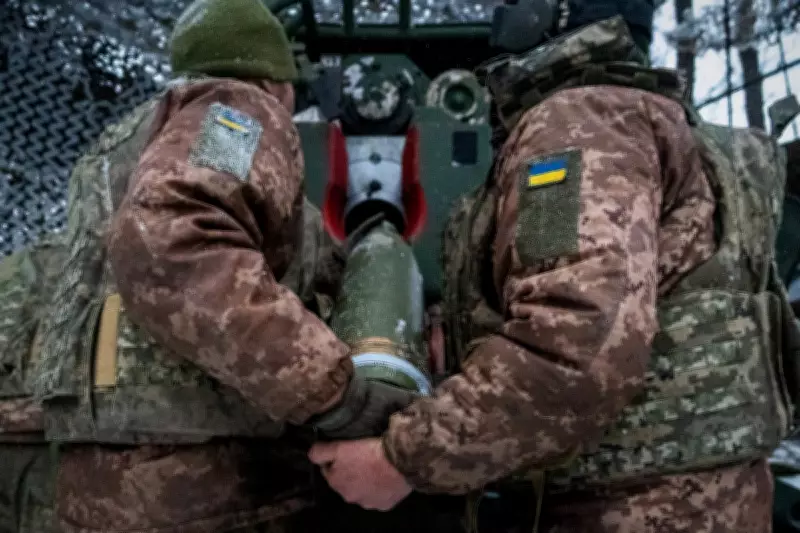
This fusion of high-tech drone warfare and World War I-style trench combat has seen small infantry groups—often just two or three soldiers—attempt to infiltrate enemy positions in towns devastated by Russian heavy artillery and glide bombs. Ferrying supplies and evacuating the wounded has become a monumental challenge as drones systematically target supply routes.
Energy Warfare and Long-Range Strikes
Ukrainian officials described this past winter as the most challenging period of the war. Russia exponentially increased strikes on Ukraine's energy infrastructure, causing widespread blackouts in Kyiv where power was limited to just a few hours daily amid freezing temperatures. Moscow has increasingly targeted power lines to halt energy transfers and fragment Ukraine's grid into isolated sections, intensifying pressure on the system.

In retaliation, Ukraine launched long-range drone attacks on oil refineries and energy facilities deep inside Russia, aiming to cripple Moscow's export revenues. Ukrainian drones and missiles have also sunk several Russian warships in the Black Sea, forcing Moscow to redeploy its fleet from occupied Crimea to Novorossiysk. In an audacious operation code-named "Spiderweb," Ukraine used drones launched from trucks to hit multiple air bases hosting long-range bombers across Russia in June, delivering a humiliating blow to the Kremlin.
Diplomatic Deadlock and Conflicting Demands
US President Donald Trump, who once promised to end the war within a day, has pushed vigorously to halt the fighting. However, mediation efforts have encountered sharply conflicting demands from both sides. Putin insists Ukraine must withdraw troops from the parts of Donetsk it still controls, abandon its NATO membership aspirations, curb its military capabilities, and grant official status to the Russian language—demands Kyiv has firmly rejected.
While Russia has left the door open to Ukraine's potential European Union membership, it has unequivocally ruled out any deployment of European peacekeepers as part of a settlement. Ukrainian President Volodymyr Zelenskyy wants a ceasefire along the current line of contact, but Putin rejects any truce, demanding instead a comprehensive peace agreement.
Tatiana Stanovaya of the Carnegie Russia Eurasia Center observed: "The territorial issue is important to the Kremlin, but the war has a more ambitious goal: to create a Ukraine that would be entirely within Russia’s sphere of influence and not perceived by Moscow as 'anti-Russia.'"
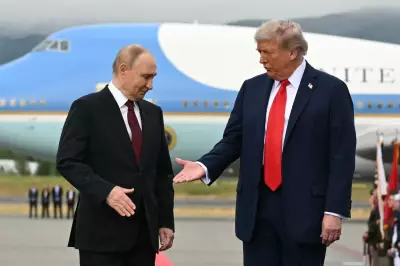
Ukraine and its allies accuse Putin of deliberately prolonging talks to seize more territory, while the Kremlin alleges that Kyiv and its European supporters are attempting to undermine a tentative agreement reached by Trump and Putin during their Alaska summit.
Political Maneuvering and Election Dynamics
Despite maintaining their respective positions, both Putin and Zelenskyy have praised US mediation efforts and sought to curry favor with President Trump. Following a disastrous White House meeting a year ago, Zelenskyy has adopted a more pragmatic negotiating stance, emphasizing Ukraine's goodwill. After Trump called for a presidential election in Ukraine, Zelenskyy signaled readiness for such a vote—even though elections are prohibited under martial law.
Zelenskyy suggested the election could be coupled with a referendum on a peace deal but insisted voting would only be possible once a ceasefire is established and Ukraine receives security guarantees from the US and other allies.
Economic Strains and Military Production
The war and Western sanctions have increasingly strained Russia's economy, with growth slowing to a near halt due to persistent inflation and labor shortages. Recent US sanctions on Russian oil exports have added further pressure. However, Russia's defense plants have significantly increased weapons output, and the government has shielded key social groups—such as soldiers and industrial workers—from economic hardship.
Richard Connolly of the Royal United Services Institute wrote: "Its economy is poorer, less efficient and less promising than it might otherwise have been. But it remains capable of sustaining the war. Its elites are more dependent on the regime, not less. Its political system is insulated from the transmission of economic discontent into pressure for regime change."
Zelenskyy has indicated that the White House has set a June deadline for ending the war and will likely pressure both sides to comply. Although Trump appears eager for a peace deal before the US midterm elections, significant challenges persist. With Putin insisting on Ukraine's withdrawal from Donetsk and Zelenskyy ruling it out, a swift agreement seems improbable. Zelenskyy has also expressed skepticism about a compromise US proposal to transform eastern Ukraine into a free economic zone.
The Kremlin expects its sustained attacks will eventually force Kyiv to accept Moscow's terms, while Ukraine hopes to hold out until Trump loses patience and increases sanctions on Russia, compelling Putin to halt his aggression. However, Trump often appears to be losing patience with Zelenskyy instead, further complicating the path to peace.