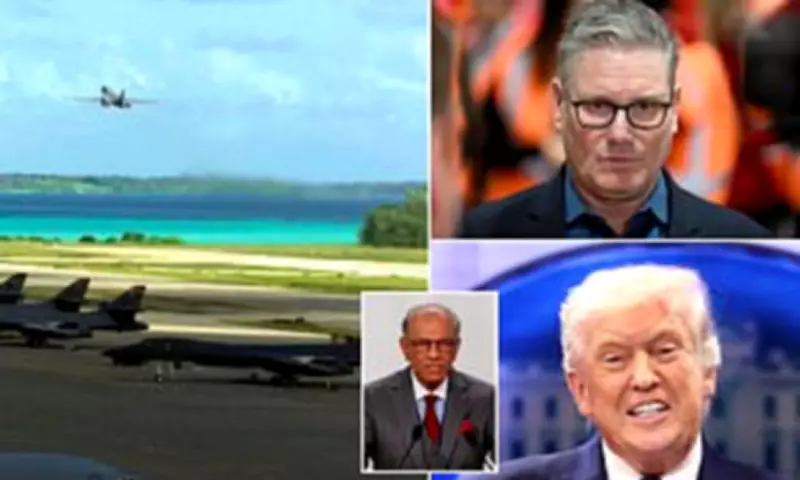
UK Braces for Multi-Billion Pound Compensation Claim Over Chagos Islands Deal
British officials are growing increasingly concerned that the United Kingdom could be hit with a compensation bill running into billions of pounds if it pulls out of Sir Keir Starmer's controversial Chagos Islands agreement with Mauritius. The deal, which has been labelled a 'surrender' by critics, involves handing over the British Indian Ocean Territory to Mauritius while leasing back the strategically vital Diego Garcia airbase for up to £35 billion over the next century.
Mauritius Plans Financial Windfall from UK Taxpayers
The agreement negotiated with Mauritius is heavily front-loaded, with Prime Minister Navin Ramgoolam intending to use the substantial payments from British taxpayers to address his country's pressing financial difficulties. Last year, Ramgoolam unveiled ambitious plans to allocate nearly £500 million from the initial UK payments to help clear Mauritius's national debt, which currently exceeds 80 per cent of its gross domestic product.
This financial injection would enable the east African nation to implement sweeping economic reforms, including abolishing income tax entirely for 81 per cent of employed Mauritians and raising minimum salaries across the board. The potential loss of this anticipated revenue stream has raised serious concerns about possible legal action from Port Louis if Britain reneges on the agreement.

Trump's Intervention Halts Parliamentary Progress
The legislative process to approve the treaty through Parliament was abruptly halted last week following Donald Trump's latest erratic outburst, in which the former US president criticised the handover arrangement. Despite Washington having officially signalled its backing for the deal earlier this week, Trump publicly urged Sir Keir Starmer not to 'give away Diego Garcia' – the island within the archipelago that hosts a crucial joint UK-US military installation.
According to reports in The Telegraph, if Trump's opposition forces a British U-turn on the agreement, Mauritius could launch fresh legal proceedings against the UK, potentially resulting in a massive compensation claim that would burden British taxpayers for years to come.
Geopolitical Tensions Complicate Security Calculations
The Times has revealed that Trump's sudden reversal on his previous support for the Chagos agreement stems from Britain's refusal to grant the White House permission to use either the Diego Garcia base or RAF Fairford in Gloucestershire for a potential military campaign against Iran. The British government's position is reportedly grounded in concerns about breaching international law, which makes no distinction between a nation carrying out an attack and one that provides support with 'knowledge of the circumstances of the internationally wrongful act'.
Foreign Secretary Yvette Cooper reinforced this message during her weekend meeting with US Secretary of State Marco Rubio in Washington, DC, emphasising that Britain favours 'diplomatic and economic pressure' on Iran rather than military escalation. This stance has emerged as Tehran announces it will have a nuclear deal draft ready within days, heightening regional tensions.
Conservative and Military Criticism Mounts
The government's cautious approach has drawn criticism from both Conservative politicians and senior military figures. Tory defence spokesman James Cartlidge has warned that Iran's nuclear programme 'poses a grave threat to Britain and our allies', while former top brass have joined Conservative voices in urging Sir Keir Starmer to prioritise national security considerations.
Several senior military figures have reportedly pressed the Prime Minister to allow Donald Trump to utilise British bases for any potential attack on Iran, arguing that security cooperation with the United States should take precedence over legal technicalities. This internal debate underscores the complex balancing act facing the British government as it navigates competing pressures from international partners, legal obligations, and domestic political considerations.

The situation remains fluid, with British officials anxiously monitoring developments in Washington and Port Louis while calculating the potential financial and diplomatic costs of various courses of action. The Chagos Islands agreement, once seen as a settled matter, has now become a flashpoint in UK foreign policy with implications stretching from the Indian Ocean to the Middle East.