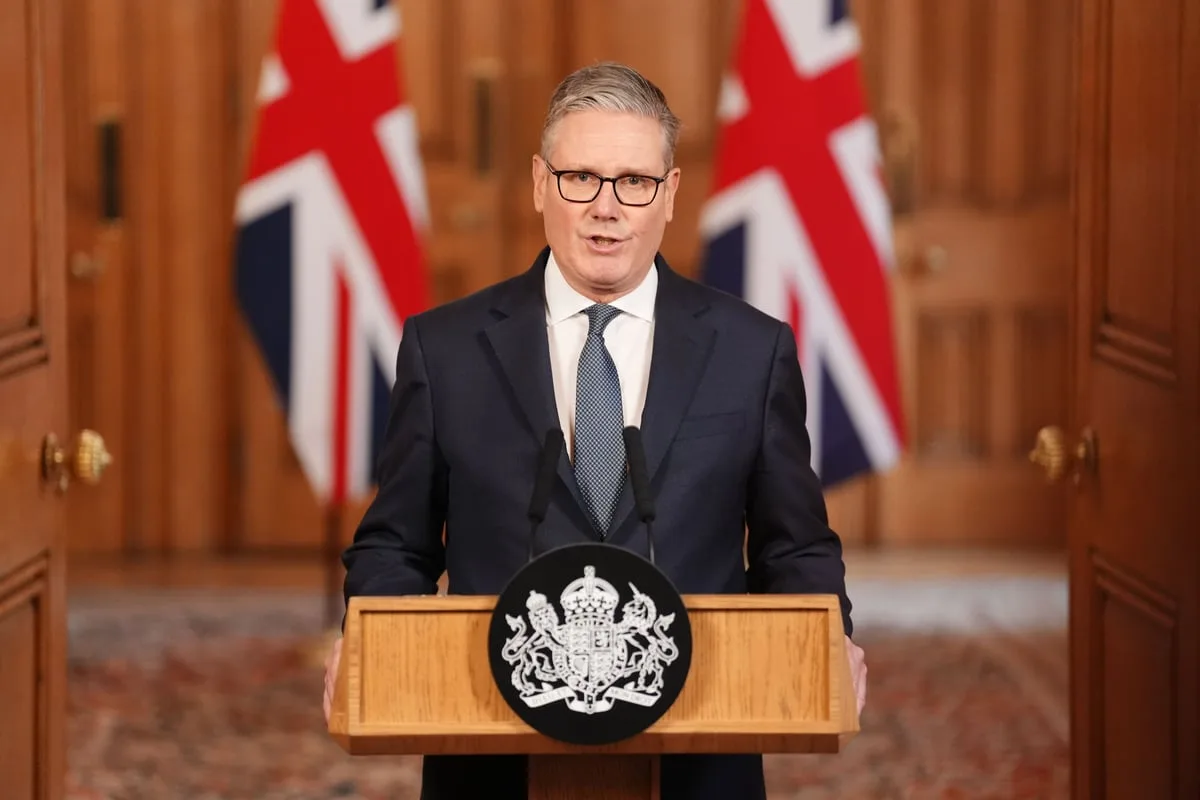
UK Grants US Access to Military Bases for Defensive Strikes Against Iran
Prime Minister Sir Keir Starmer has authorised the United States to utilise British military bases for launching defensive strikes against Iranian missile installations. This critical decision comes as hostilities in the Middle East escalate into their third consecutive day, following the death of Iran's Supreme Leader Ayatollah Ali Khamenei. The US and Israel have sustained their military operations against Iran, prompting urgent security measures across the region.
Unprecedented Rescue Operation for British Nationals in the Gulf
Simultaneously, British officials are coordinating a massive and unprecedented rescue operation for more than 200,000 UK citizens currently at risk throughout the Gulf. This substantial number includes both civilian British nationals and military personnel stationed in the area. The Tehran regime has intensified its aggression by launching additional missile barrages targeting neighbouring countries, significantly heightening the danger to all individuals in the region.
In a statement delivered late on Sunday, Prime Minister Starmer confirmed his agreement to the American request, emphasising that this authorisation serves to protect British nationals and allied forces. He accused Iran of pursuing what he termed a "scorched earth strategy" that endangers innocent lives. Sir Keir explicitly stated that British forces would not participate directly in the offensive strikes. Instead, the bases would be employed strictly for specific and limited defensive purposes, focusing on neutralising missile storage depots and launchers that threaten Iran's neighbours.
"We have taken the decision to accept this request – to prevent Iran firing missiles across the region, killing innocent civilians, putting British lives at risk, and hitting countries that have not been involved," the Prime Minister declared.
Legal Justifications and Potential Base Locations
The British Government has published a comprehensive summary of its legal position, asserting that these actions align fully with international law under the principle of collective self-defence. This move followed extensive discussions between Sir Keir and regional leaders, who reportedly urged the United Kingdom to enhance protective measures against Iranian missile threats.
While the specific bases to be utilised remain undisclosed, potential locations have been indicated through various reports. Former US President Donald Trump previously referenced Diego Garcia, a British Overseas Territory in the Chagos Islands of the Indian Ocean, as a possible site. Additionally, RAF Fairford in Gloucestershire, which possesses the capacity to accommodate American heavy bombers, has been suggested as another viable option for these defensive operations.
Political Reactions and Evacuation Preparations
The Prime Minister's decision has ignited strong political reactions across the spectrum. Green Party leader Zack Polanski condemned the authorisation, accusing Sir Keir of plunging into "yet another Middle East illegal war." The Liberal Democrats have demanded that Members of Parliament be granted a decisive vote on permitting US use of British bases. Conversely, Reform UK leader Nigel Farage offered a more supportive perspective, describing the move as "better late than never" and characterising the Prime Minister as "a follower, not a leader."
Concurrently, the Foreign Office has initiated an extraordinary operation to support British nationals throughout the Gulf region. Officials are actively developing contingency plans for potential evacuation routes, particularly should airspace closures persist for an extended duration. British citizens are currently advised to remain in place, adhere to local authority instructions, and monitor the Foreign Office's rapidly evolving travel advisories.
Residents in Bahrain, Israel, Palestine, Qatar, and the United Arab Emirates have been urgently instructed to register their presence with the Foreign Office via its online platform. To date, over 94,000 individuals, predominantly located in the UAE, have completed this registration. Although the Government has previously employed this registration system during international crises, the current situation presents an unprecedented challenge due to the vast number of people dispersed across multiple countries.
The United Kingdom will continue its existing defensive operations, which have already involved British forces successfully intercepting Iranian drones that threatened northern Iraq and Qatar. This multifaceted approach underscores the Government's commitment to safeguarding both national interests and citizen safety amidst escalating regional tensions.




