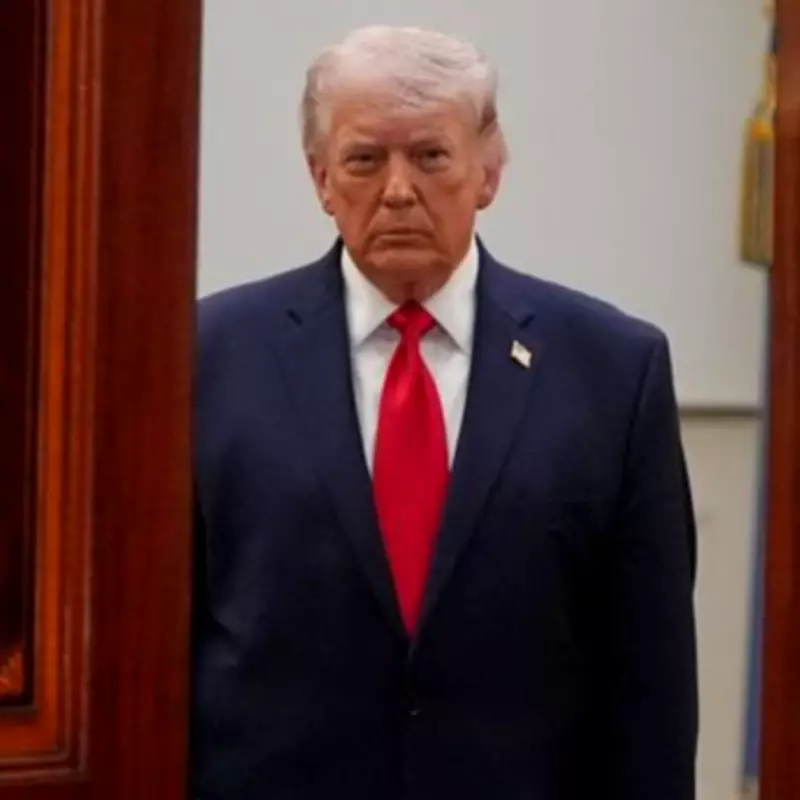
Donald Trump's persistent criticism of NATO is fundamentally destabilising the historic military alliance, potentially leading to its fragmentation in its current form. However, this very disruption could paradoxically pave the way for the emergence of a "NATO 2.0," a reconfigured defence partnership less centred on the United States, according to a leading security expert.
Trump's Relentless Assault on the Alliance
The US President, a long-time sceptic of the North Atlantic Treaty Organisation, has significantly intensified his verbal assaults in recent weeks. This escalation followed the refusal of NATO's historical member states to participate in a full-scale military offensive he launched against Iran. Failing to acknowledge NATO's core function as a defensive pact designed to respond to attacks on member territories, Trump has instead disparaged the alliance as a "paper tiger" for not acquiescing to his demands.
Expert Warns of Organisational Rupture
Anthony Glees, a Professor at the University of Buckingham and a globally recognised authority on security and European affairs, has issued a stark warning. He stated that the broadside from Trump and his MAGA movement is actively "tearing apart" the organisation. Speaking exclusively to the Mirror, Professor Glees outlined a challenging but feasible future where a "non-America NATO partnership" could be constructed.

"Building a non-America NATO partnership will be truly tough and it will require our accepting some hard and unpalatable trade-offs," Glees explained. He emphasised that a "NATO 2.0," or a European-focused NATO, could "certainly" be established without a MAGA-aligned America. "Not, of course, because we would ideally want it, but because we have no alternative," he added.
The Irony of NATO's Success
Professor Glees highlighted the profound irony of the situation, noting that NATO is being dismantled not due to failure, but despite its remarkable success. "NATO has kept the peace in Europe since April 1949 and its defensive strength and resolve, along with the economic might of the European Union, brought about the collapse of state communism in Eastern Europe and in Russia itself," he stated.
Growing Rifts with Key Allies
While NATO members generally express a desire for continued US involvement and cooperation with the Trump administration, significant fractures have recently appeared. Sir Keir Starmer, despite limited previous cooperation, has firmly refused to commit British forces to the Iranian assault. The most pointed criticism, however, has come from French President Emmanuel Macron, known for his diplomatic approach.
During a diplomatic visit to South Korea, Macron publicly criticised Trump's inconsistent and contradictory statements regarding global conflicts and NATO's role. "There is too much talk … and it’s all over the place," Macron asserted. "We all need stability, calm, a return to peace – this isn't a show!" He stressed that for leaders to "be serious," they should avoid offering conflicting narratives on the progression of war efforts.
The expert analysis suggests that the current transatlantic crisis, driven by presidential rhetoric, may force European nations to confront the necessity of greater strategic autonomy. The potential birth of a "NATO 2.0" would represent a seismic shift in post-war defence architecture, moving away from seven decades of American leadership towards a more balanced, European-led security framework.