
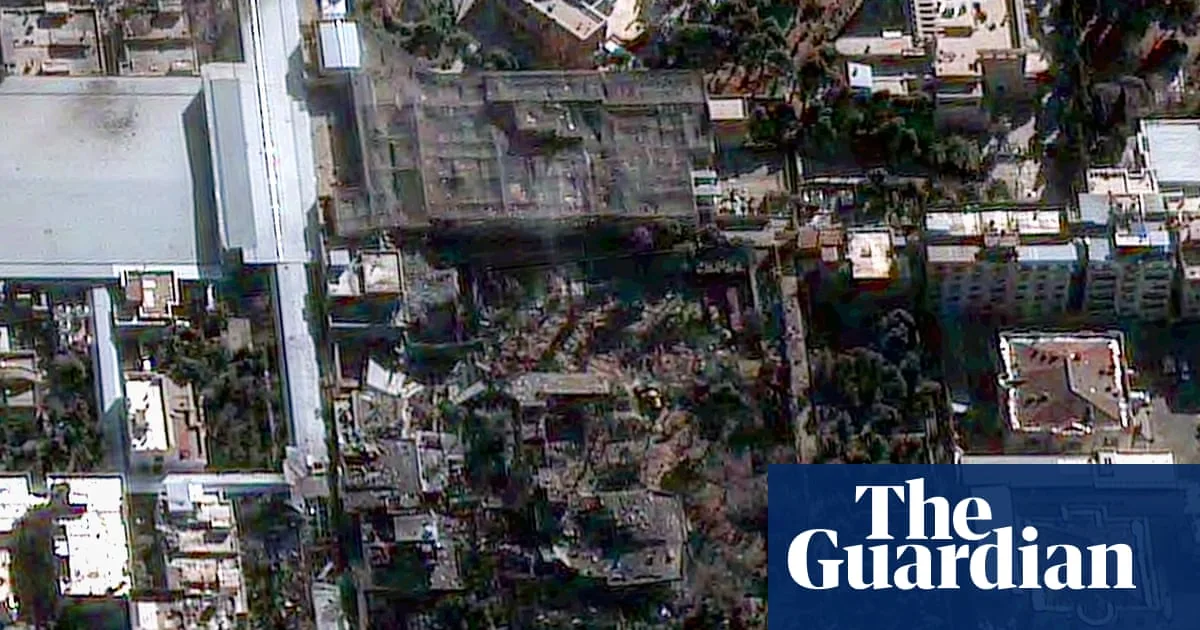
The assassination of Iran’s supreme leader, Ayatollah Ali Khamenei, was carried out in a series of near-simultaneous strikes lasting just 60 seconds, according to Israeli and US officials. Khamenei, 86, was killed along with seven top Iranian security leaders, a dozen members of his family and entourage, and 40 other senior Iranian figures in the operation, which marked the opening of an air offensive by Israel and the US aimed at overthrowing Iran’s clerical regime.
The mission was the culmination of decades of intelligence gathering by Israeli secret services, with the CIA providing crucial technological resources and manpower over the past six months. The timing was determined by CIA intelligence about a meeting of top Iranian officials in a leadership compound in Tehran, where Khamenei was expected to be present. Israeli spies had long tracked Khamenei’s daily routine, building a detailed file on his movements and associates.
Some experts warned that the assassination may prove to be a strategic error. Yossi Melman, an Israeli intelligence analyst, said: “The problem is that Israel is in love with assassinations … and we never learn that it is not the solution. We have killed all the leaders of Hamas. They are still there. It’s the same with Hezbollah. The leaders are always replaced.” Amos Yadlin, a former head of Israeli military intelligence, described the strike as “a tactical surprise, an operational surprise”.
Former CIA veterans noted the importance of combining US technological assets with Israeli human intelligence networks on the ground. Reuel Gerecht, a former CIA targeting officer, suggested that while US technology was formidable, Israel’s covert networks were essential for carrying out the operation. The Mossad has built deep networks in Iran over decades, enabling previous operations such as the assassination of a top nuclear scientist.




