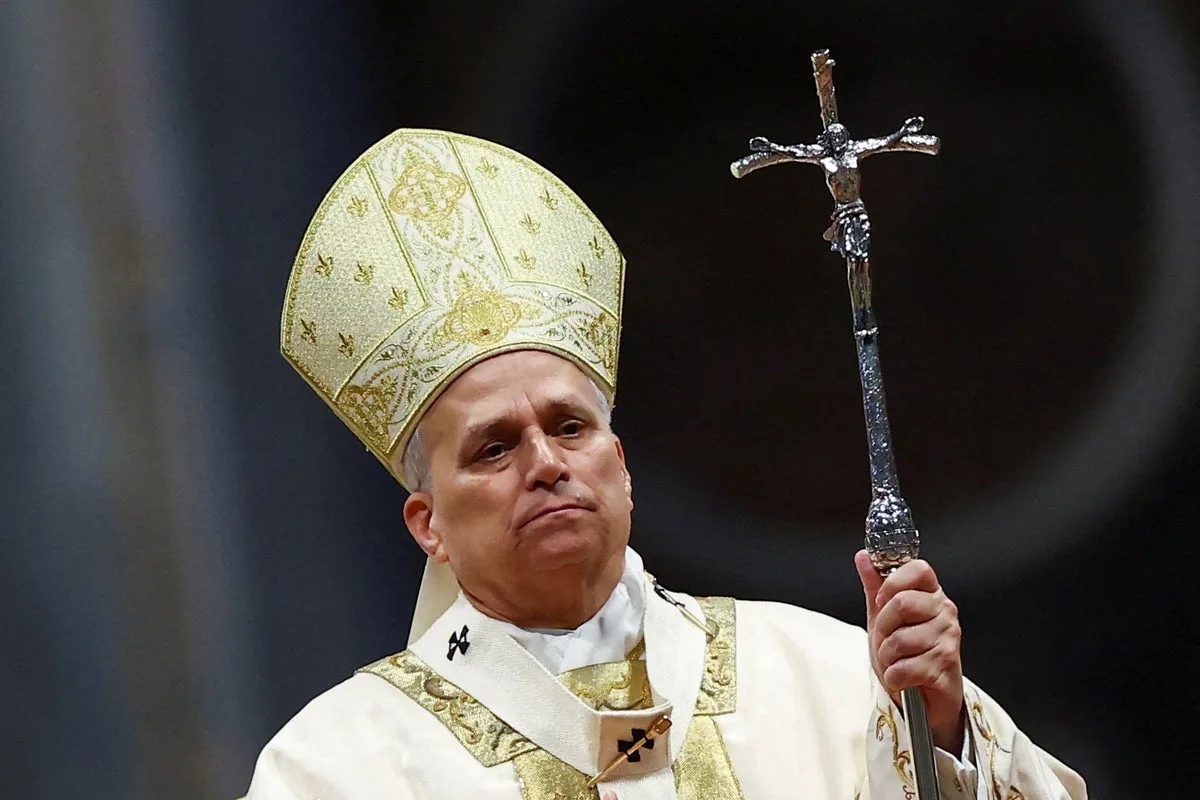
Pope Leo, the first American to lead the global Catholic Church, has broken his silence on US affairs by emerging as a sharp critic of the escalating Iran war. In recent weeks, the pontiff has directly appealed to President Donald Trump, publicly naming him for the first time, urging an end to the expanding conflict. This marks a significant shift in tone and approach, with experts suggesting the Pope aims to serve as a global counterweight to Trump's foreign policy.
Massimo Faggioli, an Italian academic who closely follows the Vatican, said: 'I don't think he wants the Vatican to be accused of being soft on Trumpism because he's an American.' Known for his careful choice of words, Pope Leo specifically urged Mr Trump to find an 'off-ramp' to end the war, employing an American colloquialism likely to resonate with the President and his administration.
Chicago Cardinal Blase Cupich, a close ally of Leo, said the pope was taking up the mantle of a long line of pontiffs who have urged world leaders to turn away from war. 'What is different ... is the voice of the messenger, for now Americans and the entire English-speaking world are hearing the message in an idiom familiar to them,' said the cardinal.
Two days before appealing to Trump directly, Leo said God rejected the prayers of leaders who start wars and have 'hands full of blood', in unusually forceful remarks. Those comments were interpreted by conservative Catholic commentators as aimed at US Defence Secretary Pete Hegseth, who has invoked Christian language to justify the joint US-Israeli strikes on Iran that initiated the war. They also led to one of the Trump administration's first direct responses to a comment by Leo.
White House spokesperson Karoline Leavitt said: 'I don't think there is anything wrong with our military leaders or with the president calling on the American people to pray for our service members.' Marie Dennis, a former leader of the international Catholic peace movement Pax Christi, said Leo's most recent comments 'reflect a heart broken by unrelenting violence'.
Leo had previously taken aim at Mr Trump's hardline immigration policies without naming him directly. He also carried out a major shake-up of US Catholic leadership in December, removing Cardinal Timothy Dolan as archbishop of New York. Cardinal Michael Czerny, a senior Vatican official, said the pope's voice would carry weight globally because 'everyone can perceive that he speaks ... for the common good, for all people and especially the vulnerable'.