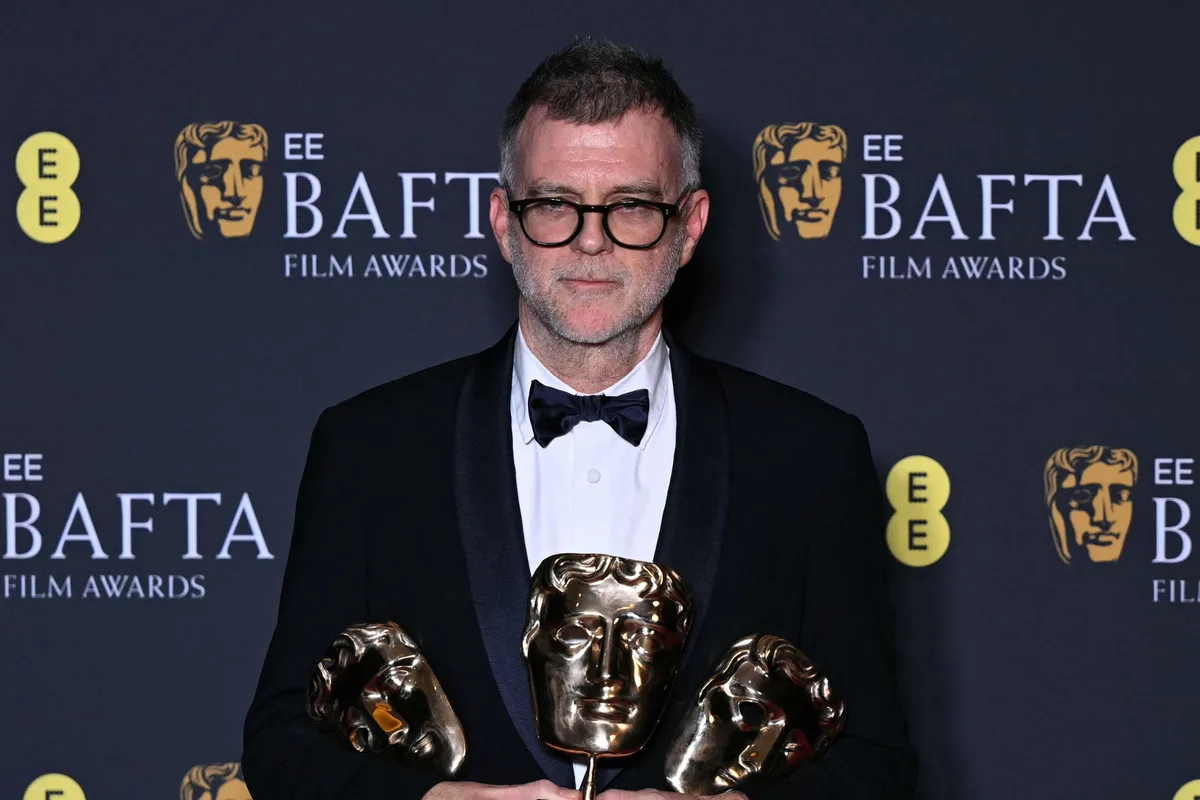
Acclaimed director Paul Thomas Anderson has firmly positioned himself in the ongoing discourse about whether artists bear a responsibility to engage with political issues, declaring his primary role as a filmmaker rather than a political commentator. This statement came shortly after Anderson secured two prestigious Bafta awards for his latest project, One Battle After Another, which claimed both Best Film and Best Director honours at the ceremony held on Sunday, 22 February 2026.
Anderson's Stance on Political Expression Through Film
When questioned by journalists in the press room about whether high-profile figures in the film industry should vocalise their political views, Anderson offered a nuanced response. He expressed a lack of confidence in articulating intelligent political commentary in such a setting, remarking, "I'll ultimately fail here, in this situation." Instead, he emphasised his belief in the power of cinema as a medium for conveying his perspectives on the world.
"Where I have confidence that I won't fail is by making a film," Anderson elaborated. "I have significantly more confidence in myself communicating my feelings about the world through the film, and I think that's what we've done with this film. Trying to find intelligent things to say in this form wouldn't be – I'm not a politician, but I'm a filmmaker, so [I] try to do it through the work."
Context of the Political Art Debate
Anderson's comments emerge against a backdrop of heightened tension within the artistic community regarding political engagement. Just one week prior, the Berlin Film Festival became a focal point when its president urged participants to "stay out of politics", sparking widespread controversy. This directive led author Arundhati Roy to withdraw from the festival, labelling the remarks as "unconscionable", while an open letter signed by 81 artists, including Javier Bardem and Tilda Swinton, criticised the perceived silence on international conflicts.
Filmmaker Wim Wenders, associated with the Berlinale, echoed the sentiment, asserting that while movies possess the capacity to effect change, they should do so "not in a political way". This environment has intensified discussions about the boundaries between artistic expression and political advocacy.
'One Battle After Another': A Politically Charged Film
Anderson's film, One Battle After Another, has itself been at the centre of political interpretation and backlash. Inspired by Thomas Pynchon's 1990 novel, the movie features a star-studded cast including Leonardo DiCaprio, Teyana Taylor, and Chase Infiniti. It narrates the story of a revolutionary group confronting a military force led by a corrupt white-supremacist officer portrayed by Sean Penn.
Many critics and audiences have viewed the film as a sharp satire and critique of Trump-era America, drawing ire from right-wing commentators in the United States. Some have branded it a "reckless ode to radical terrorism", with commentator Ben Shapiro condemning it as "an apologia for radical left-wing terrorism". Despite this controversy, the film's success at the Baftas underscores its impact and recognition within the industry.
Implications for the Film Industry
Anderson's refusal to directly engage in political discourse highlights a broader dilemma faced by artists in today's polarised climate. His approach suggests a belief in the subtlety and potency of cinematic storytelling over overt political statements, a perspective that may resonate with fellow creators navigating similar pressures.
The debate continues to unfold, with no clear consensus on whether artists have a duty to address political issues. Anderson's stance, rooted in his confidence in filmmaking as a communicative tool, adds a significant voice to this conversation, emphasising the enduring power of art to reflect and challenge societal norms without explicit political posturing.
The Independent has reached out to Anderson's representative for further comment, but no additional statements have been provided at this time.






